
Knowledge Hub
The pulse of concrete innovation in hydroelectric engineering.
Technical briefs, trend analysis, and expert perspectives on what's shaping the future of concrete in hydroelectric and large-scale infrastructure.
Latest Articles
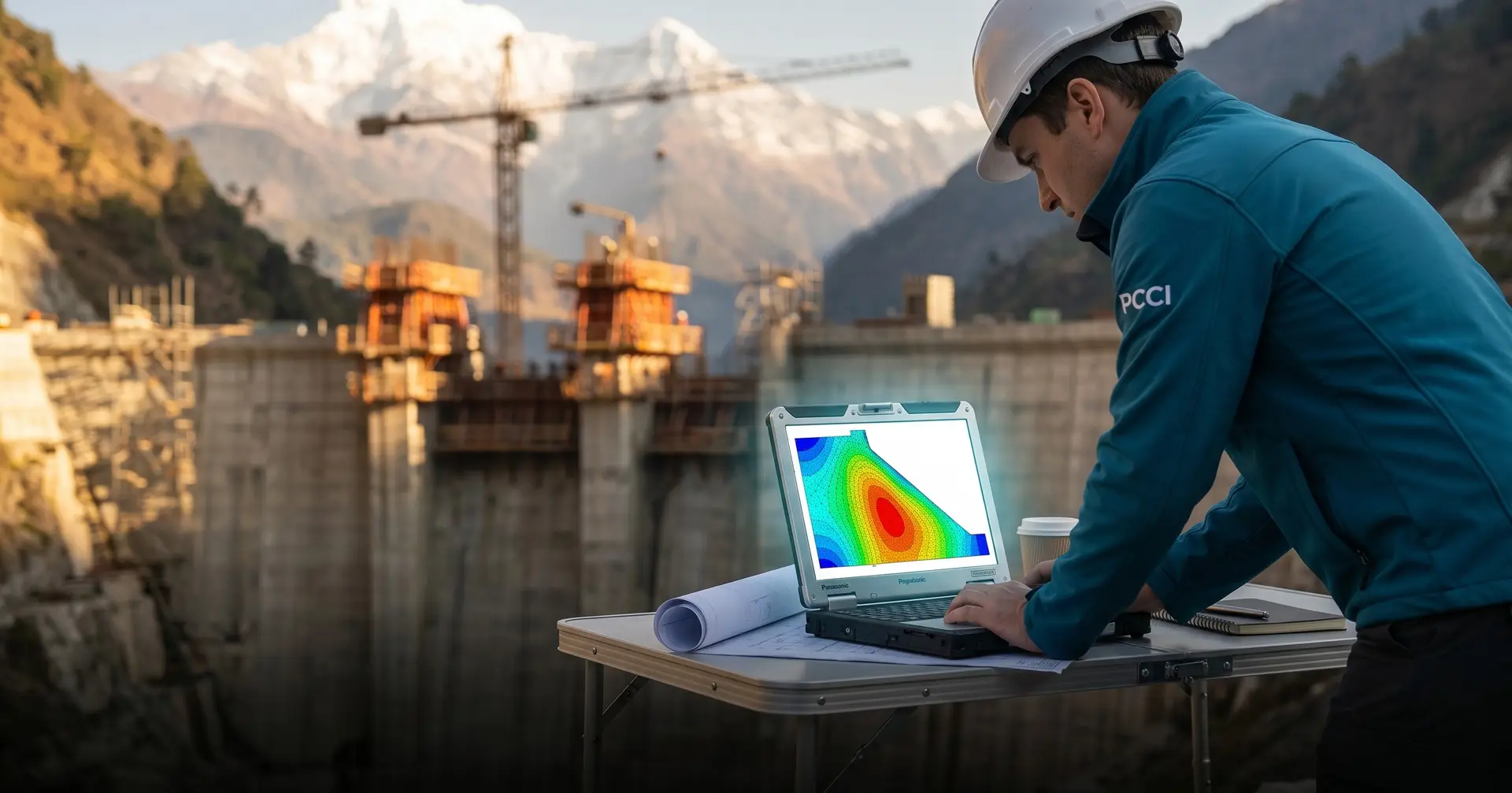
Thermal Modelling for Mass Concrete: FEM Analysis, Input Parameters, and Practical Application
Every thermal control plan for a mass concrete dam rests on a thermal model. The model predicts the temperature at every point inside the concrete, at every time step from placement through years of service. It determines whether the pre-cooling system is adequate, whether the placement schedule allows sufficient heat dissipation, whether the post-cooling pipes are correctly spaced, and whether the resulting thermal stresses will crack the concrete. A thermal model that is wrong does not just produce incorrect numbers. It produces a thermal control plan that either under-protects the concrete (leading to cracking) or over-protects it (wasting resources on unnecessary cooling). Getting the model right requires accurate input parameters, appropriate modelling assumptions, and validation against field measurements.
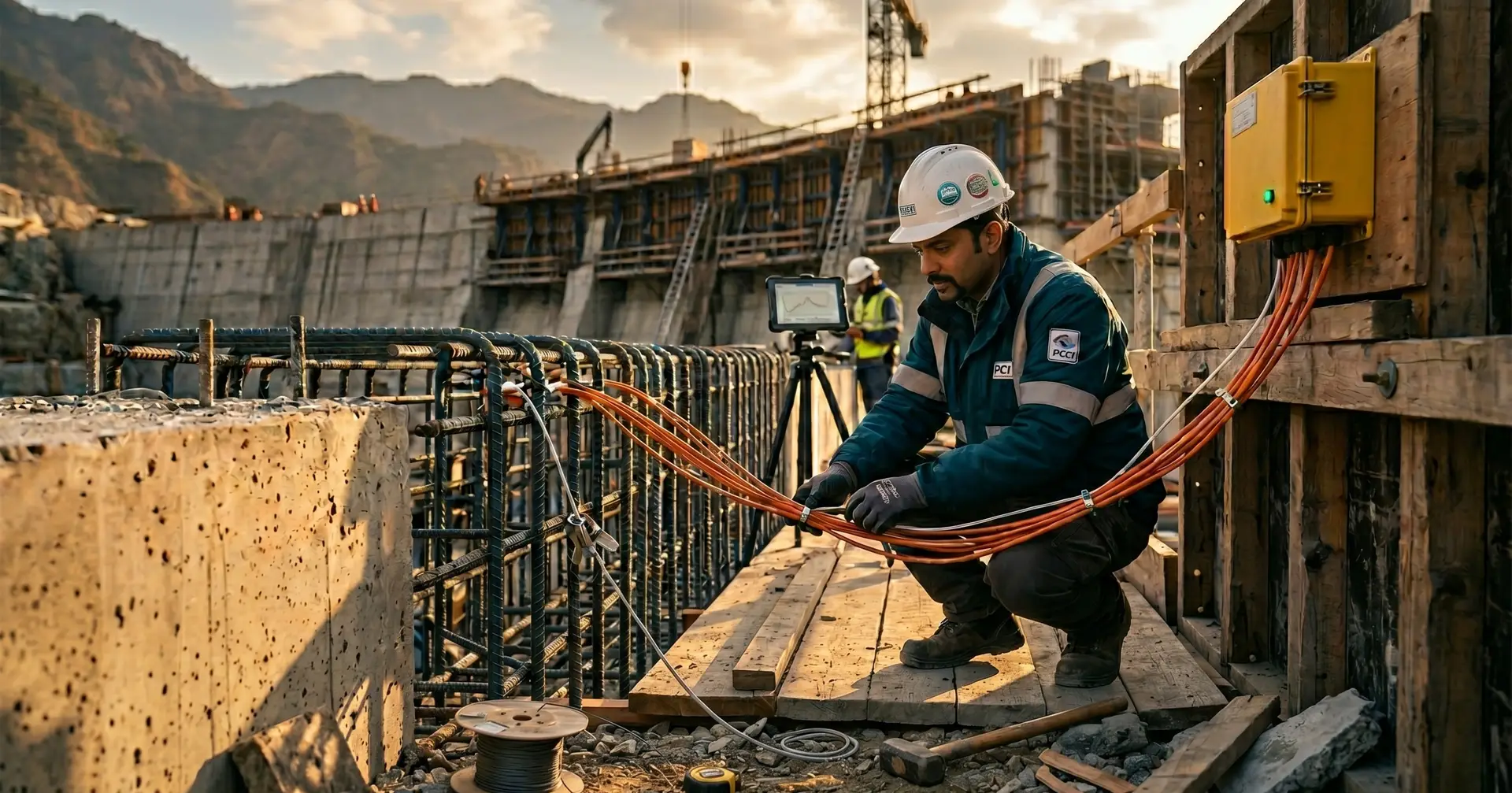
Thermal Instrumentation for Mass Concrete Dams: Sensors, Monitoring, and Real-Time Decision Making
A thermal control plan without instrumentation is a document without feedback. You can model the expected temperature rise, design the pre-cooling system, specify the placement schedule, and calculate the maximum thermal gradients. But unless you measure what actually happens inside the concrete after placement, you have no way of knowing whether the plan is working until a crack appears on the surface. Thermal instrumentation closes this loop: embedded sensors provide real-time temperature data that allows the construction team to verify predictions, adjust cooling operations, and intervene before thermal stresses exceed the concrete's capacity.
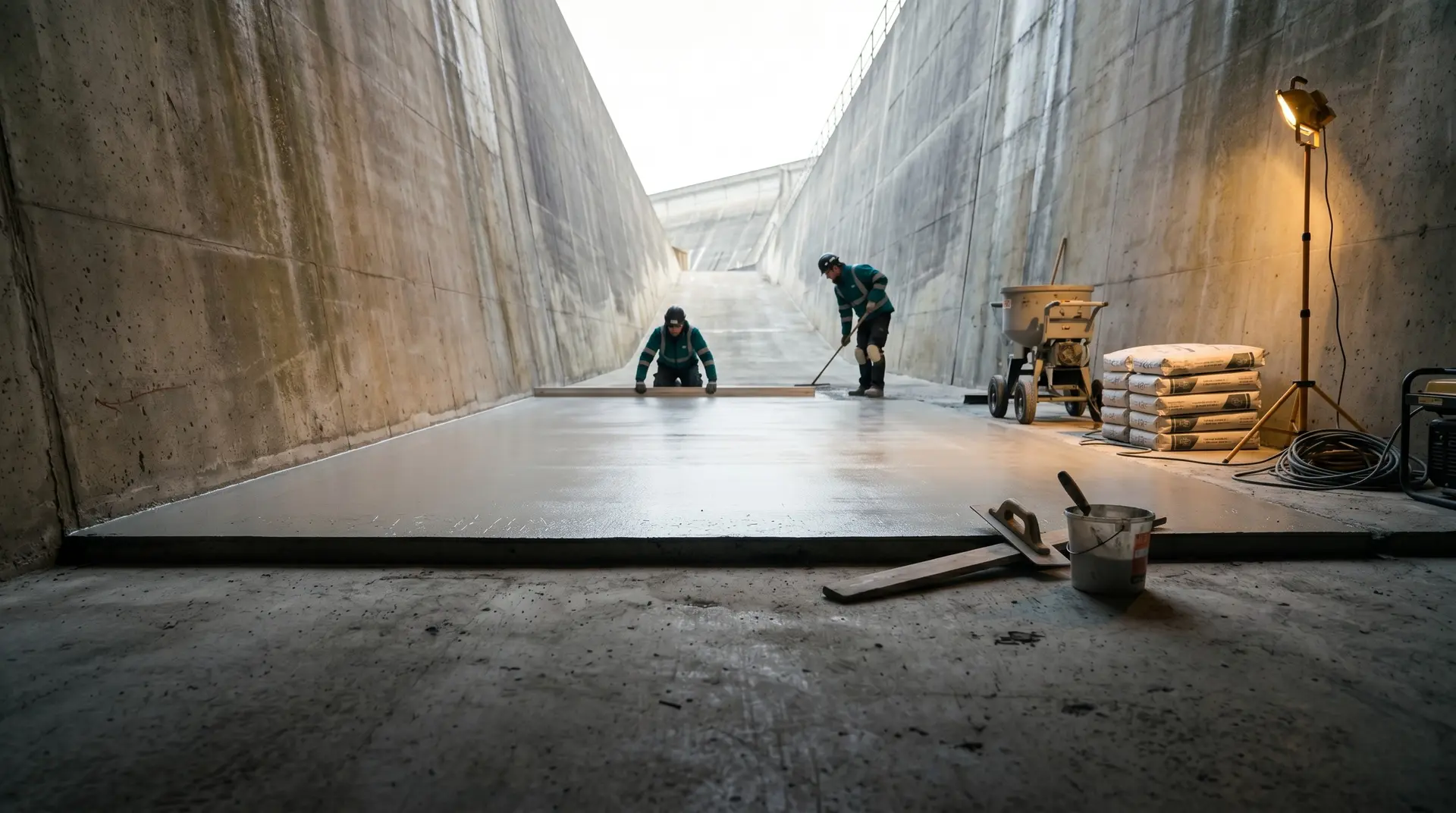
UHPC for Hydroelectric Infrastructure: Where Ultra-High Performance Concrete Fits in Dam Engineering
Ultra-high performance concrete (UHPC) has transformed bridge deck rehabilitation across North America, with more than 20 state departments of transportation using UHPC overlays as thin as 25 mm to extend bridge service lives by decades. The material's compressive strength exceeding 150 MPa, near-zero permeability, and abrasion resistance roughly double that of conventional concrete make it a compelling technology. For dam engineers, the question is specific: where in a hydroelectric project does UHPC's exceptional performance justify its cost, which runs 5 to 10 times higher than conventional concrete per cubic metre? The answer is not everywhere; it is in targeted applications where thin sections, extreme abrasion, cavitation exposure, or permanent submersion demand a material that conventional HPC cannot match. This technical brief examines UHPC's material properties through the lens of dam engineering requirements, identifies the specific applications where it adds genuine value, addresses the cost and constructability challenges, and provides a practical decision framework for dam owners and consulting engineers.

Machine Learning for Concrete Mix Design: From BOxCrete to Dam-Specific Optimization
In March 2026, Meta released BOxCrete, an open-source Bayesian Optimization model for concrete mix design, under an MIT license. The model, developed with the University of Illinois and cement producer Amrize, reduces the carbon footprint of concrete by up to 40% while maintaining strength, with some formulations replacing upwards of 70% of cement with fly ash and slag combinations. For dam engineers, this raises an immediate question. Mass concrete for hydroelectric projects already uses high SCM dosages, low cement contents, and extended curing ages that fall outside the training data of most ML models. Can these tools actually help with dam-specific mix design, or are they solving a different industry's problem? This technical brief examines the current state of ML-driven mix design optimization, assesses its relevance to mass concrete for dams and RCC, and outlines a practical framework for integrating ML tools into the trial mix process without abandoning the engineering judgment that keeps dams standing.
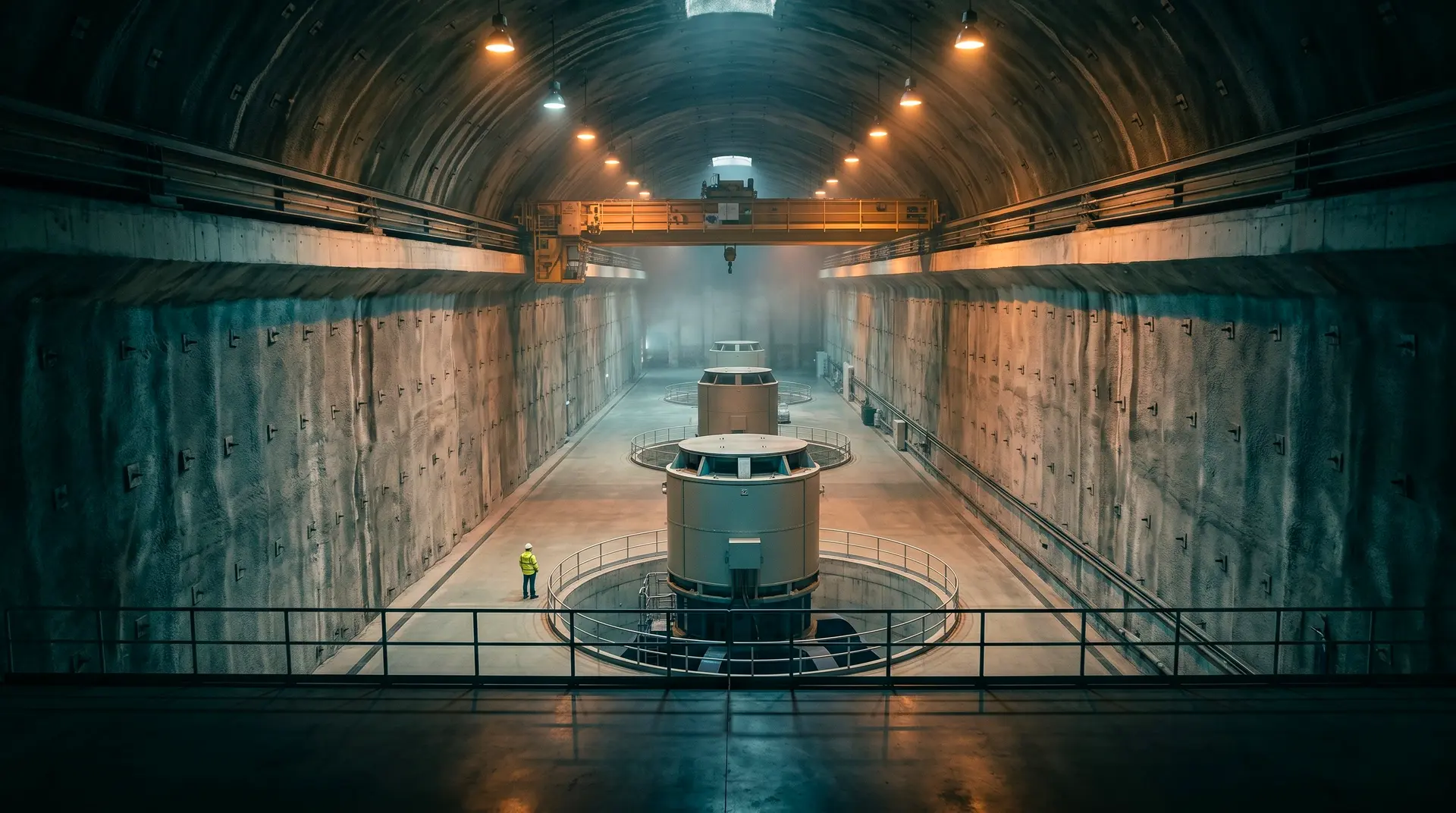
Pumped Storage vs Conventional Hydropower: How Concrete Requirements Differ
A conventional hydropower dam fills its reservoir once and maintains a relatively stable water level for decades. A pumped storage reservoir cycles its water level by tens of metres every single day. This fundamental operational difference transforms every concrete engineering decision: the dam must resist cyclic loading that conventional dams never experience, the waterways must withstand reversible high-velocity flow, and the project must build two reservoirs instead of one, often in remote terrain. Engineers who approach pumped storage concrete with conventional hydropower assumptions will underdesign for the conditions these structures actually face.

Understanding ICOLD Bulletins: A Practitioner's Guide for Dam Engineers
The International Commission on Large Dams publishes the most authoritative technical guidance on dam engineering in the world. Over 180 bulletins cover every aspect of dam design, construction, safety, and operation. For concrete technology specialists, a handful of these bulletins are essential references that fill gaps left by Indian and American standards. But navigating the ICOLD library is challenging: bulletins are numbered sequentially, not thematically, some are decades old, and not all are freely accessible. This guide identifies the ICOLD bulletins most relevant to concrete technology, explains what each covers, and shows how they integrate with IS and ACI standards in Indian practice.
Computer Vision and Drone Inspection for Concrete Dams: A Practical Guide
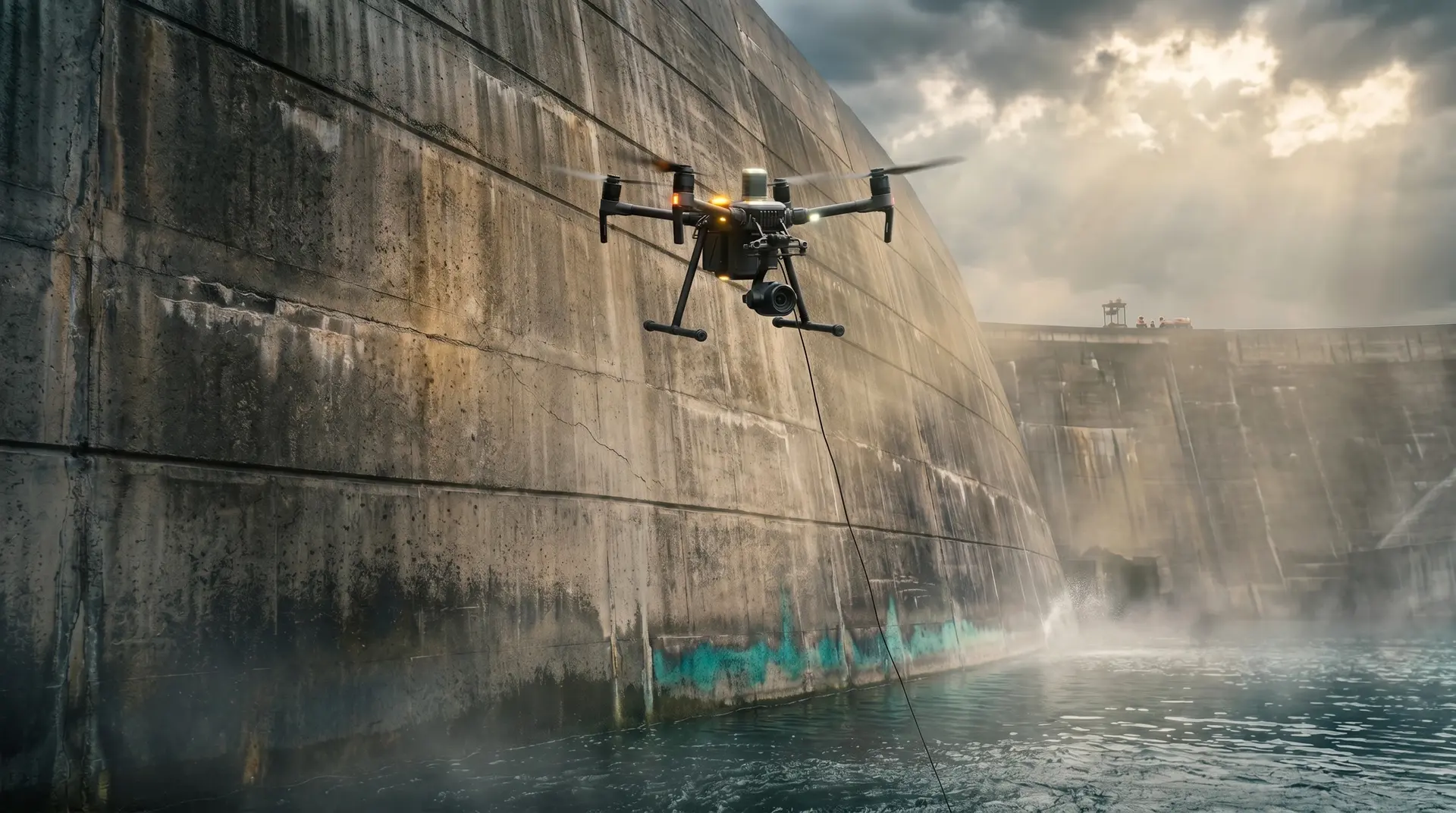
At the Storfinnforsen Hydroelectric Power Station in Sweden, an autonomous drone system captured over 300,000 location-tagged images of the dam's concrete surfaces in 52 flight hours, completing the inspection 50% faster than manual methods and saving an estimated 40 workdays. No scaffolding, no rope access, no personnel working at height. This is not a research prototype. Drone-based inspection with AI-powered defect detection is commercially deployed and delivering measurable results on operational hydroelectric dams. Deep learning models now detect sub-millimetre cracks on concrete surfaces with precision exceeding 90%, while ROVs extend the same capability to submerged dam faces. For dam owners and engineers responsible for concrete condition assessment, the question has shifted from "does this technology work?" to "how do we integrate it into our inspection programme?" This technical brief examines the available systems, their proven capabilities, their limitations, and a practical deployment framework for hydroelectric projects.
RCC Dam Seepage: Causes, Prevention, and Remediation
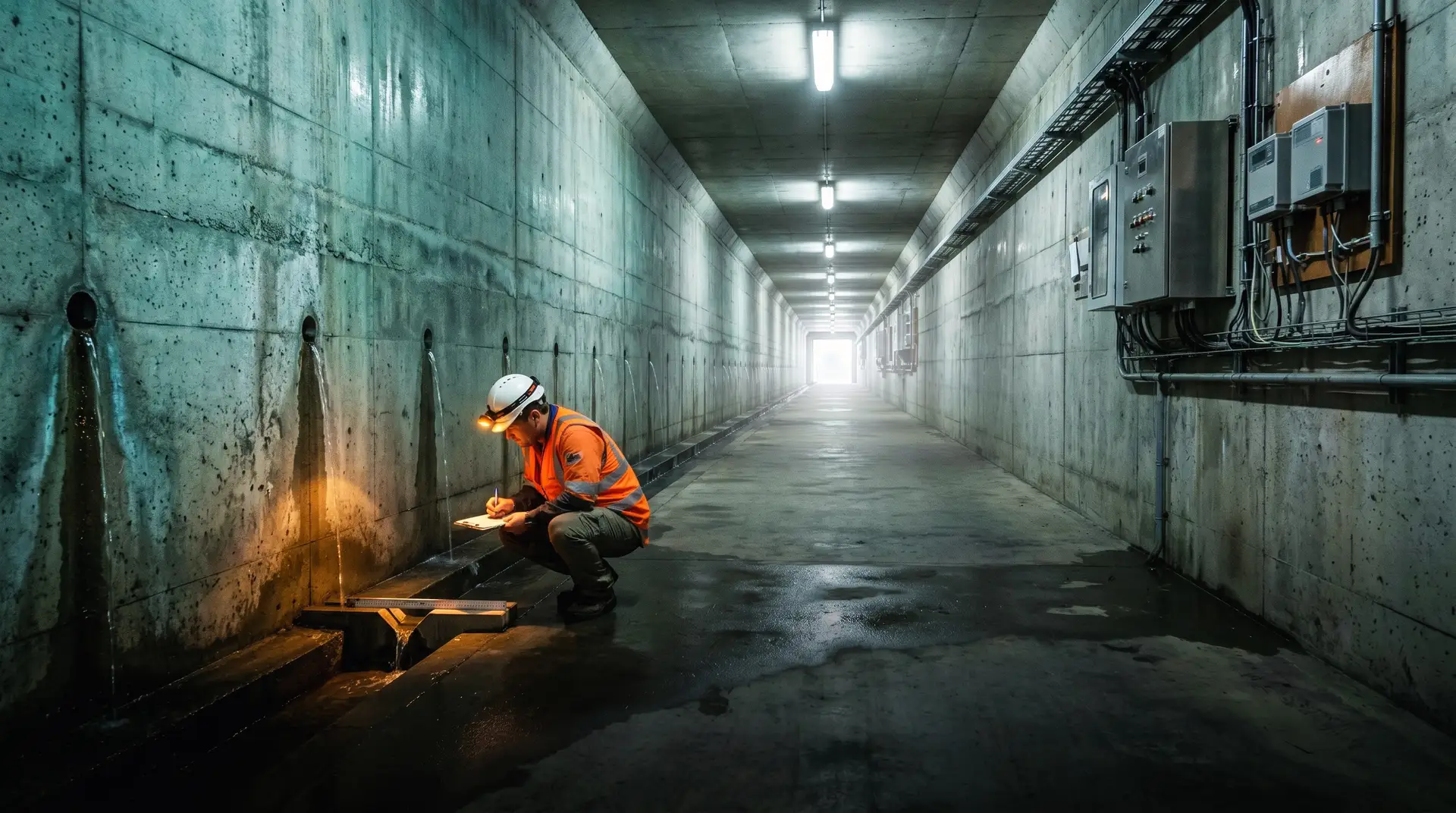
Seepage through RCC dams is not a defect. It is a design consideration. The low-paste, zero-slump nature of roller compacted concrete means that lift joints will never be as impermeable as monolithic conventional concrete. The question is not whether seepage will occur, but whether it is controlled within acceptable limits. When it is not, the consequences range from aesthetic staining to structural instability. This article examines why RCC dams seep, how upstream facing systems and internal drainage control it, and what to do when seepage exceeds design assumptions.

Digital Twins for Thermal Monitoring in Mass Concrete Dams: From Sensors to Predictive Crack Prevention
Thermal cracking remains the single most common quality failure in mass concrete dam construction. Traditional monitoring relies on embedded thermocouples read at intervals, compared against ACI 207 or IS 457 limits, with corrective action taken after temperatures breach thresholds. The fundamental limitation is reactive: by the time a thermocouple registers an exceedance, the thermal gradient has already established the conditions for cracking. Digital twins change this dynamic. By integrating real-time sensor data with finite element thermal models and machine learning prediction algorithms, a digital twin can forecast concrete temperatures 24 to 72 hours ahead, flag thermal crack risk before it materialises, and recommend cooling adjustments in real time. At Baihetan Dam (16 GW, China), an ANN-based thermal prediction system trained on over 80,000 monitoring samples achieved forecast accuracy with RMSE of 0.15 degrees C. For dam engineers managing thermal control on active pours, this represents a shift from threshold-based alarms to predictive, model-driven decision support. This technical brief examines how digital twins work for dam thermal monitoring, what accuracy they achieve, what sensor infrastructure they require, and how Indian hydropower projects can begin adopting this approach within existing regulatory frameworks.
Carbon Footprint of a Concrete Dam: How to Measure and Reduce It
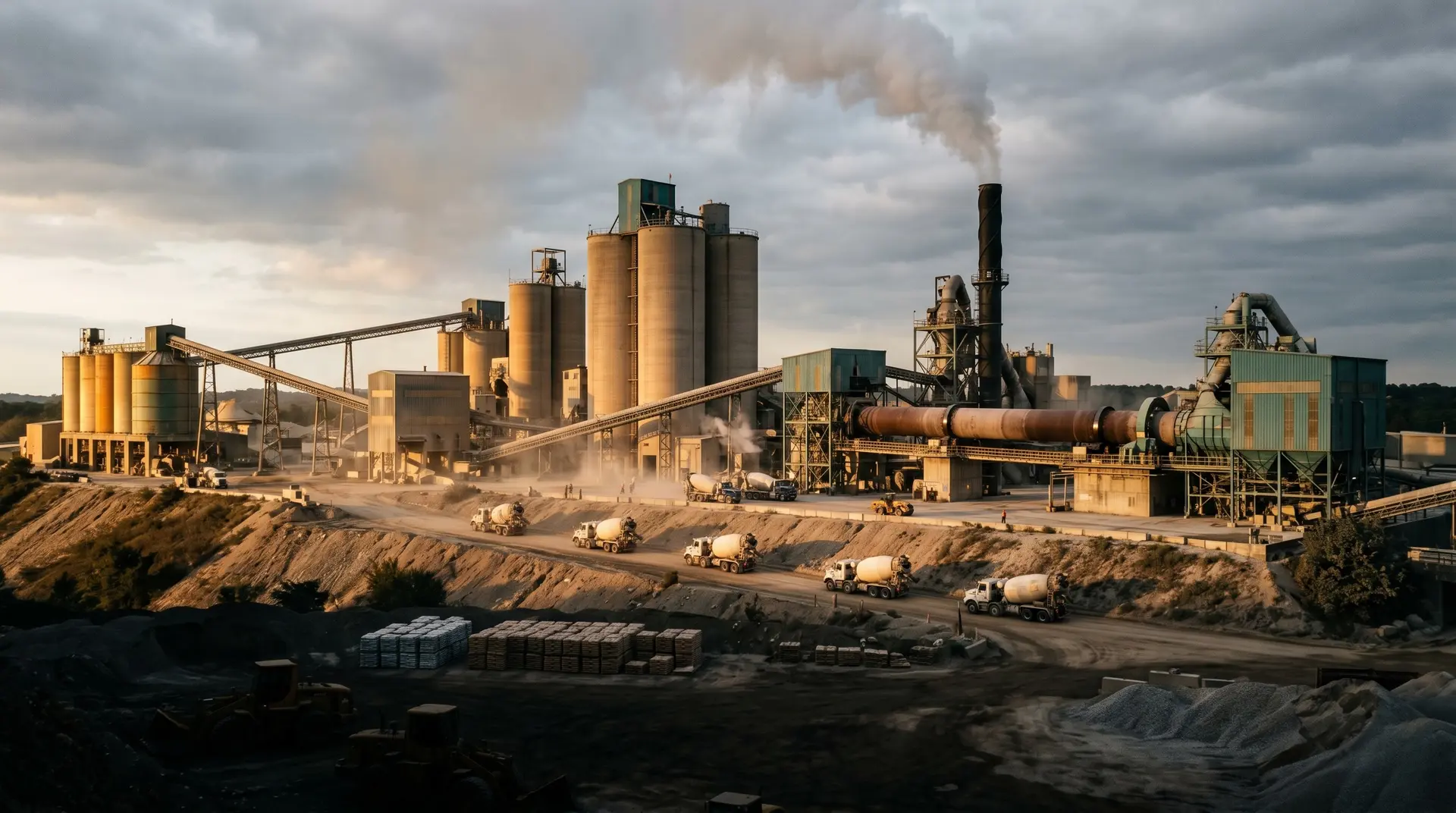
A large concrete dam requires 300,000-1,000,000 cubic metres of concrete. At typical cement intensities, that concrete produces 40,000-80,000 tonnes of CO2, roughly equivalent to the annual emissions of a small town. As multilateral lenders (World Bank, ADB, AIIB) increasingly require embodied carbon assessments for infrastructure projects, and as India's own National Action Plan on Climate Change drives decarbonisation across sectors, dam engineers need to understand where the carbon comes from and which design decisions have the greatest impact on reducing it. The answer is not a single silver bullet. It is a systematic approach across five levers: cement content, SCM replacement, aggregate sourcing, placement efficiency, and design optimisation.

Stilling Basin Concrete: Designing for Impact, Turbulence, and Long-Term Durability
Stilling basins absorb the full kinetic energy of water discharged from dam spillways, subjecting their concrete to impact forces, cavitation, high-velocity abrasion, and hydraulic uplift that no other dam component experiences. Designing concrete for stilling basins requires a different engineering approach than designing for the dam body itself. This article covers material selection, mix design parameters, placement methods, and repair strategies for concrete that must survive the most punishing hydraulic environment in any dam project.
High-Altitude Concreting: Freeze-Thaw and Cold Weather Placement Above 2,000 Metres
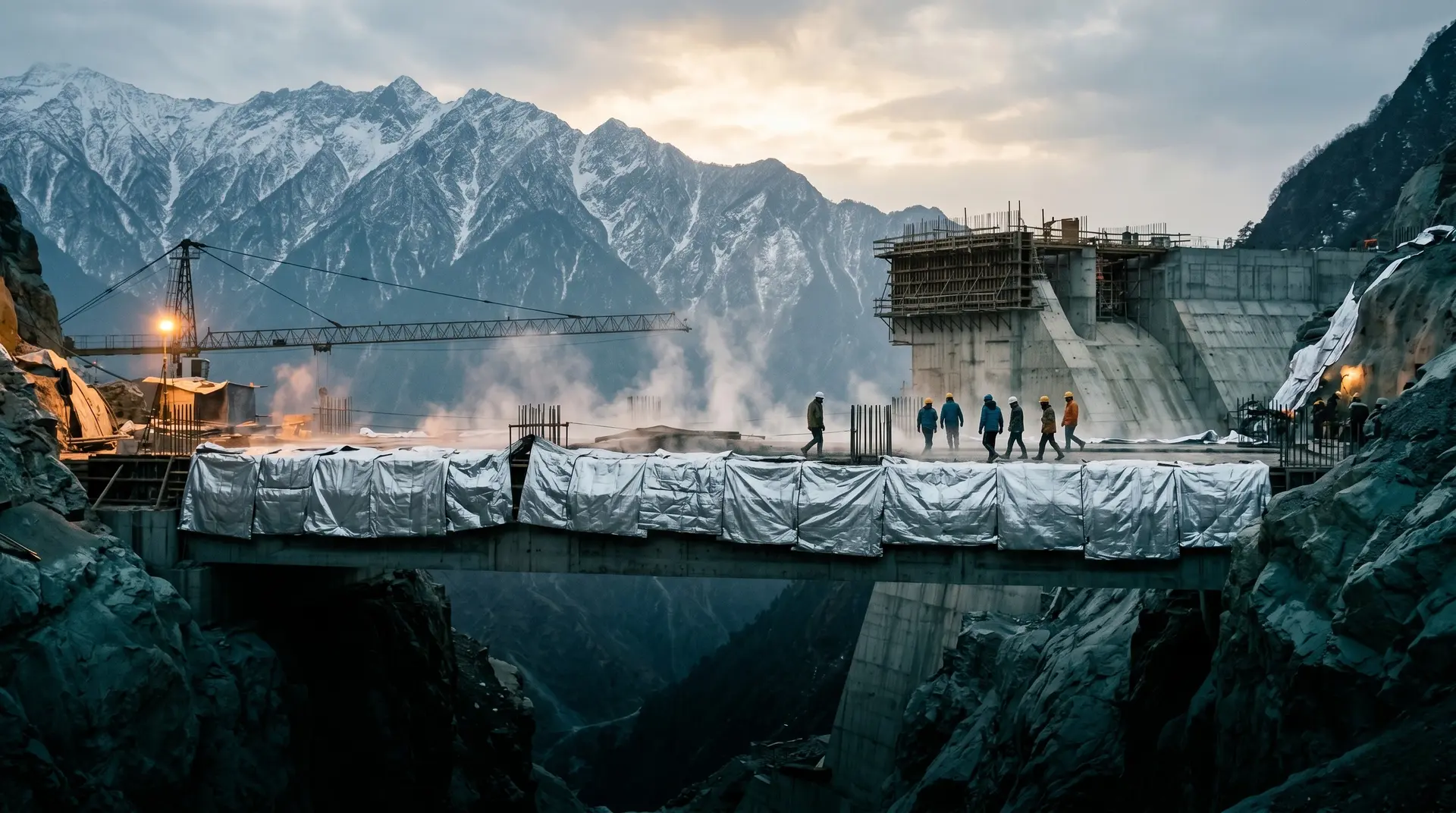
At 2,000 metres above sea level, the rules of concrete engineering change. Water freezes inside concrete pores during 50-100+ cycles per year, progressively destroying the matrix from within. Ambient temperatures can swing 30 degrees between day and night. The construction season shrinks to 6-8 months. Material delivery depends on mountain roads that close during winter and monsoon. And the concrete must perform for 100 years in this environment, not just survive the construction period. High-altitude dam concrete requires a fundamentally different approach to mix design, placement, curing, and protection than concrete placed at lower elevations.
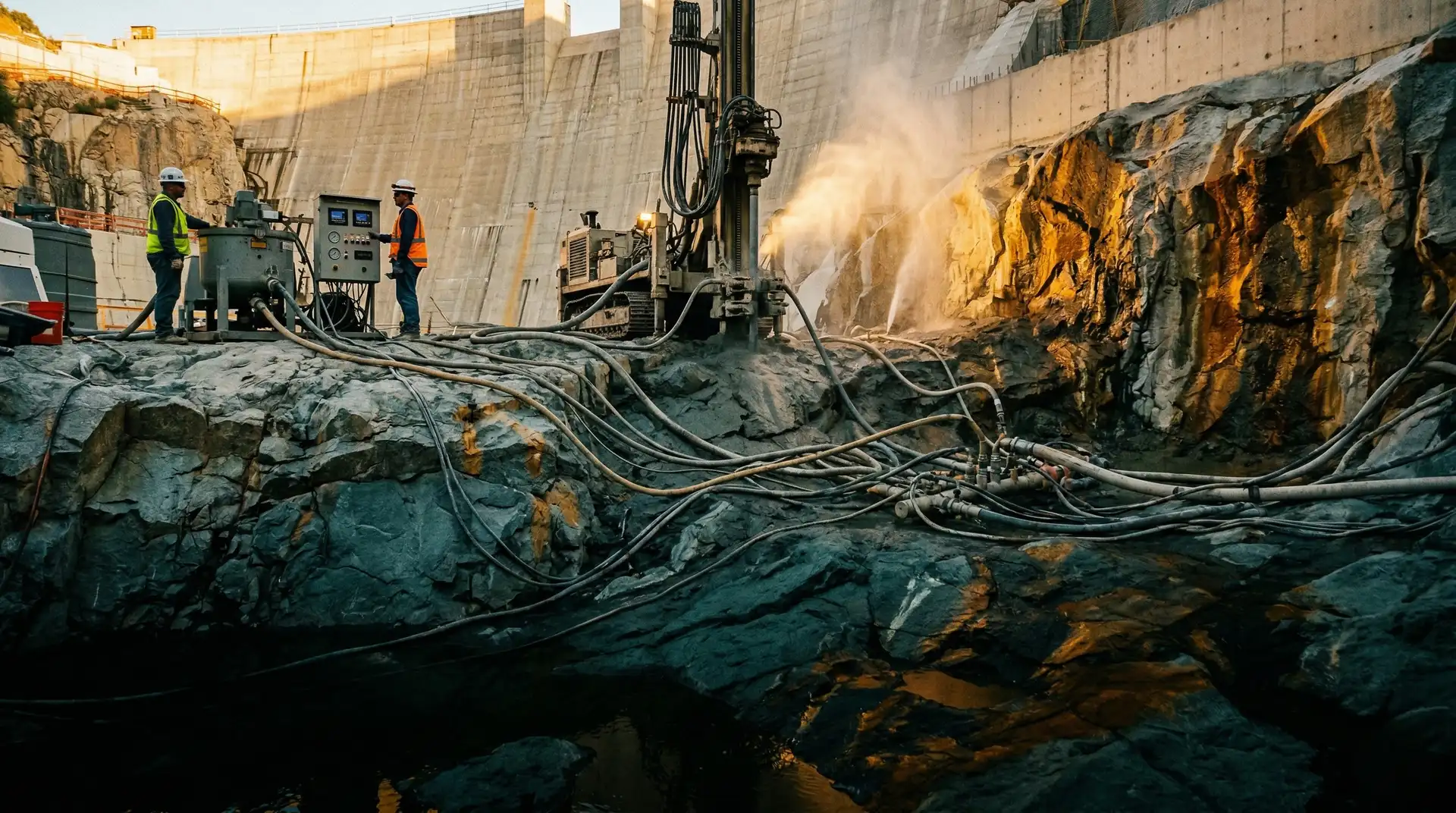
Cement Grouting for Dam Foundations: Curtain, Consolidation, and Contact Grouting Explained
A dam is only as good as its foundation. The concrete above may be perfectly designed and flawlessly placed, but if the rock beneath it is permeable, fractured, or weak, the dam will seep, settle, or fail. Foundation grouting is the engineering intervention that transforms natural rock into a competent dam foundation. Three distinct grouting programmes serve different purposes: curtain grouting creates an underground wall to block seepage, consolidation grouting strengthens the rock mass to support the dam load, and contact grouting seals the interface between the concrete and the rock. Each requires different materials, pressures, sequences, and quality control, and getting any of them wrong compromises the entire structure.
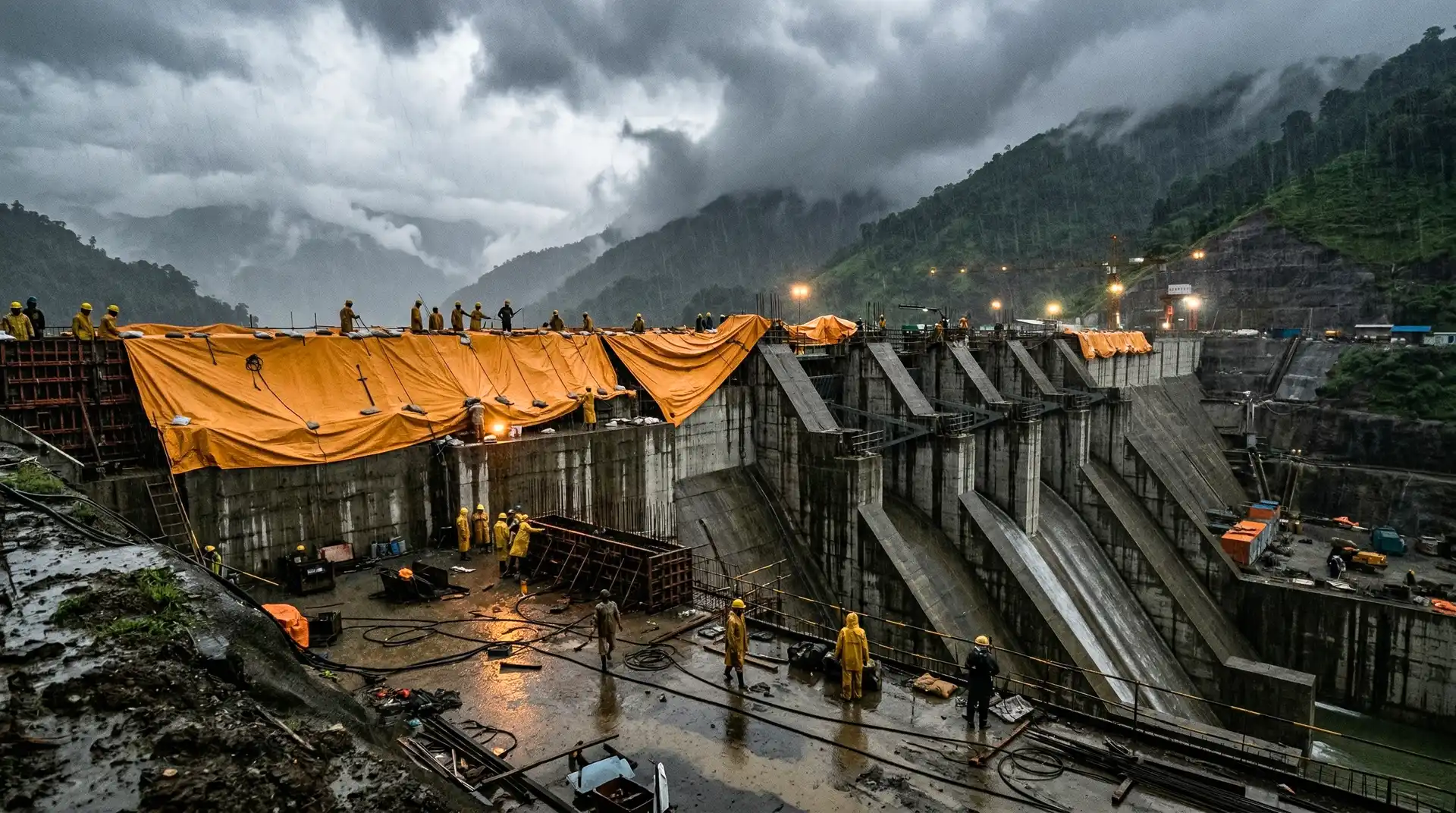
Monsoon Concreting: How to Maintain Quality During India's Wet Season
The Indian monsoon delivers 70-90% of annual rainfall in just 3-4 months. For dam construction projects across the country, this means the concrete programme effectively shuts down for a quarter of the year. But the monsoon does not start and stop cleanly. Pre-monsoon storms, post-monsoon tail rains, and intermittent dry spells within the monsoon create a complex operating environment where the decisions about when to place concrete, when to stop, and how to protect work in progress directly affect the quality and integrity of the finished structure.
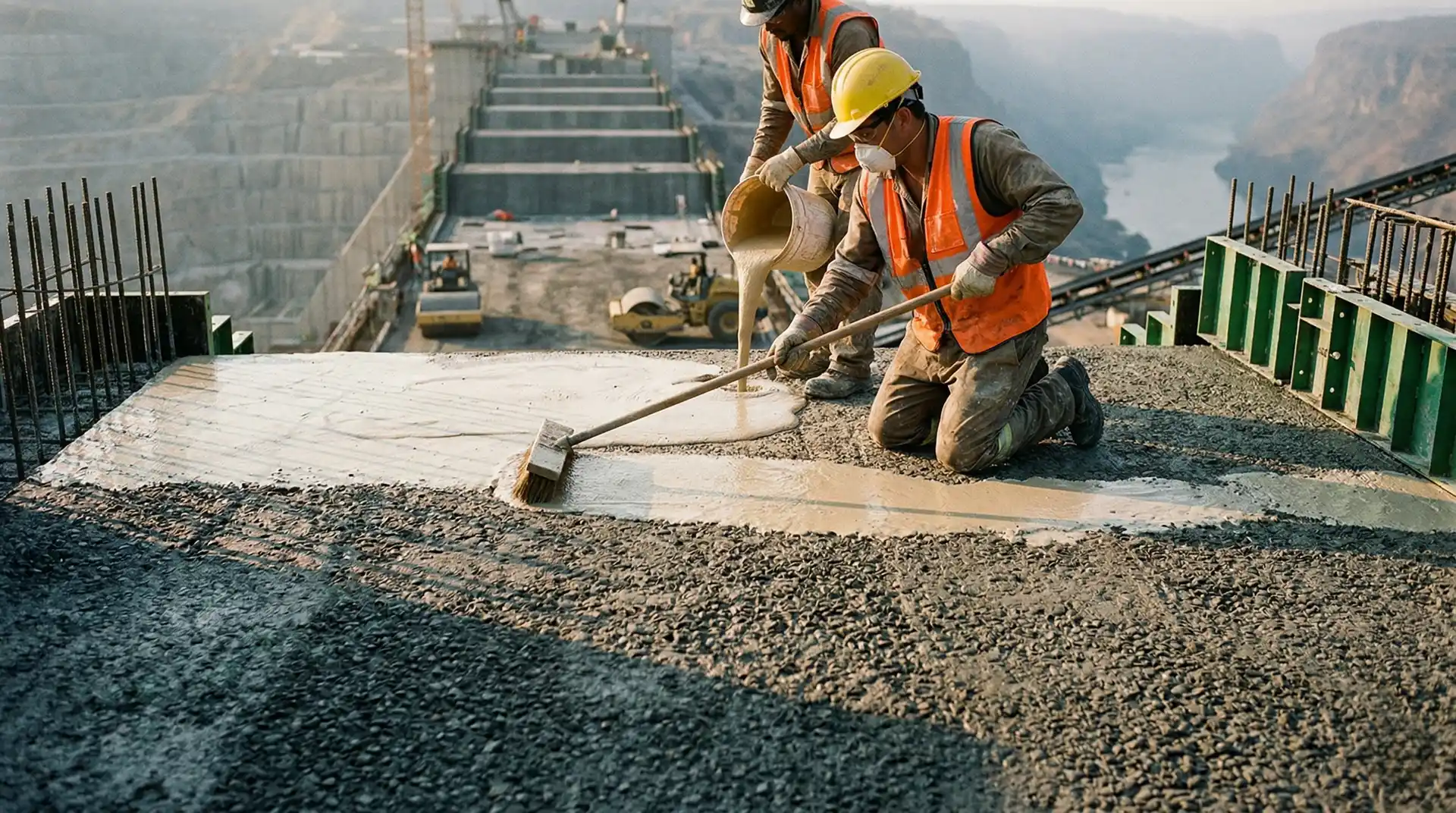
Bedding Mortar in RCC Dams: When, Why, and How to Apply It
Between every RCC lift in a dam sits a 10-20 mm layer of cement-sand mortar that determines whether the joint behaves as a bonded plane or a seepage path. Bedding mortar compensates for the inherent weakness of RCC lift joints by providing a paste-rich transition zone that enhances both bond strength and impermeability. Getting it right requires precise timing, consistent application, and a QC programme that verifies coverage on every joint. Getting it wrong leaves the dam with hundreds of unbonded planes stacked 300 mm apart.
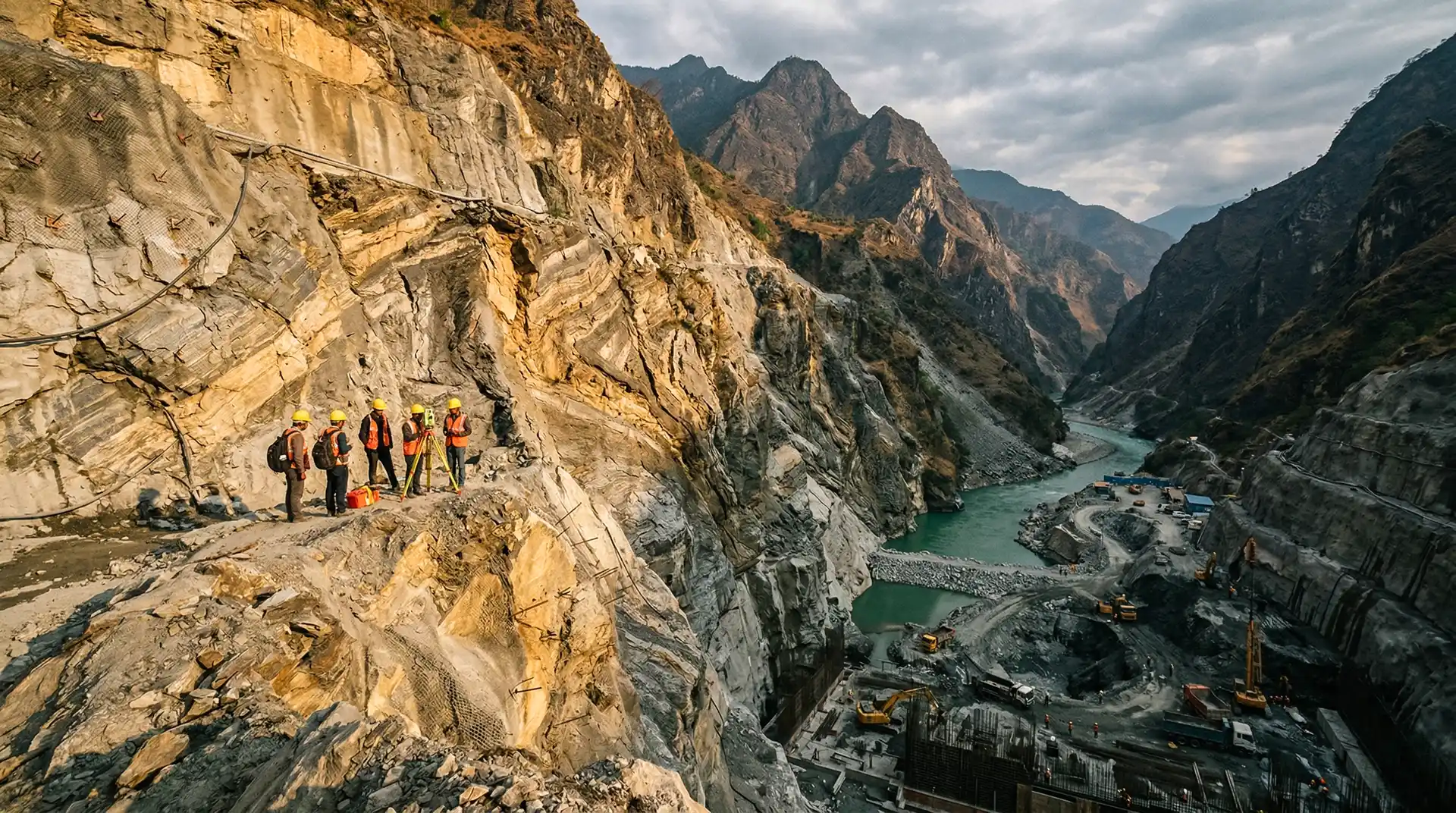
Seismic Design Considerations for Dam Concrete in the Himalayas
The Himalayas are among the most seismically active regions on earth. The Indian plate thrusts beneath the Eurasian plate at approximately 40-50 mm per year, accumulating elastic strain that is released in earthquakes ranging from frequent minor tremors to rare catastrophic events. Every dam built in this environment must resist not only the static weight of water but the dynamic forces of earthquakes that can arrive without warning at any point during the structure's 100-year design life. For concrete dam engineers, seismic design is not an add-on to the standard design process. It is a fundamental constraint that governs material selection, joint quality, foundation treatment, and structural detailing.
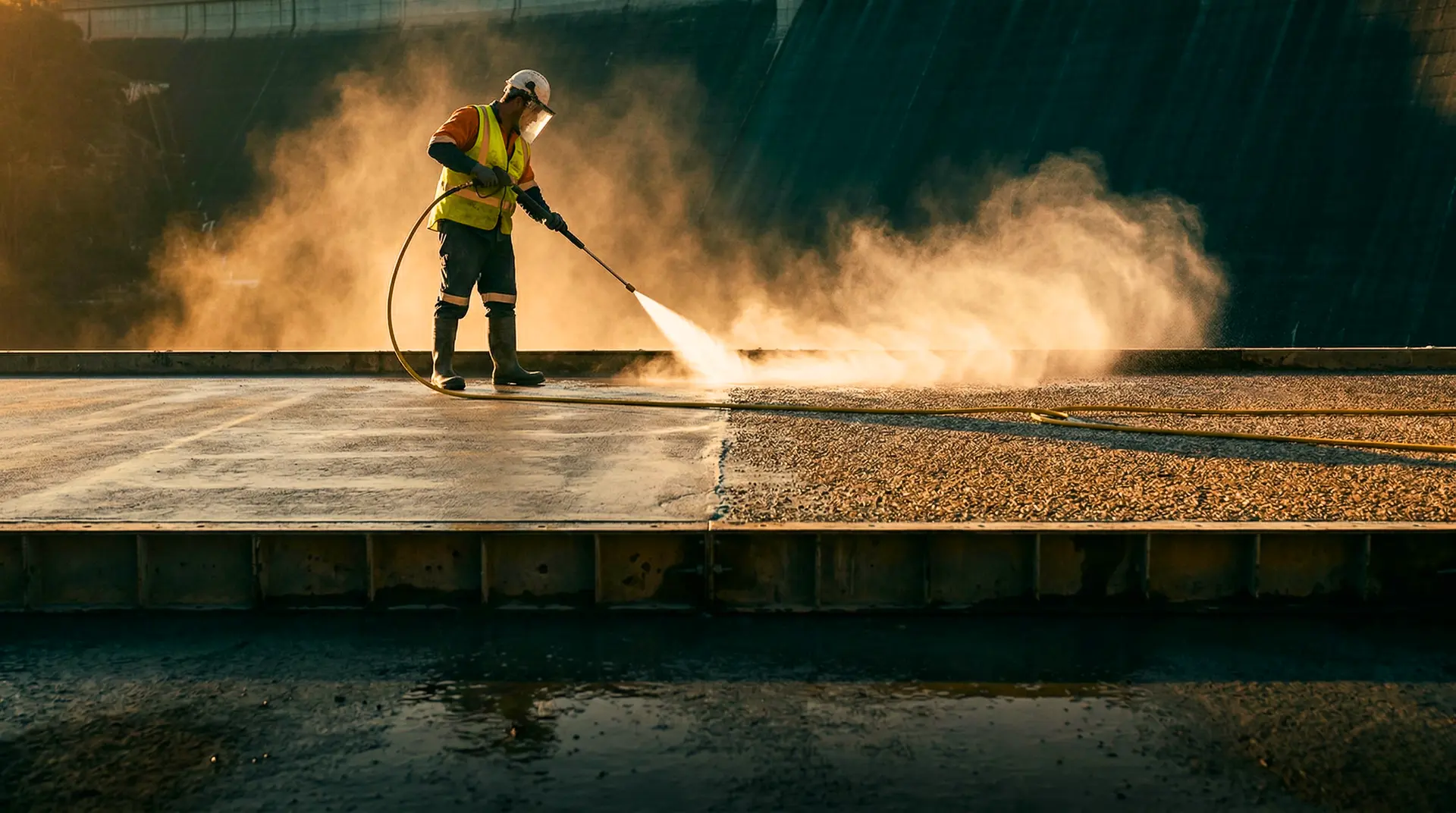
Dam Concrete Construction: The Complete QA/QC Field Guide from Day 1 to Day 1,000
Building a dam is measured in years. The concrete that forms its body must perform for a century. Between the first pour and the last core test lies a continuous chain of quality decisions, hundreds per day, thousands per month, that collectively determine whether the structure will serve its purpose or become a liability. This guide covers the entire QA/QC process for dam concrete construction: from batching plant commissioning to the 365-day strength test, from the first aggregate stockpile to the final grouting of cooling pipes.
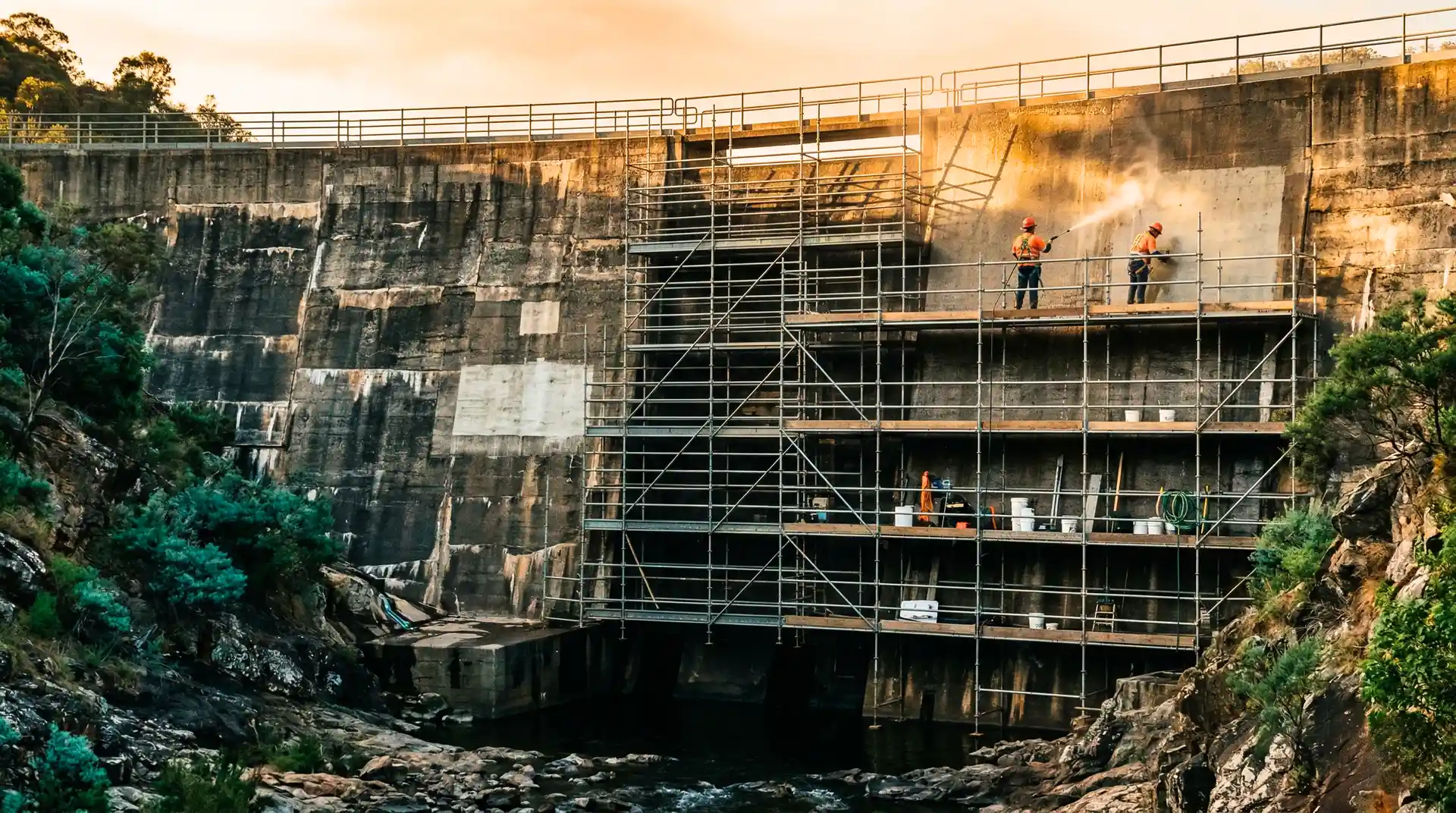
Concrete Repair Materials for Dam Rehabilitation: A Specification Guide
Selecting the right repair material for dam concrete is not a catalogue exercise. The material must bond to old concrete, match its thermal movement, resist the specific deterioration mechanism that caused the damage, and survive the hydraulic environment for decades. This guide covers the full range of repair materials used in dam rehabilitation, from epoxy injection for crack sealing to fibre-reinforced overlays for erosion protection, with specification parameters, application methods, and selection criteria for each.

AI in Concrete Quality Control: What Dam Engineers Need to Know Now
Artificial intelligence has moved beyond academic papers and into concrete production. In March 2026, Meta released BOxCrete, an open-source AI model for concrete mix optimization, trained on over 500 strength measurements. Giatec's SmartRock sensor platform, deployed on 7,500+ projects across 45 countries, now feeds millions of data points into an AI algorithm that has already reduced cement usage by an average of 10 kg per mix. For dam engineers, the question is no longer whether AI will affect concrete quality control. It is which applications are ready for deployment, which remain experimental, and what a responsible adoption path looks like for hydroelectric infrastructure where failure carries consequences measured in lives and megawatts. This perspective examines five AI application areas through the lens of mass concrete for dams: mix design optimization, compressive strength prediction, computer vision inspection, real-time placement monitoring, and digital twins. It separates the proven from the promising, and outlines what PCCI sees as the practical path forward.
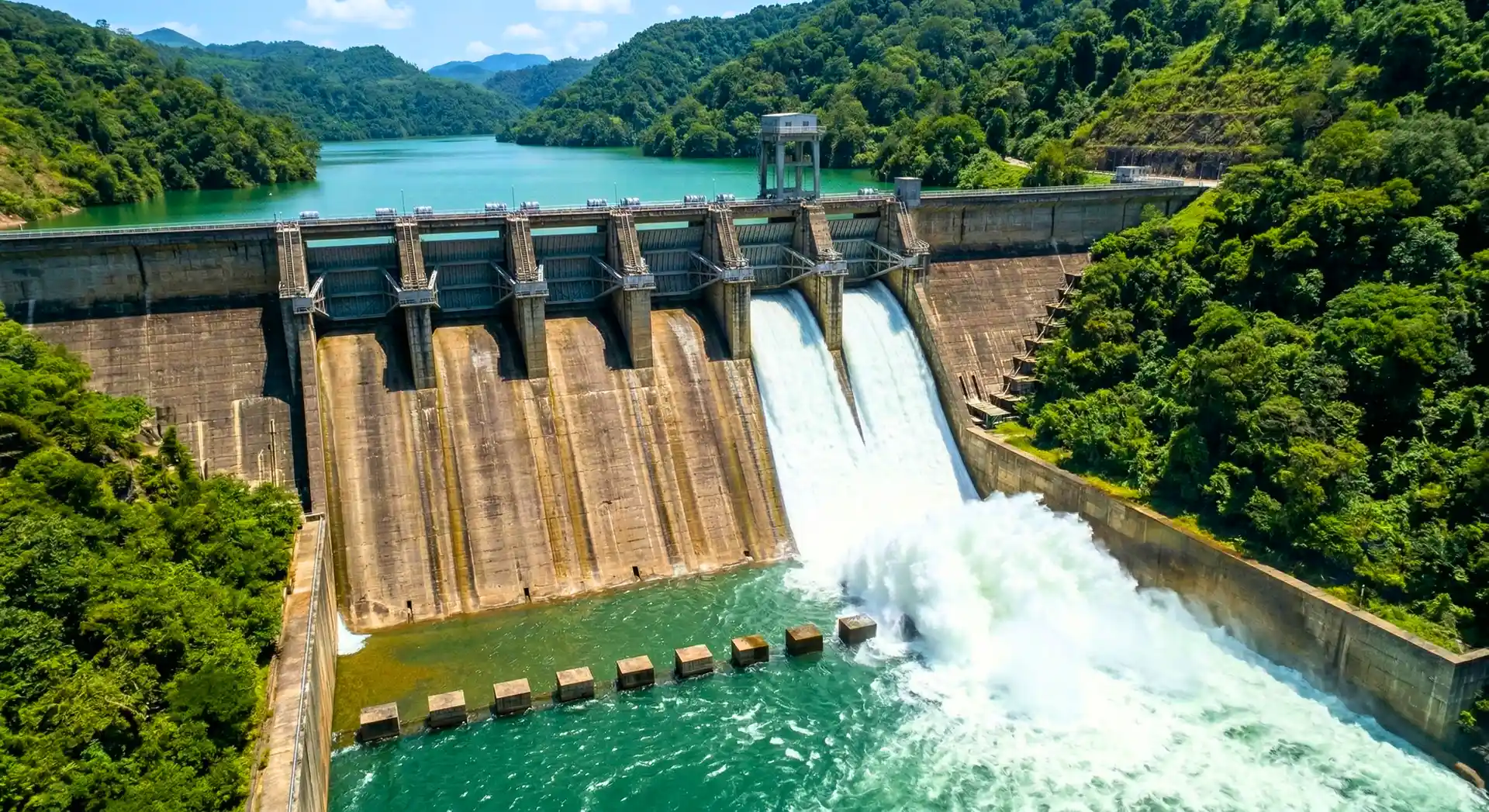
Fly Ash in Spillway Concrete: Should It Be Used in the Wearing Layer?
The spillway wearing layer endures the most punishing conditions on any dam: high-velocity flow, sediment-laden water, and decades of cyclic wetting and drying. Conventional wisdom often excludes fly ash from this layer, citing concerns about early-age strength and abrasion resistance. But is that position still supported by the evidence? Research spanning four decades paints a more nuanced picture. While binary blends with silica fume remain the gold standard for pure abrasion resistance, ternary blends incorporating modest fly ash dosages (10 to 15%) can deliver nearly equivalent wear performance while providing critical protection against alkali-aggregate reaction. For projects using Himalayan aggregates, where ASR reactivity is well documented, the case for ternary blends becomes compelling. This technical brief examines the evidence from ASTM C1138 testing, field data from Indian and international hydroelectric projects, and current ACI and USBR guidance. It concludes with a practical decision framework and recommended specifications for spillway wearing layer concrete.
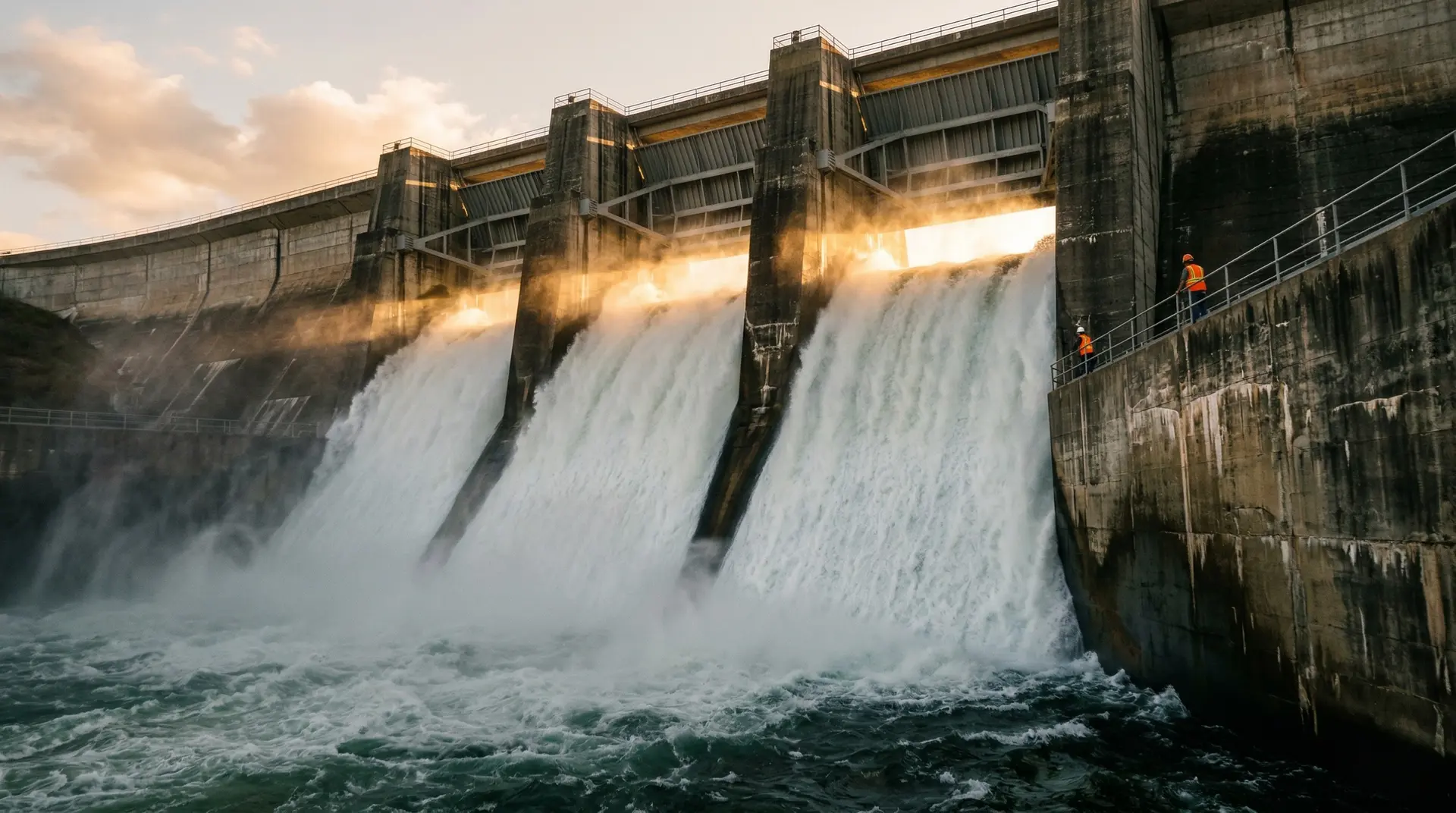
Spillway Concrete: Designing for Abrasion and Cavitation Resistance
The spillway is the hardest-working concrete in any dam. Water velocities can exceed 20 metres per second. Suspended sediment, rocks, and debris scour the surface with every flood. Cavitation forms and collapses vapour bubbles that pit the concrete at locations where the flow profile changes. Over a service life of 50-100 years, these forces can erode through metres of concrete if the material and design are not engineered for the conditions. The Tungabhadra Dam gate failure in 2024, after 70 years of service, is a reminder that spillway concrete deterioration is not academic. It is operational, visible, and consequential.

Calcined Clay Cement (LC3): The Next Frontier for Dam Concrete
The concrete industry's most promising low-carbon innovation is not a high-tech composite or a nanotechnology breakthrough. It is clay, heated to 800 degrees C. Limestone Calcined Clay Cement (LC3) replaces up to 50% of clinker with a combination of calcined kaolinite and limestone, reducing CO2 emissions by 30-40% while maintaining comparable strength and durability. For dam construction, where concrete volumes can exceed 500,000 cubic metres and carbon footprints are measured in tens of thousands of tonnes, LC3 offers a path to significantly lower-carbon infrastructure without compromising the performance that 100-year service life demands.
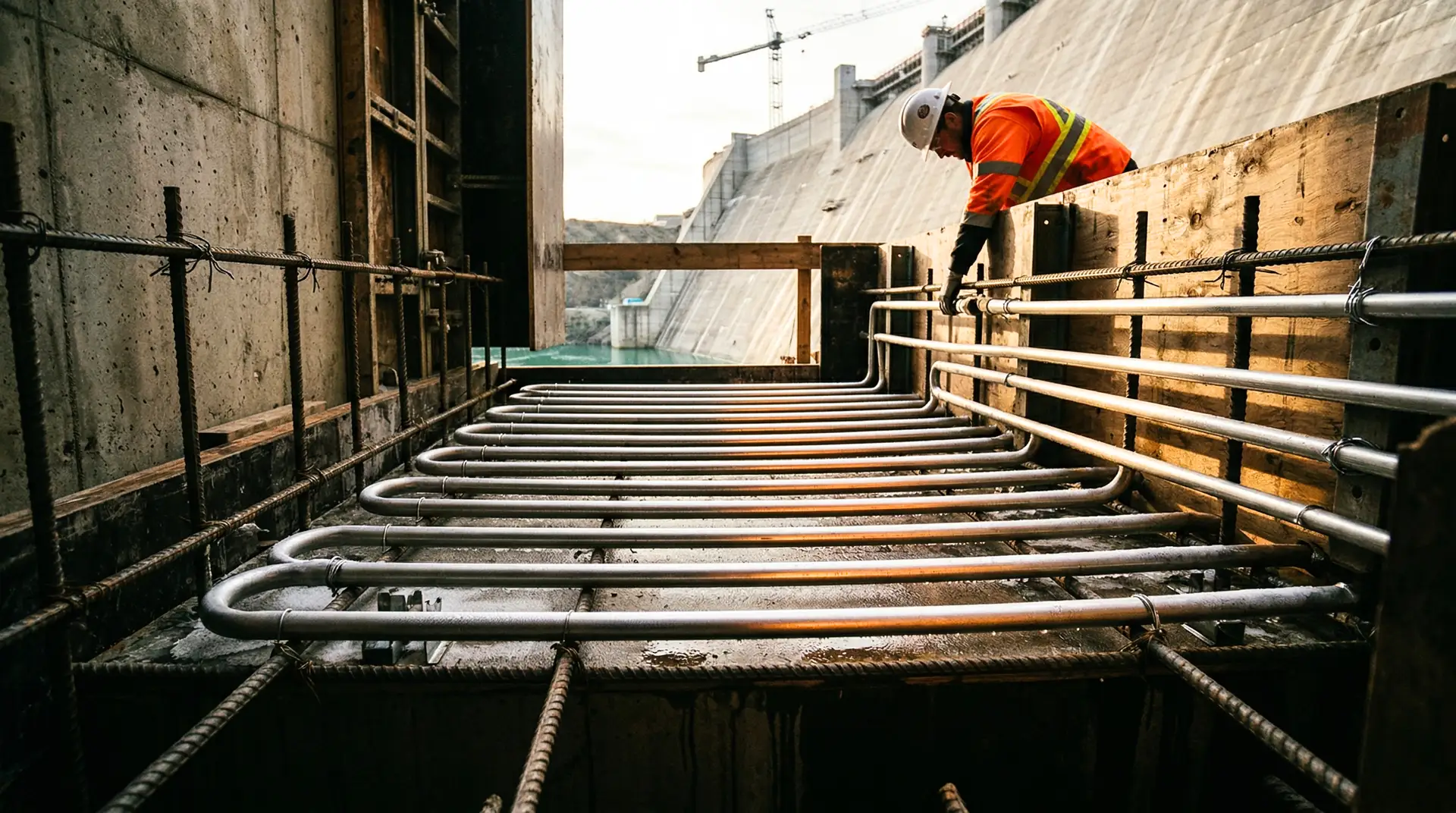
Post-Cooling Systems in Dams: Embedded Pipe Design, Operation, and Monitoring
Pre-cooling reduces the starting temperature. Post-cooling removes the heat that pre-cooling could not prevent. In thick mass concrete sections where the heat of hydration cannot dissipate naturally through the surfaces, embedded pipe cooling systems circulate chilled water through the concrete to extract heat from within. The pipe layout, flow rate, water temperature, and cooling duration are engineered variables that must be designed to match the thermal profile of the specific section. Over-cooling cracks the concrete. Under-cooling allows the peak temperature to exceed safe limits. The balance between these two extremes is the art and science of post-cooling design.
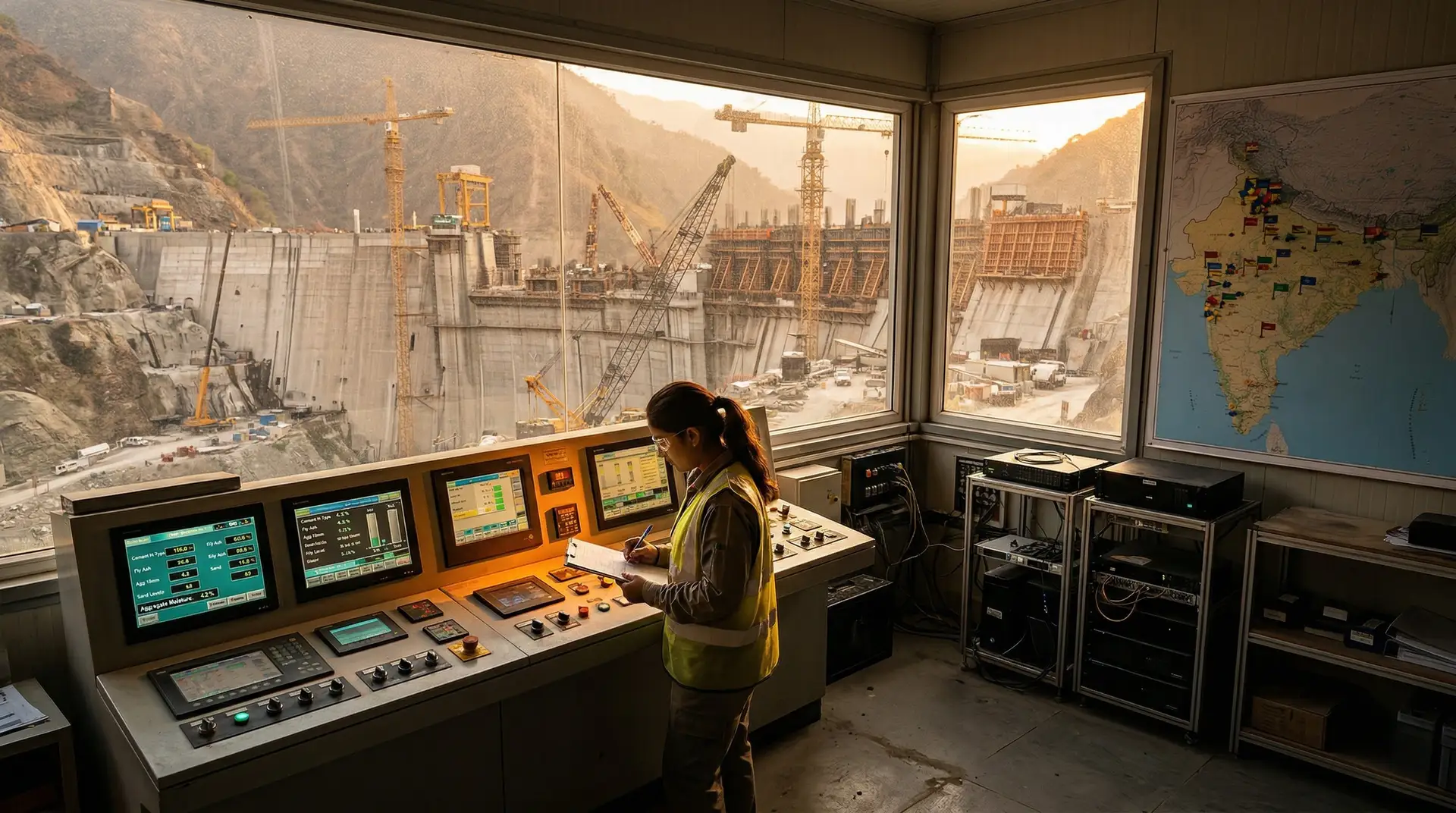
How India's Hydropower Expansion Creates Demand for Concrete Specialists
India's hydropower sector is entering its largest construction cycle in decades. With 8,514 MW under active construction, a 51 GW pumped storage pipeline approved in principle, and the Dam Rehabilitation and Improvement Programme covering 736 dams, the country needs concrete technology specialists at a scale the industry has never seen. This article examines the numbers, the workforce gap, and the opportunity for engineers and firms positioned to fill it.
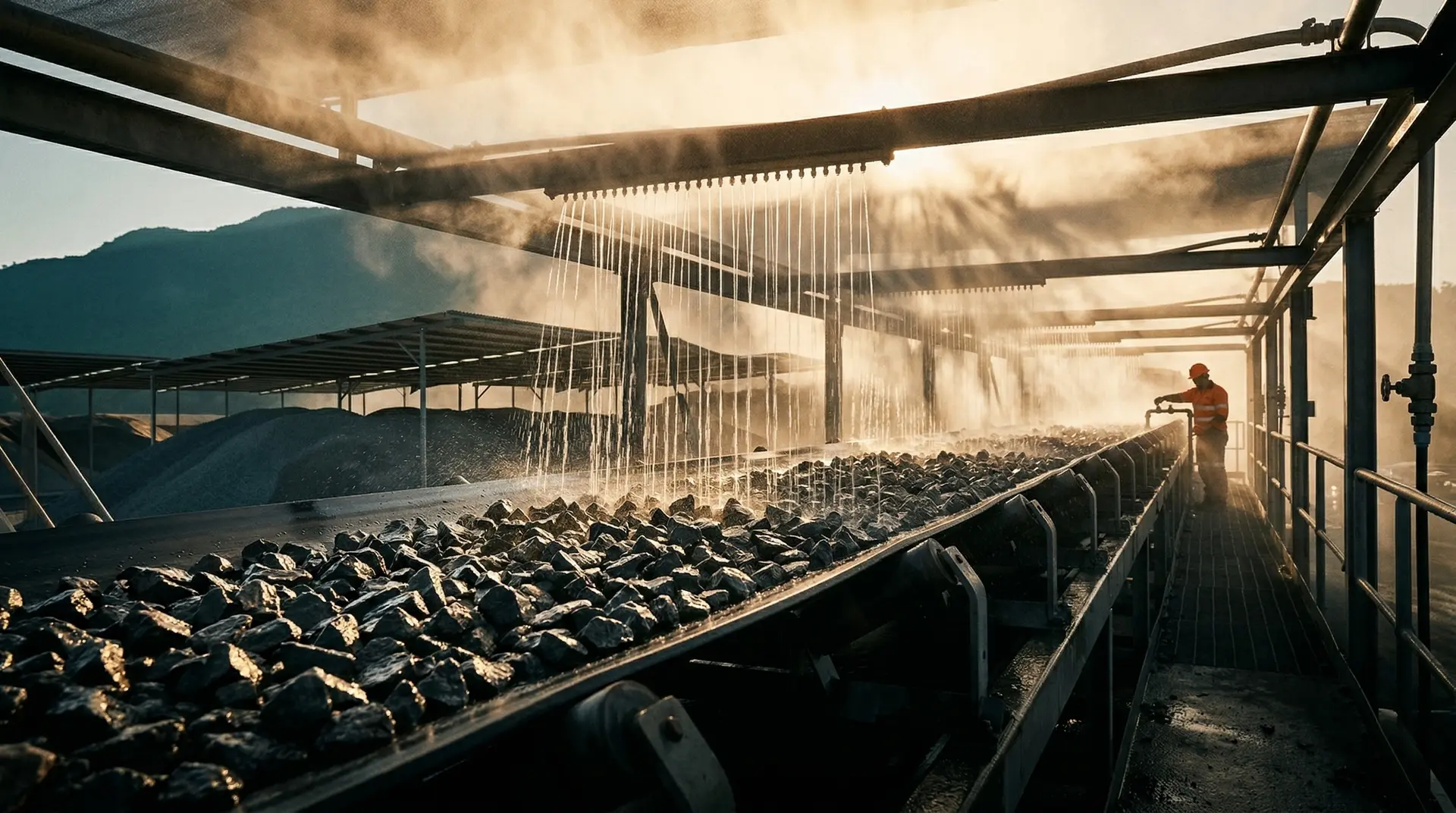
Pre-Cooling Concrete for Dams: Methods, Equipment, and Design Considerations
Pre-cooling is the most effective method for controlling the placing temperature of mass concrete in dams. By reducing the temperature of concrete ingredients before mixing, pre-cooling lowers the peak temperature within the dam body, reduces thermal gradients, and decreases the risk of thermal cracking. For Indian dam projects where ambient temperatures regularly exceed 35 degrees C for months at a time, pre-cooling is not optional. It is a structural requirement embedded in the thermal control plan. This guide covers the four primary pre-cooling methods, their thermodynamic principles, equipment requirements, and practical design considerations.
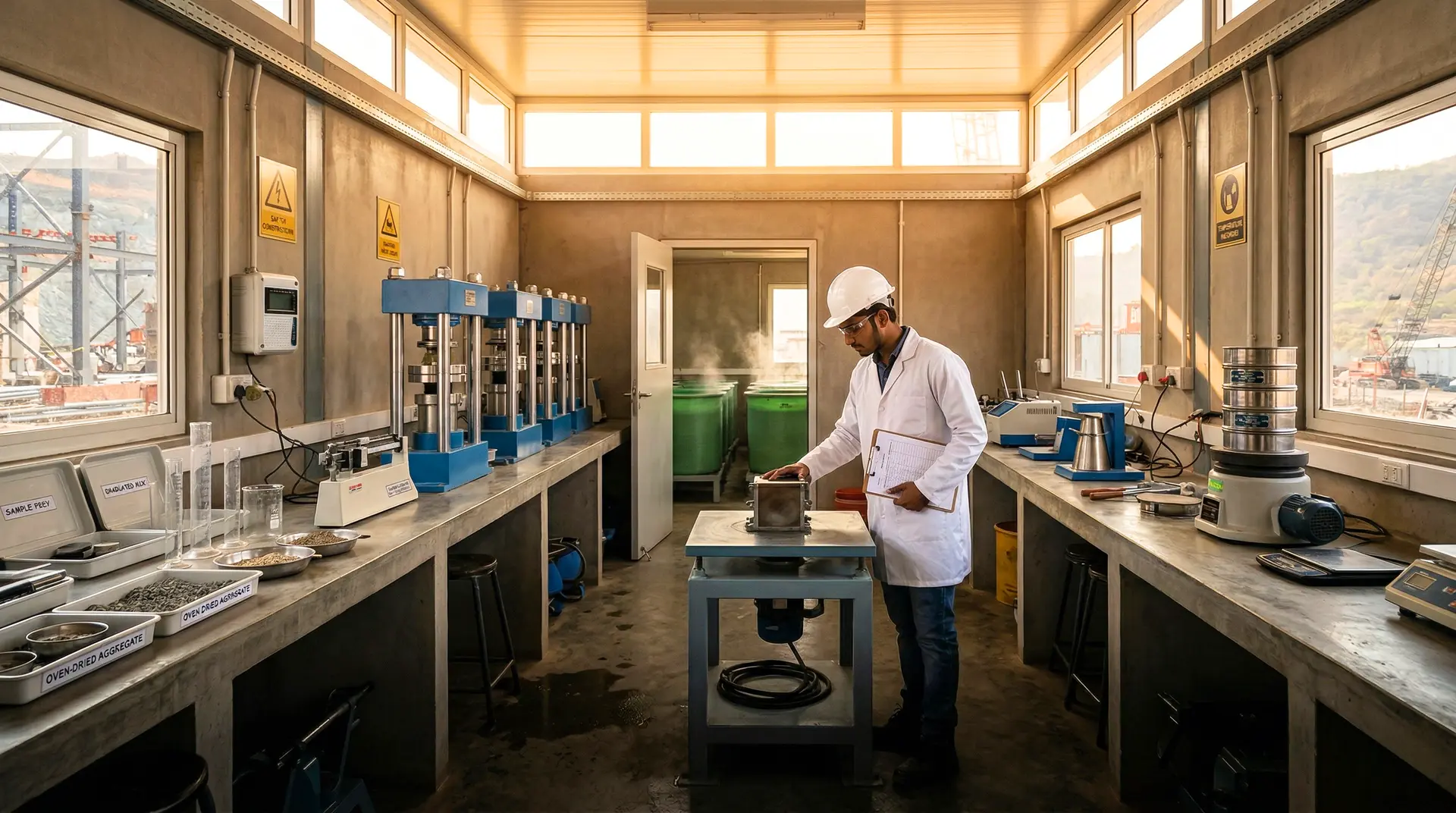
Concrete Laboratory Setup for Dam Construction Sites: Equipment, Protocols, and Staffing
A dam project without a properly equipped site laboratory is a project flying blind. Every placement decision, from mix approval to formwork stripping, depends on timely and accurate test results. This guide covers the equipment, layout, staffing, testing protocols, and calibration systems needed to establish a concrete laboratory that meets IS, ACI, and ASTM requirements on a hydroelectric dam construction site.
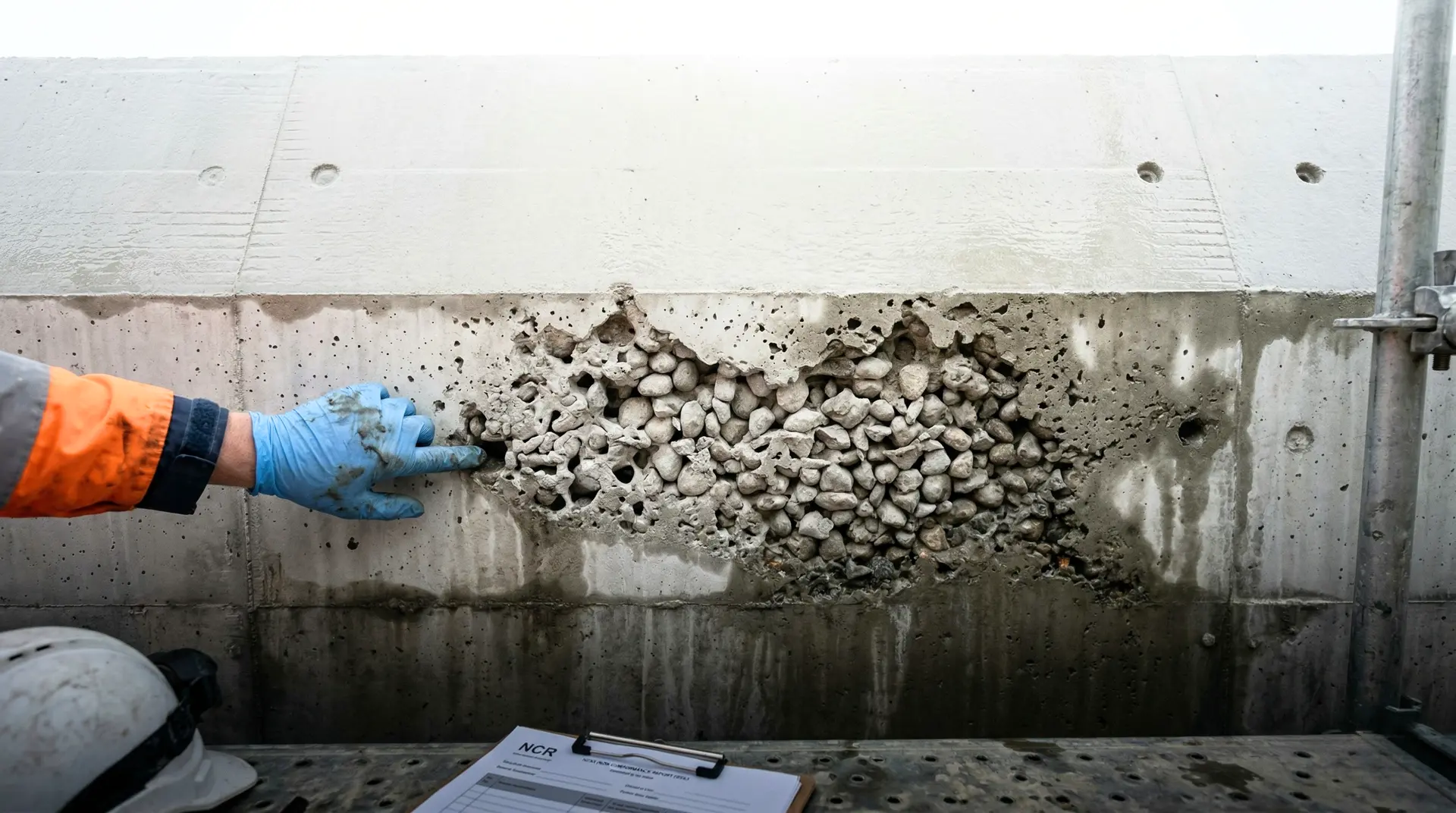
Concrete Honeycombing in Dam Construction: Causes, Detection, and Repair
Honeycombing occurs when concrete voids remain unfilled by cement paste, leaving exposed coarse aggregate with air pockets between particles. In dam construction, honeycombing is more than cosmetic: it creates zones of zero tensile strength, high permeability, and accelerated deterioration. Every honeycomb on a dam face raises the same question: is this a surface defect or does it extend into the structural section? The answer determines whether the repair is a simple surface patch or a major structural intervention.
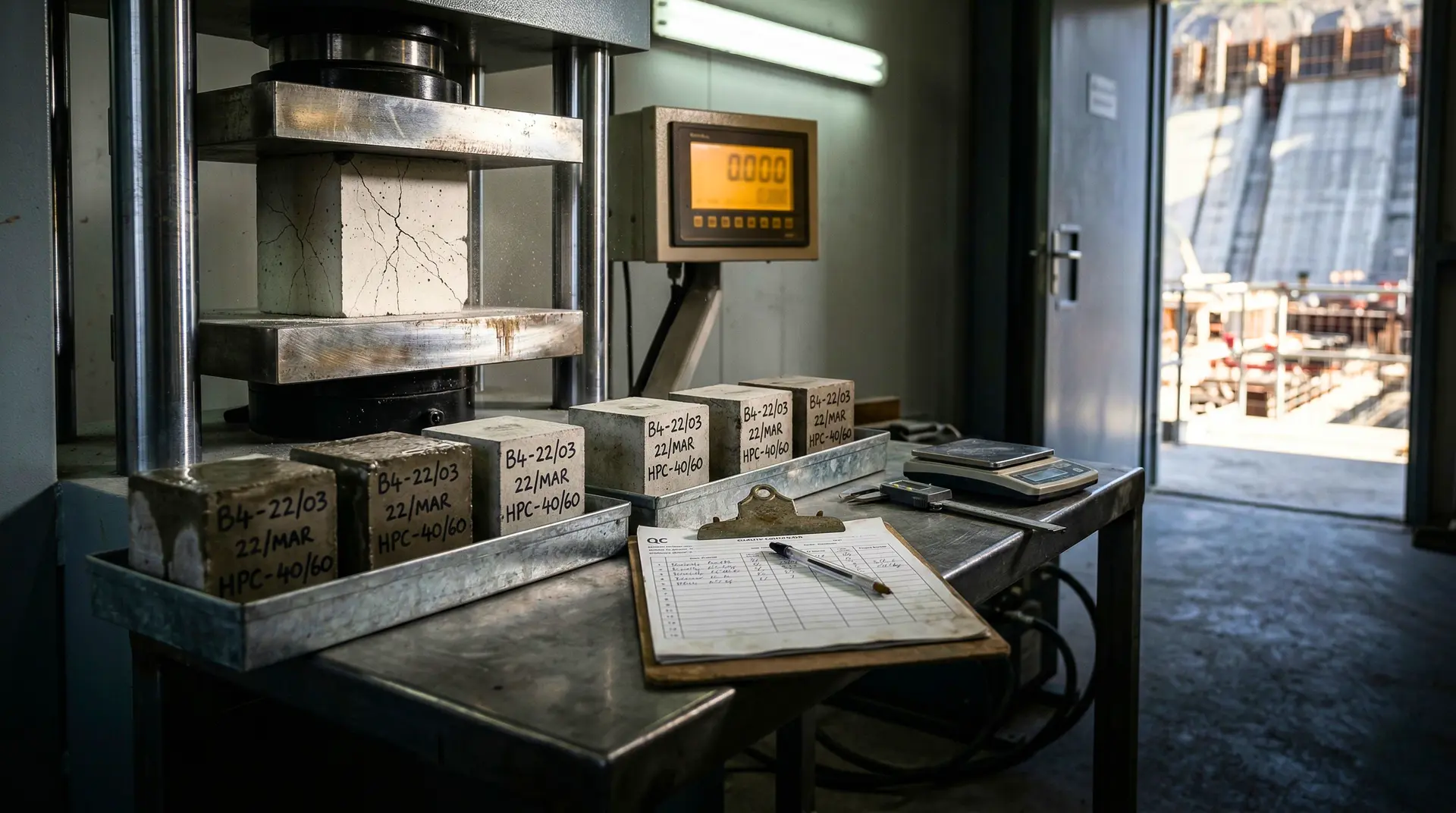
Concrete Acceptance Criteria for Dam Construction: A QA/QC Decision Guide
Every batch of concrete placed in a dam faces a binary question: does it meet the specification or does it not? In practice, the answer is rarely binary. A compressive strength result at 95% of the target value. A density test 1% below the specification minimum. A lift joint that was treated 30 minutes late. A placing temperature 1 degree above the limit. Site engineers face these borderline results daily, and the decisions they make, accept, repair, or reject, accumulate over thousands of batches to determine whether the finished dam meets its design intent.

India's Pumped Storage Pipeline: A Concrete Technology Readiness Assessment
India has allocated 39 pumped storage projects totalling 50.67 GW for commissioning by 2032. Another 131 projects with 154.9 GW capacity are in the environmental clearance pipeline. The investment required: Rs 5-6 lakh crore. But the conversation about India's pumped storage ambition focuses almost entirely on policy, financing, and equipment. The question nobody is asking is whether the concrete technology infrastructure, from mix design capability to thermal control expertise to QC systems, exists at the scale required to build hundreds of new dams, reservoirs, and underground structures simultaneously.
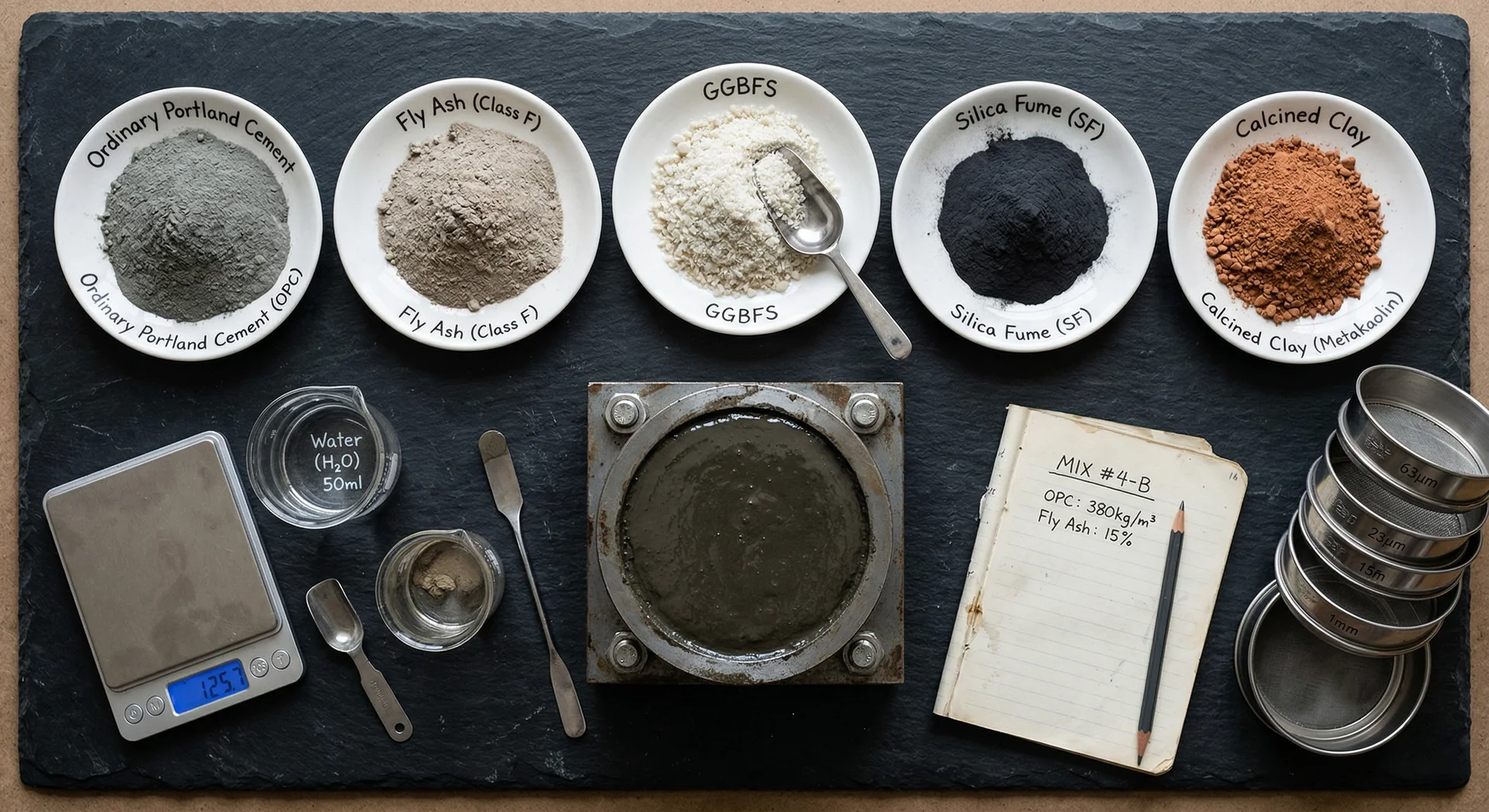
SCM Strategies for Dam Concrete: Fly Ash, GGBS, Silica Fume, and Calcined Clay
Supplementary cementitious materials are not optional in modern dam concrete. They reduce heat of hydration, improve long-term durability, lower permeability, mitigate alkali-aggregate reaction, and reduce the carbon footprint of every cubic metre placed. But selecting the right SCM, at the right replacement rate, for the right application within a dam is not as simple as substituting fly ash for cement. Each SCM has distinct performance characteristics, availability constraints, and interaction effects that must be understood and designed around.
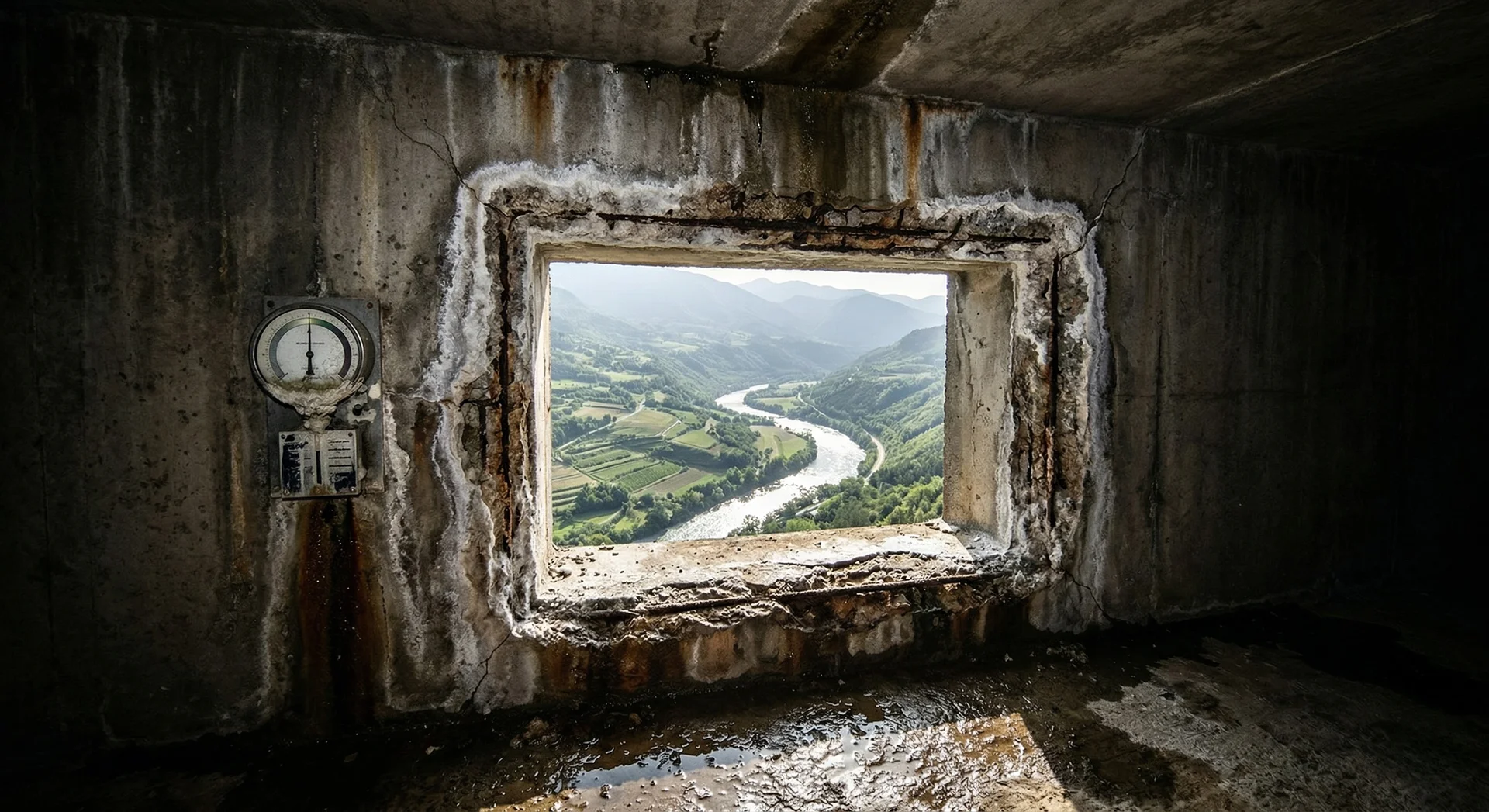
Concrete Deterioration in Indian Dams: Warning Signs Every Dam Owner Should Recognise
India has 1,681 dams over 50 years old. Many are showing their age. Alkali-aggregate reaction has crippled the powerhouse at Rihand Dam. Spillway cracks at Hirakud Dam run 25 mm wide. The Tungabhadra Dam lost a crest gate after 70 years of service. Mullaperiyar Dam, over 100 years old, remains the subject of ongoing safety disputes with 3.5 million people living downstream. These are not isolated incidents. They are symptoms of a nationwide infrastructure aging problem. Recognising the early warning signs of concrete deterioration is the first step toward preventing catastrophic failure.

How to Select a Concrete Technology Consultant for Your Hydropower Project
The concrete technology consultant is the most specialised role on a dam project, and the most frequently misunderstood. They are not the structural designer (who sizes the dam). They are not the geotechnical engineer (who characterises the foundation). They are not the contractor's QC manager (who runs the testing). They are the specialist who engineers the concrete itself: selecting the cementitious system, designing the thermal control plan, specifying the QC programme, and solving the problems that arise when 500,000 cubic metres of concrete must perform for 100 years. Selecting the right consultant, and defining their scope correctly, is one of the most consequential decisions a project owner makes.
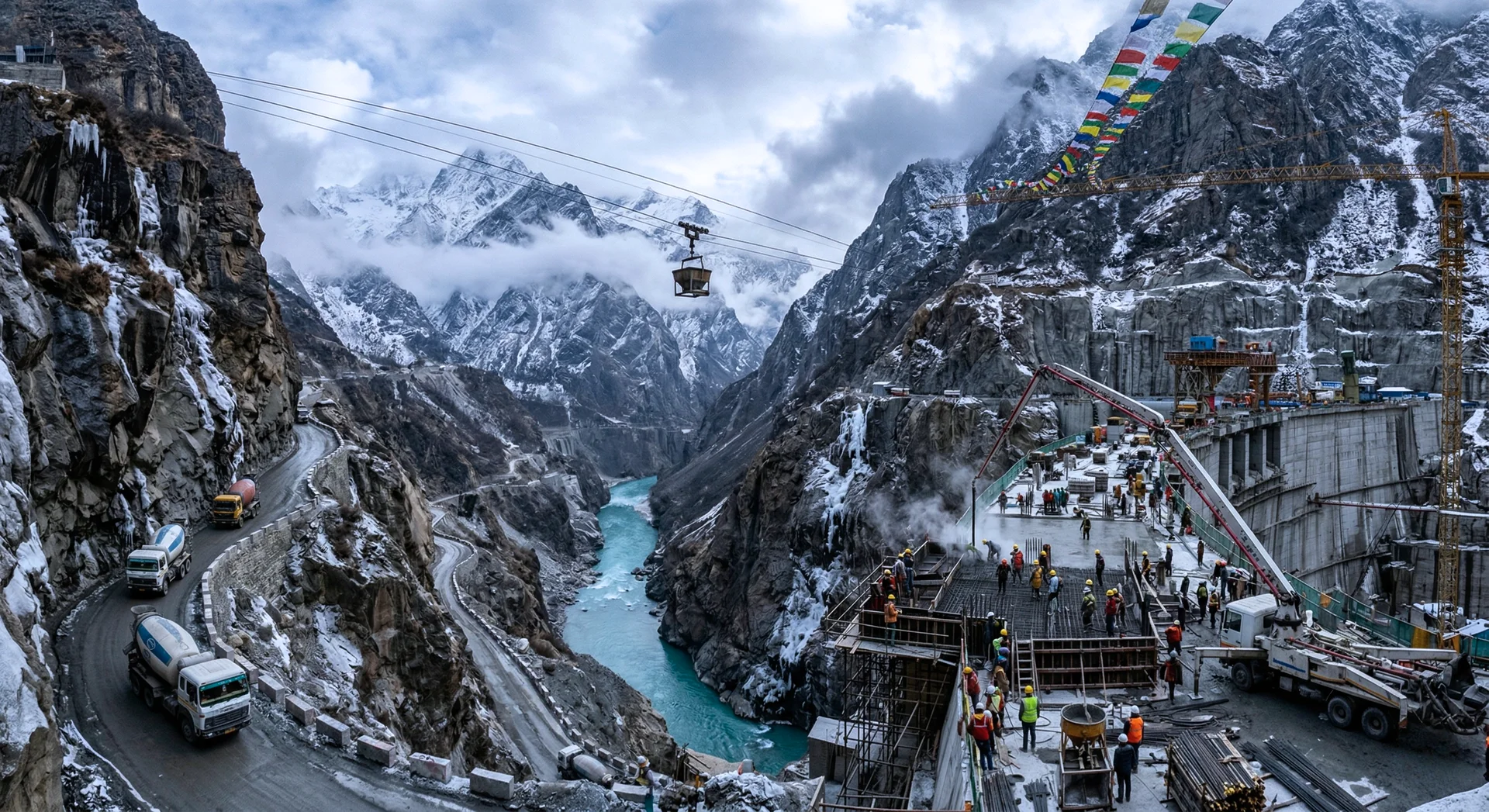
Concrete Challenges Unique to Himalayan Hydropower Projects
Building a dam in the Himalayas is not the same as building one anywhere else. The combination of seismic activity (Zones IV and V), freeze-thaw cycles at 1,500-4,000 metres elevation, monsoon rainfall that halts placement for weeks, extreme temperature swings from minus 10 to plus 40 degrees C across seasons, and remote logistics that make material supply uncertain creates a set of concrete engineering challenges that standard guidelines from temperate climates do not address. India's hydropower pipeline includes dozens of projects in this environment, and the concrete technology for each one must be designed for Himalayan conditions, not adapted from plains practice.
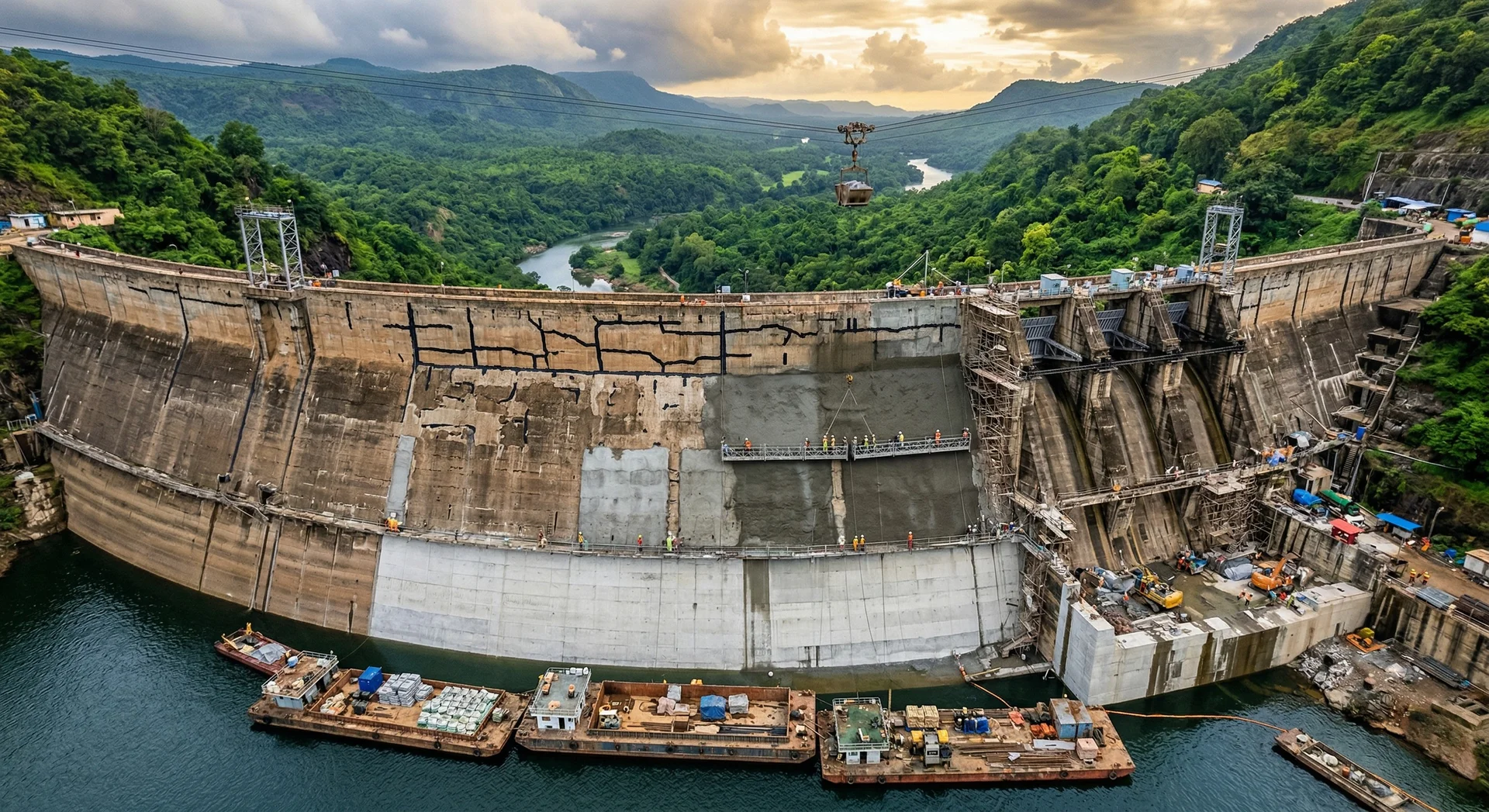
DRIP Phase II: What Rs 10,211 Crore in Dam Rehabilitation Means for Concrete Engineers
The Dam Rehabilitation and Improvement Project is the world's largest dam rehabilitation programme. Phase II and III, funded by the World Bank and AIIB at Rs 10,211 crore, will assess and rehabilitate 736 dams across 19 Indian states by 2031. For concrete engineers, DRIP represents a decade-long pipeline of assessment, diagnostic, and rehabilitation work on aging dam infrastructure. Understanding the programme's structure, funding, and technical scope is essential for any firm or professional seeking to participate.
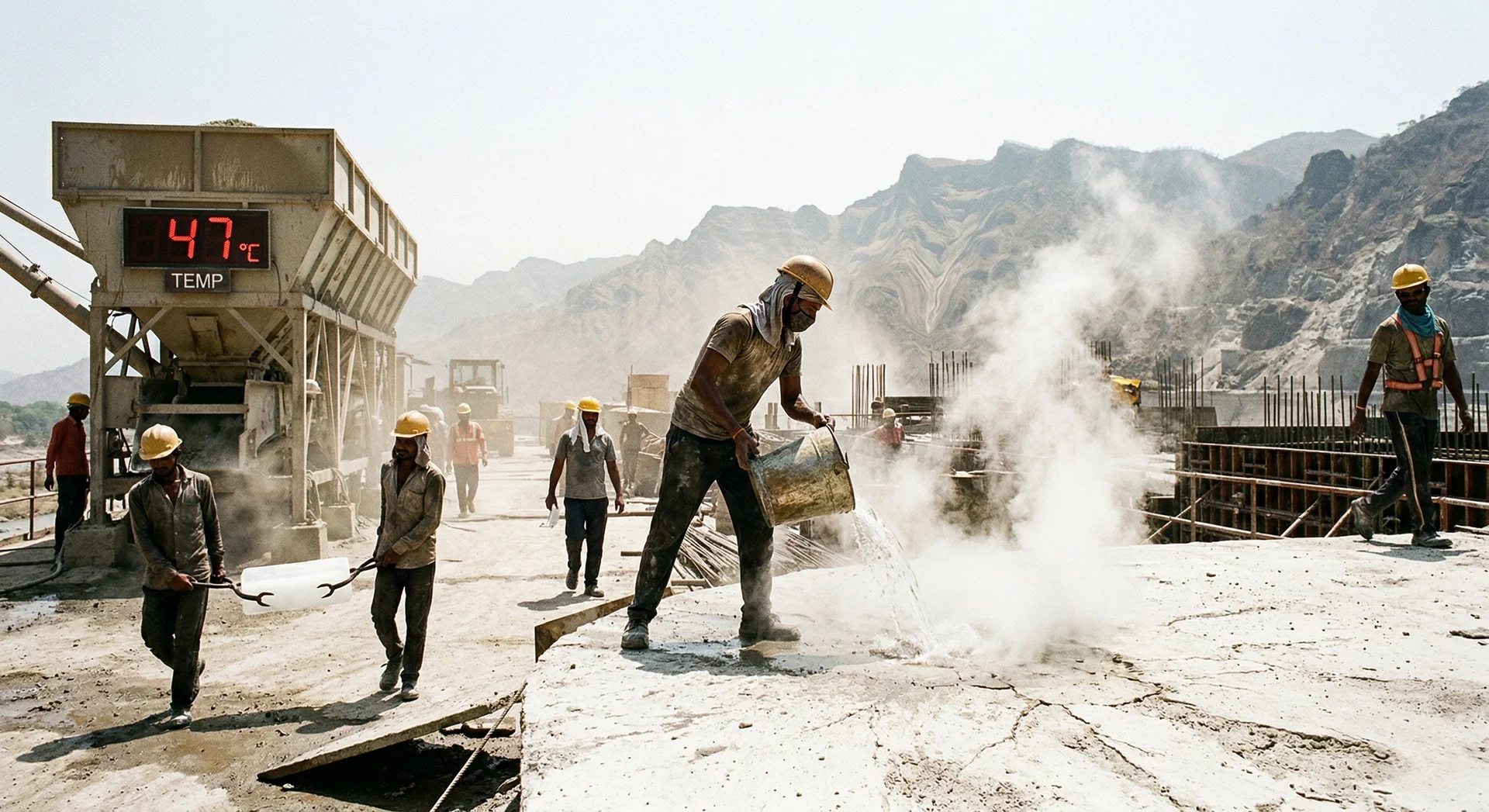
Hot Weather Concreting for Dams: Placement Strategies When Temperatures Exceed 40 Degrees C
International mass concrete guidelines were not written for Indian summers. When ambient temperatures exceed 40 degrees C, concrete placing temperatures can reach 35-38 degrees C even with pre-cooling, initial set accelerates to under 4 hours, and the window for avoiding cold joints shrinks to almost nothing. For dam projects across central and peninsular India, hot weather concreting is not an occasional challenge. It is the default condition for 4-6 months every year, and the thermal control plan must be designed around it.
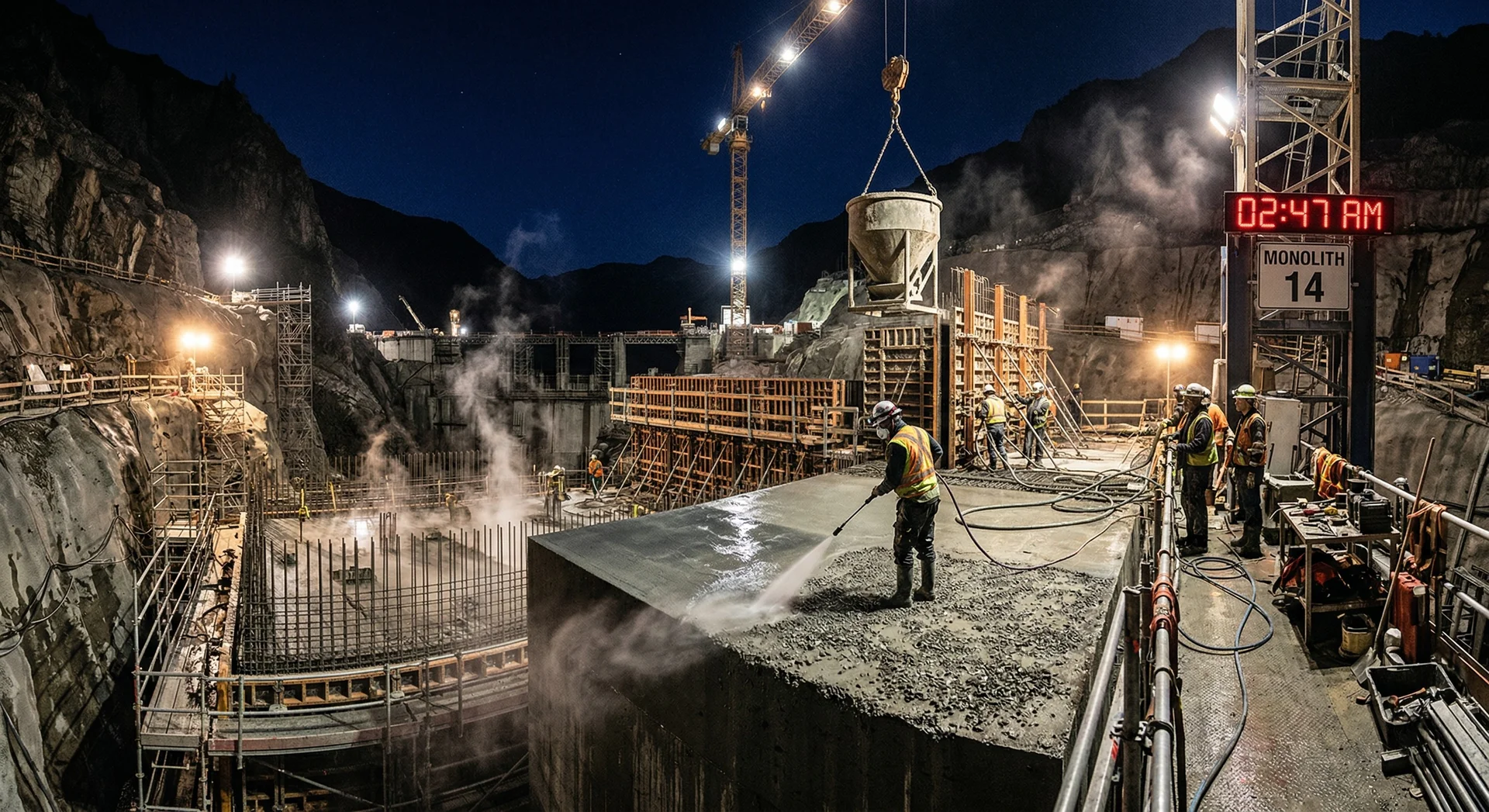
Cold Joint Prevention in Mass Concrete Dam Construction
A cold joint forms when fresh concrete is placed on a surface that has already set. In mass concrete dam construction, where placement intervals are dictated by thermal control requirements and logistics, cold joints are the single most common preventable quality defect. They reduce structural integrity, create seepage paths, and compromise the monolithic behaviour that gravity dams depend on. Prevention requires coordinating thermal control, placement scheduling, surface preparation, and real-time monitoring into a single integrated system.
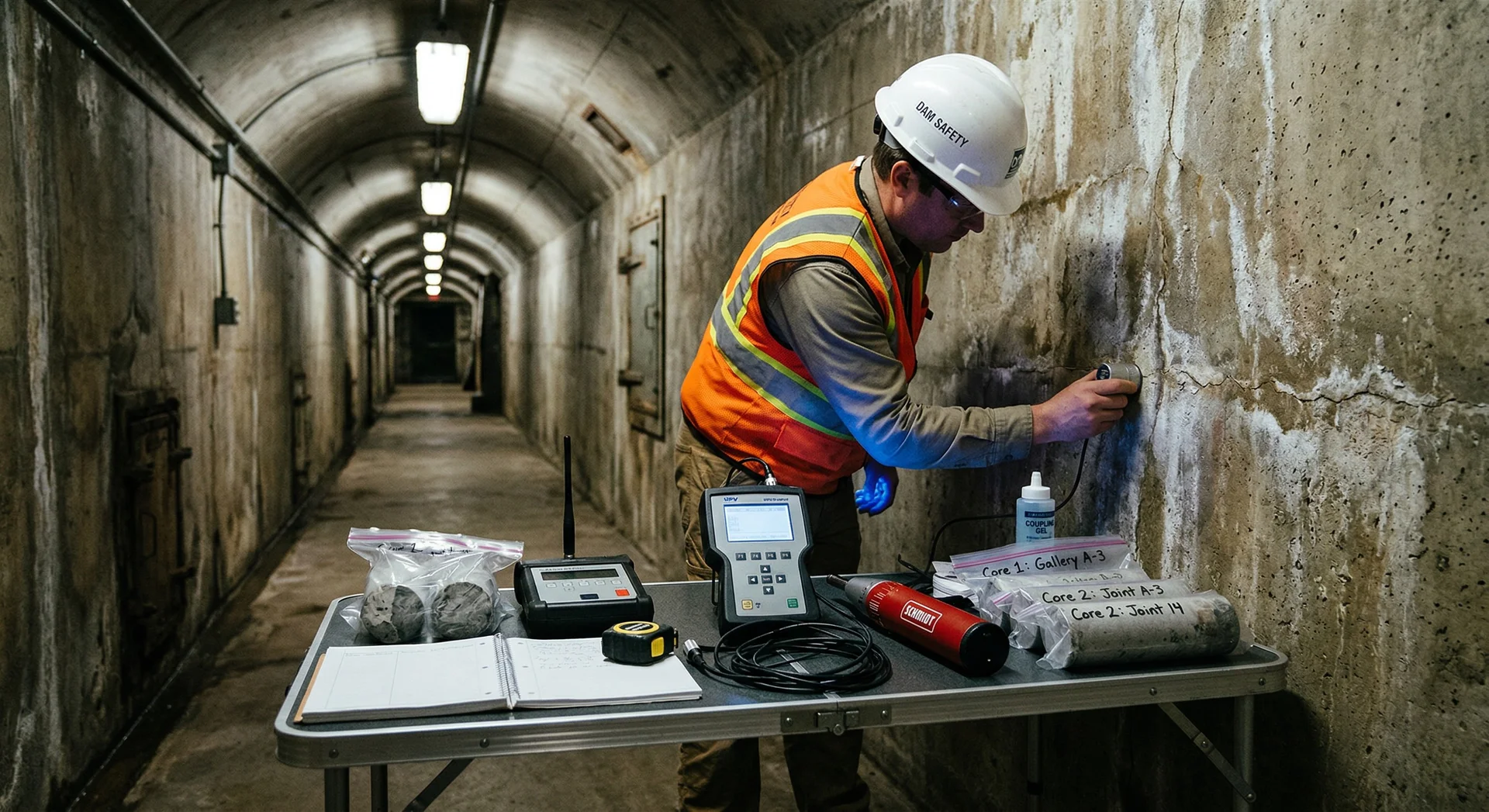
The 5 Non-Destructive Tests Every Dam Owner Should Know
With 1,681 Indian dams over 50 years old and a December 2026 deadline for comprehensive safety evaluation under the Dam Safety Act, dam owners need to understand the concrete assessment tools available to them. Non-destructive testing (NDT) provides the first line of investigation: evaluating concrete strength, detecting internal defects, and identifying deterioration before it becomes visible. These five methods form the core of every concrete integrity assessment programme for dams.

IS 457 vs ACI 207: A Practical Comparison of Mass Concrete Standards for Dam Engineers
India's primary mass concrete standard, IS 457, was published in 1957 and has not been revised since. Meanwhile, ACI 207 has been updated multiple times, most recently in 2021. For dam engineers working under Indian standards but referencing international practice, the gap between these two documents creates real project-level confusion about temperature limits, cooling requirements, and placement specifications. This comparison maps the key provisions of both standards and identifies where IS 457 falls short of modern practice.
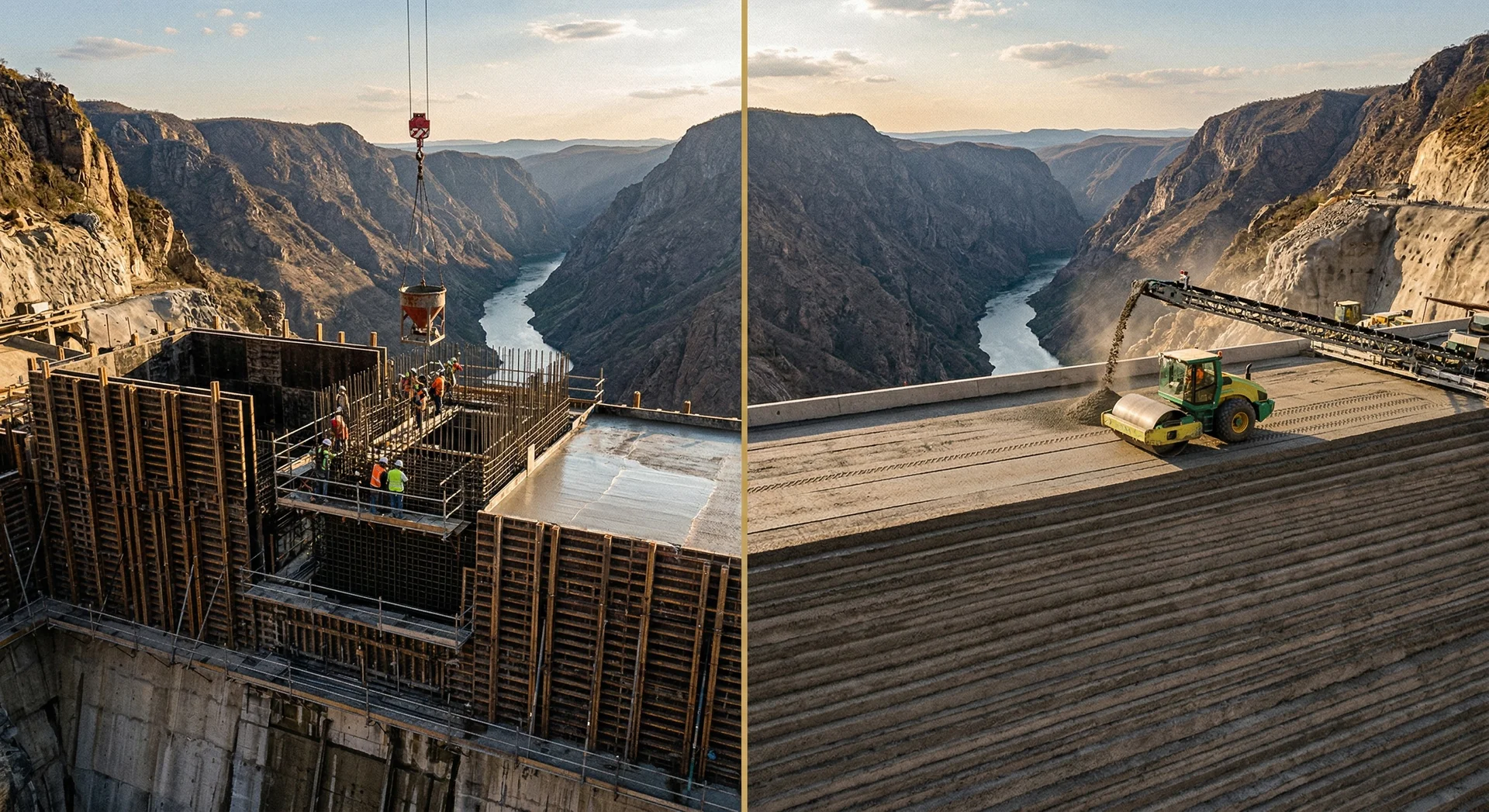
RCC vs Conventional Concrete for Dams: A Cost-Benefit Analysis
Roller compacted concrete has transformed dam construction economics since the 1980s. With placement rates 5-10 times faster than conventional concrete and costs 25-40% lower, RCC is now used in over 55% of new dams globally. But RCC is not simply cheap conventional concrete placed differently. The trade-offs in joint quality, impermeability, surface finish, and design flexibility are real, and the choice between RCC and conventional concrete (CVC) depends on project-specific factors that generic cost comparisons cannot capture.

What India's Dam Safety Act 2021 Means for Concrete Assessment and Rehabilitation
The Dam Safety Act 2021 requires every specified dam in India to undergo a comprehensive safety evaluation by 30 December 2026. With 1,681 dams over 50 years old and only 28% audited so far, the compliance gap is enormous. For concrete engineers, this creates both a regulatory obligation and a generational market opportunity in assessment, testing, and rehabilitation.
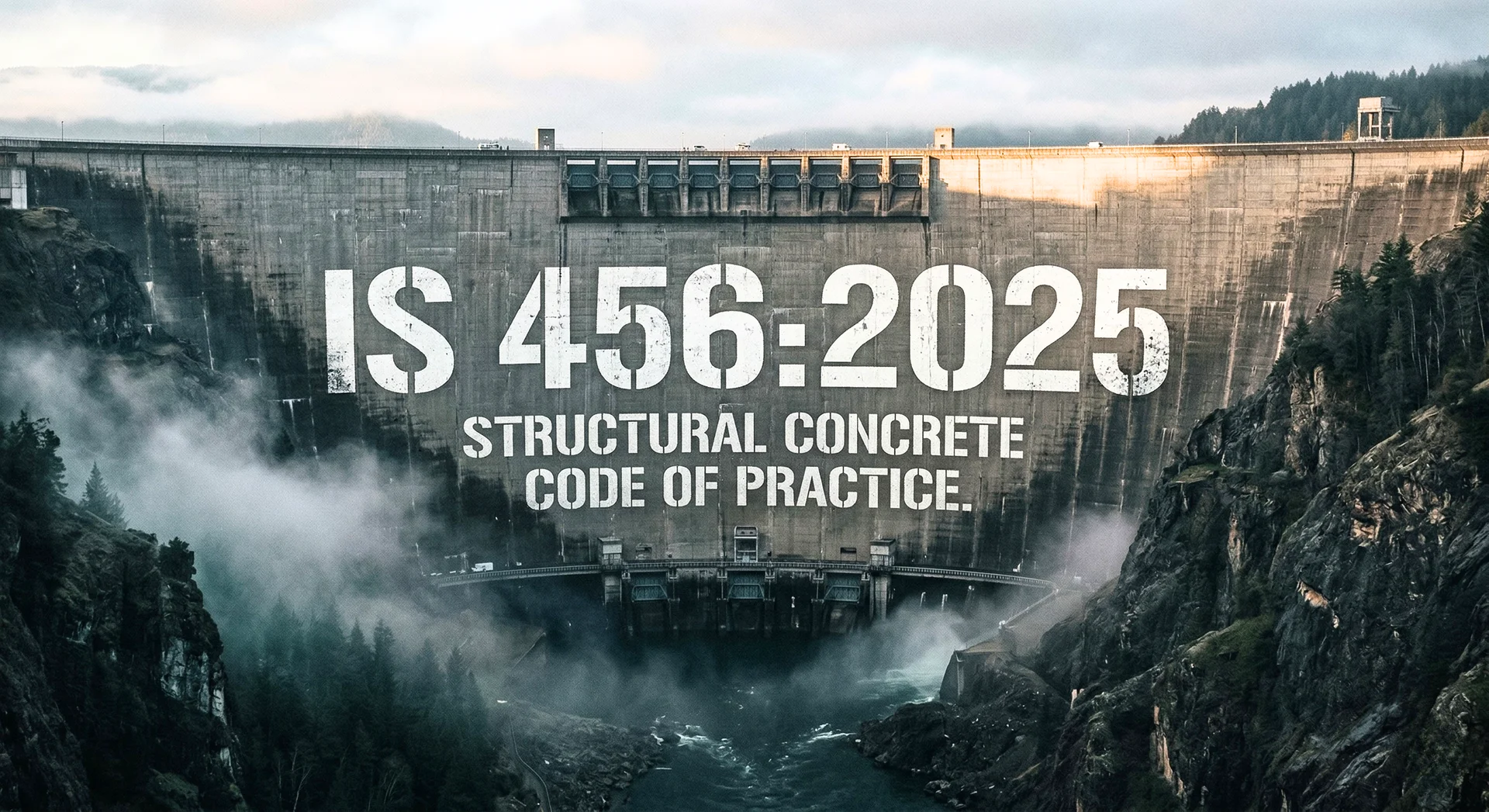
IS 456:2025: What India's Biggest Concrete Code Revision in 25 Years Means for Dam Engineers
India's foundational concrete code is undergoing its most significant revision in a quarter century. The draft fifth revision of IS 456 expands from 'Plain and Reinforced Concrete' to 'Structural Concrete,' introducing six limit states, dedicated chapters on roller compacted concrete and high-performance concrete, and a shift from prescriptive to performance-based durability design. For engineers working on dams and large infrastructure, these changes affect everything from mix design submissions to long-term durability compliance.

Low-Carbon RCC Dams: Reducing Cement Content Without Compromising Durability
Roller compacted concrete dams consume massive volumes of material, often exceeding one million cubic metres per structure. That scale turns even small reductions in cement content into enormous CO2 savings. With the right mix design, SCM replacement rates of 50-70% are achievable in RCC without sacrificing the long-term strength or durability these structures demand.
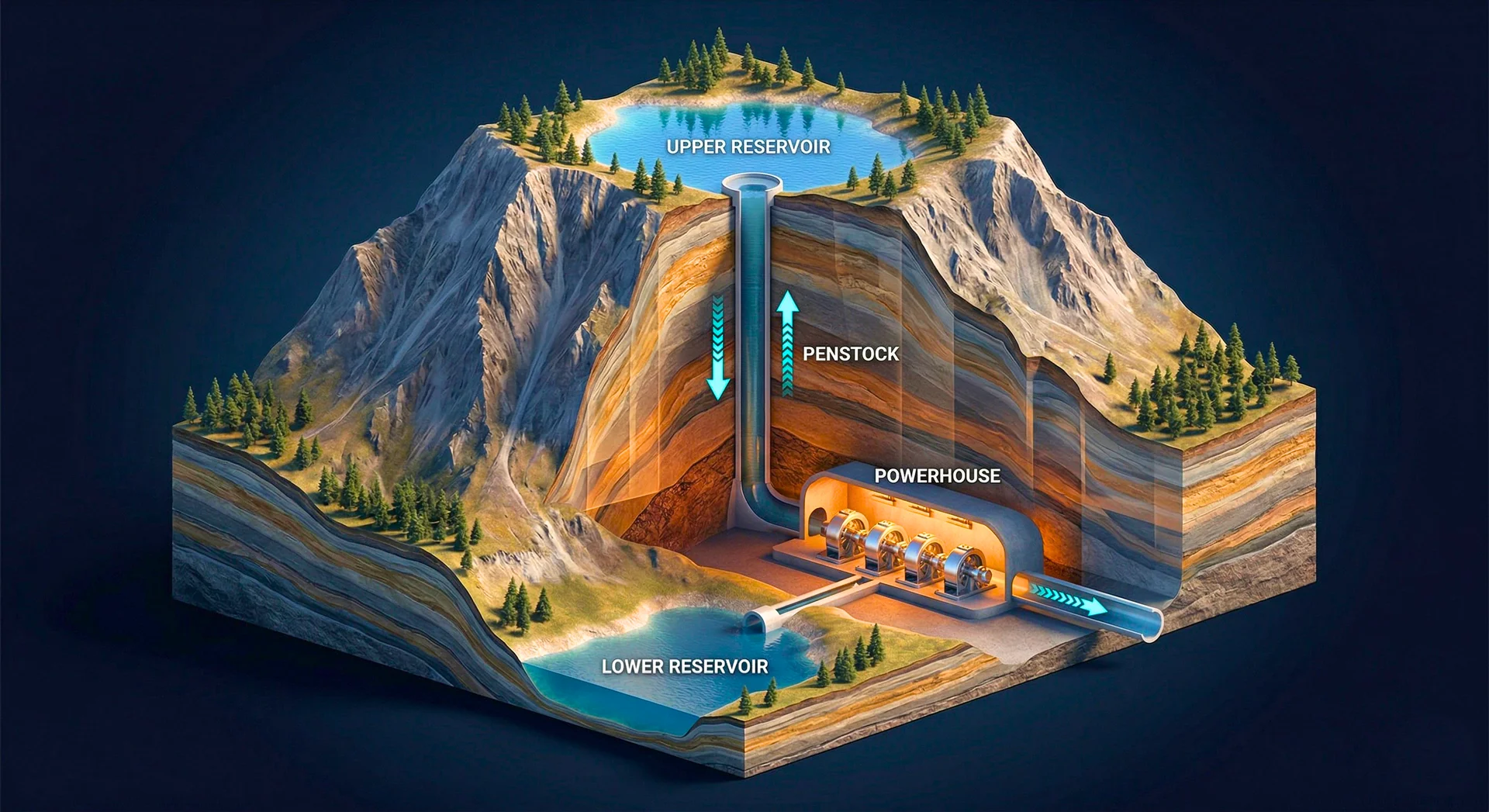
Pumped Storage Hydropower: Why Concrete Technology Will Define India's 100 GW Ambition
India is planning the most aggressive pumped storage buildout in the world: from 4.7 GW operational today to 100 GW by 2036. That requires building hundreds of new dams, reservoirs, tunnels, and underground powerhouses in some of the most geologically challenging terrain on earth. The concrete technology decisions made on these projects will determine whether they deliver on time and perform for 50+ years, or join the growing list of Indian hydropower projects plagued by delays and cost overruns.
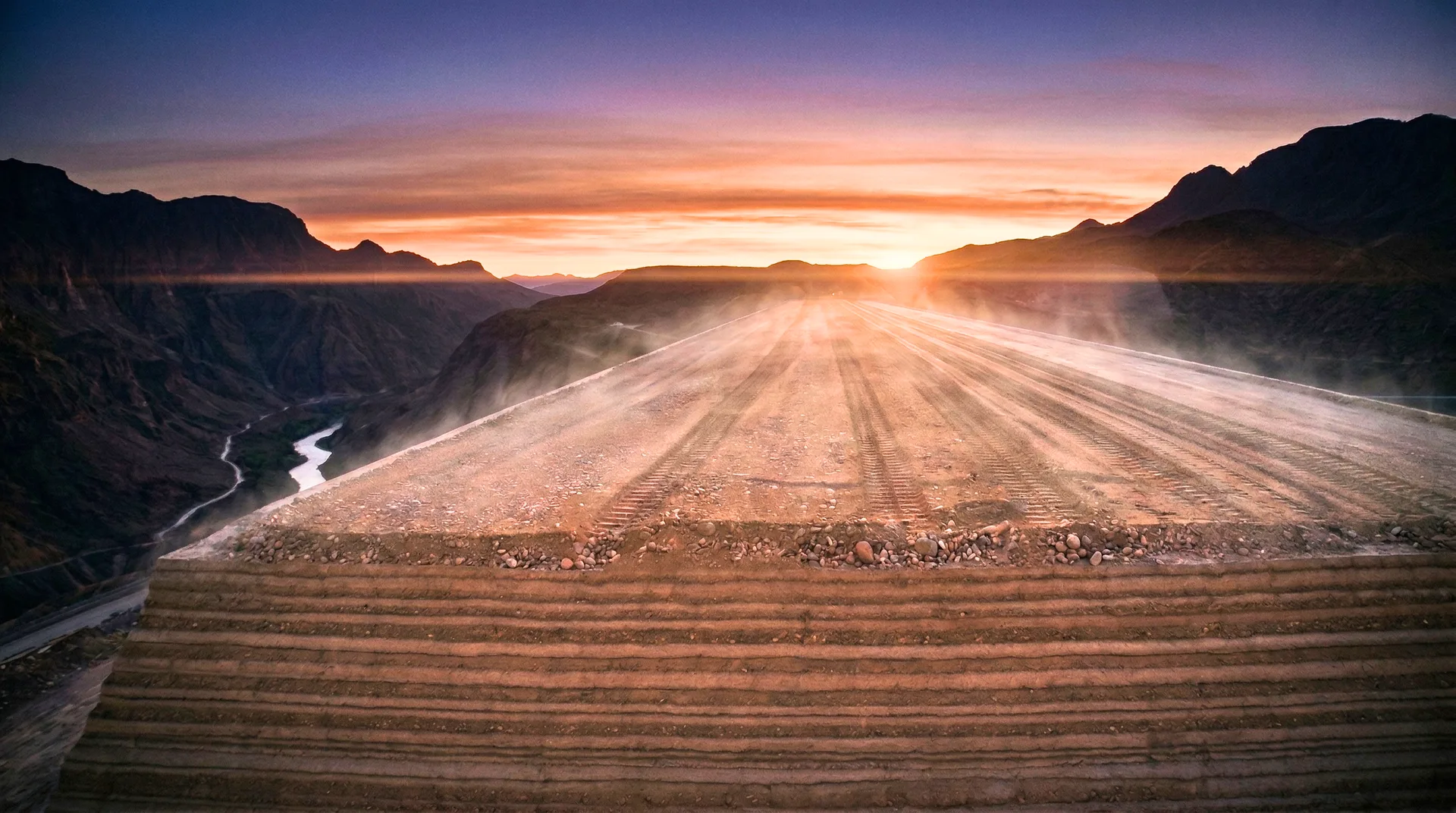
Thermal Control in RCC Dams: Managing Heat Without Cooling Pipes
Roller compacted concrete is placed in thin lifts by vibratory rollers, which means embedded cooling pipes are not an option. Every thermal control strategy must come from mix design, placement logistics, and construction sequencing. This makes thermal modelling not just useful but essential.
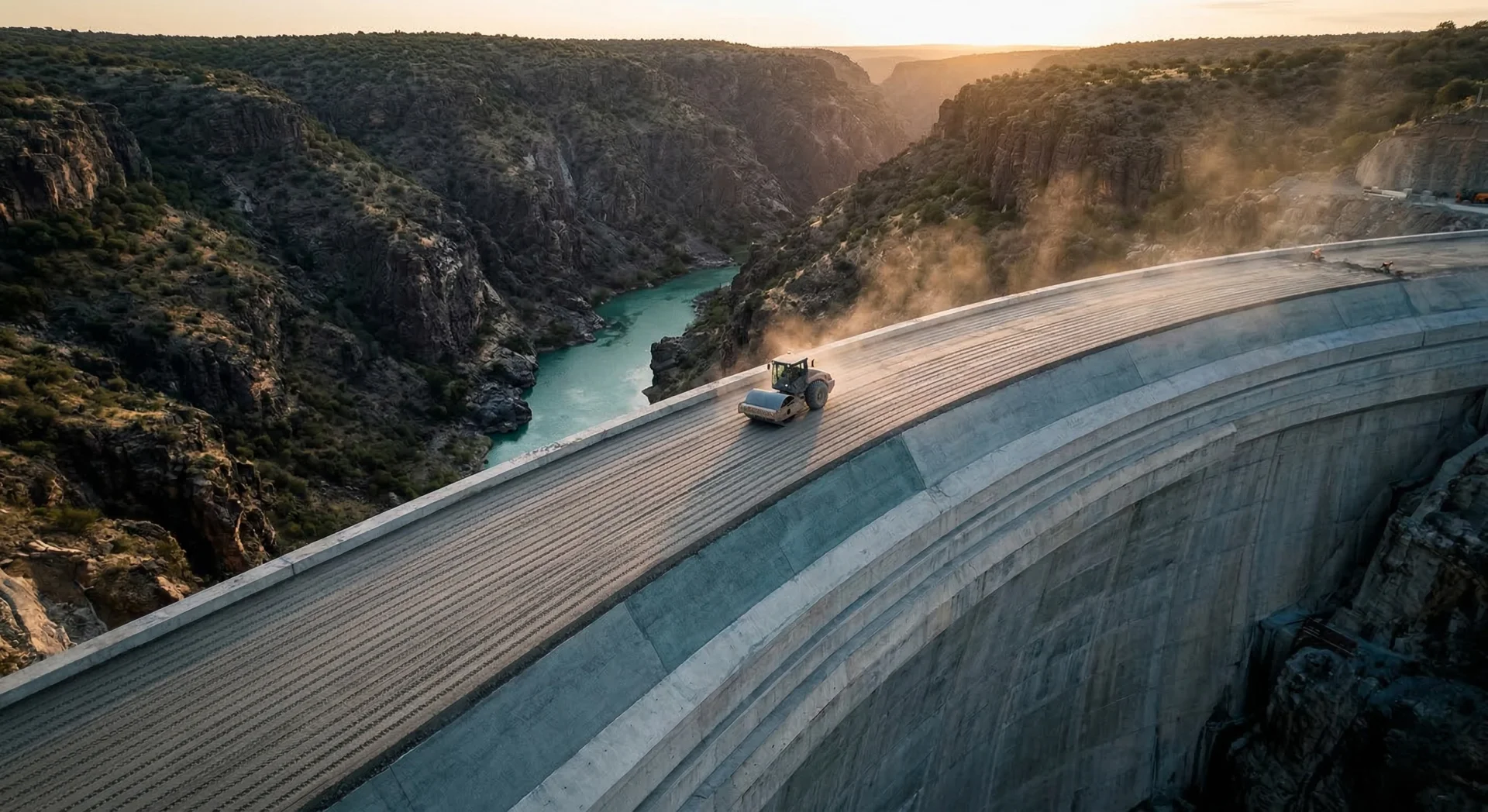
RCC Lift Joint Quality: Why It Fails and What Your QC Program Must Cover
Lift joints are the weakest plane in any RCC dam. In-situ testing consistently shows that joint tensile and shear strength ranges from just 30-80% of the parent RCC, depending on joint maturity, surface preparation, and treatment method. Since seepage through lift joints is the dominant failure mode in RCC dams, your QC program's ability to classify, treat, and verify every joint directly determines whether the structure performs for its 100-year design life or develops problems within the first decade.
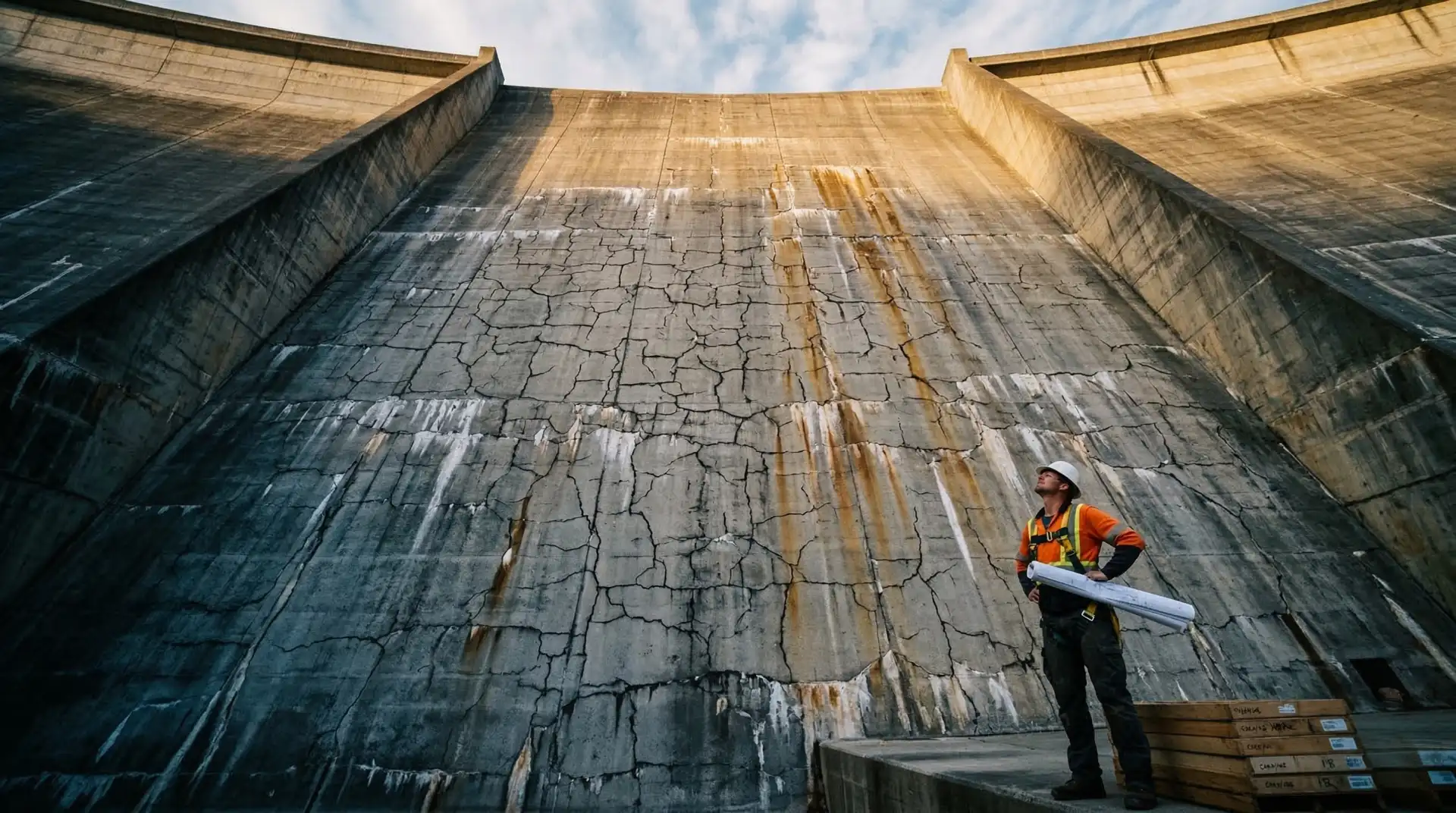
Alkali-Aggregate Reaction (AAR) in Dam Concrete: Identification, Prevention, and Management
Alkali-aggregate reaction is the slow-motion structural crisis of dam engineering. Unlike thermal cracking, which reveals itself within days of placement, AAR works silently for decades before surfacing as map cracking, joint misalignment, or gate seizure. By the time symptoms are visible, the reaction has already consumed years of the structure's service life. The Mactaquac Dam in Canada, built in 1968, will cost an estimated CAD 7.5-9 billion to rehabilitate — all because the greywacke aggregate in its concrete reacted with alkalis in the cement. That is the cost of not testing, not specifying, and not controlling for AAR at the construction stage. This article explains the mechanism, the warning signs, the testing protocols, and the mix design strategies that prevent it.

Thermal Control in Mass Concrete: Why It Matters and How We Manage It
Every large concrete placement is a race against physics. As cement hydrates, it generates heat, and in mass pours exceeding 1.5 metres in any dimension, that heat has nowhere to go. The resulting temperature differential between the hot interior and cooler surface creates tensile stresses that can crack the structure from the inside out. Thermal control is not optional in dam construction. It is the single most critical factor separating a durable 100-year structure from one that cracks before it is even loaded.
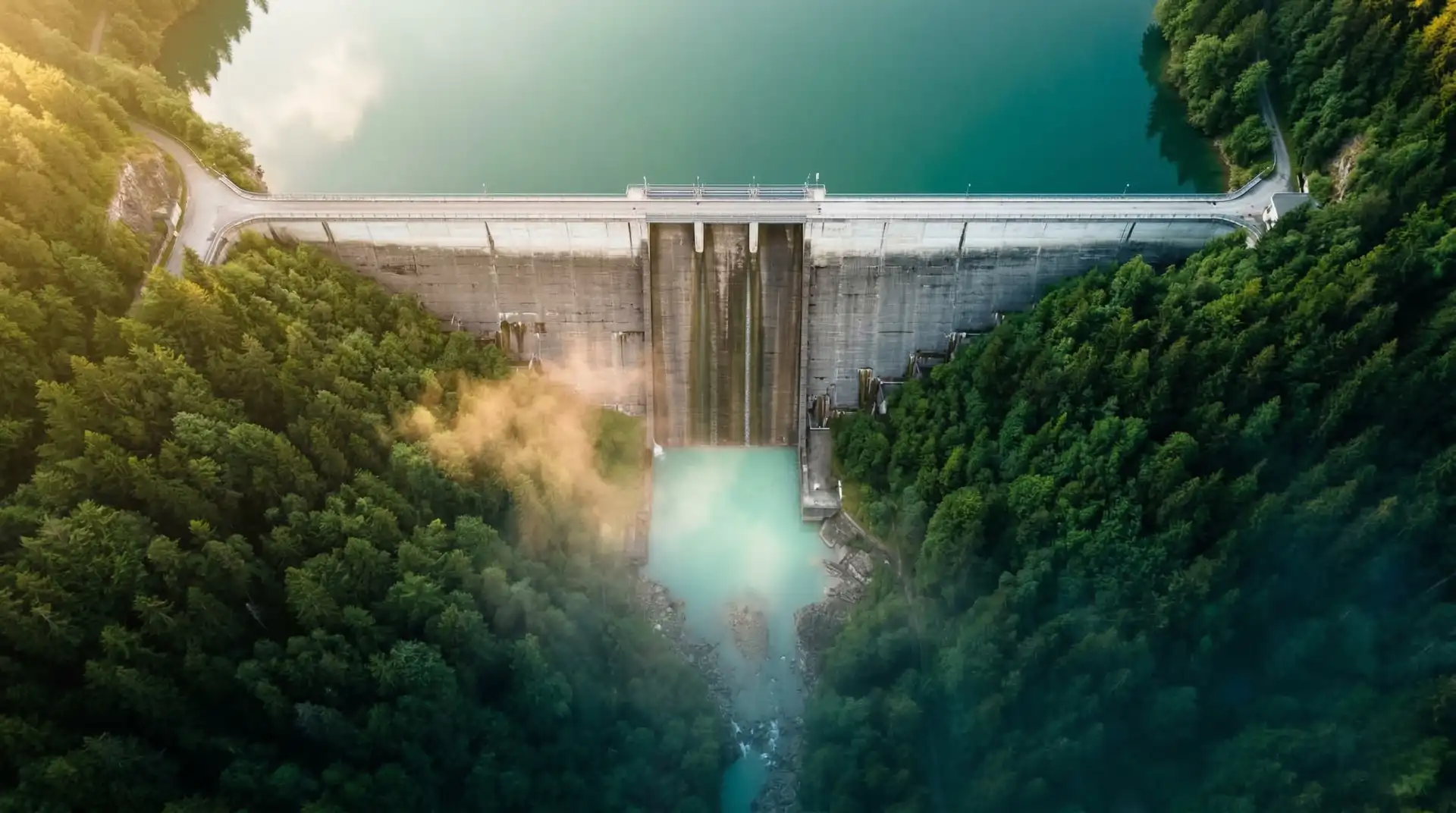
The Greenest Concrete Is the One You Don't Have to Repair
The construction industry fixates on reducing cement content per cubic metre. That matters, but it misses the larger picture. The biggest carbon cost in concrete infrastructure comes not from the initial pour, but from premature failure. Demolition, disposal, and reconstruction of a dam that cracks at 30 years produces far more CO₂ than getting the mix right the first time for 100 years of service. Durability is not separate from sustainability. Durability is sustainability.
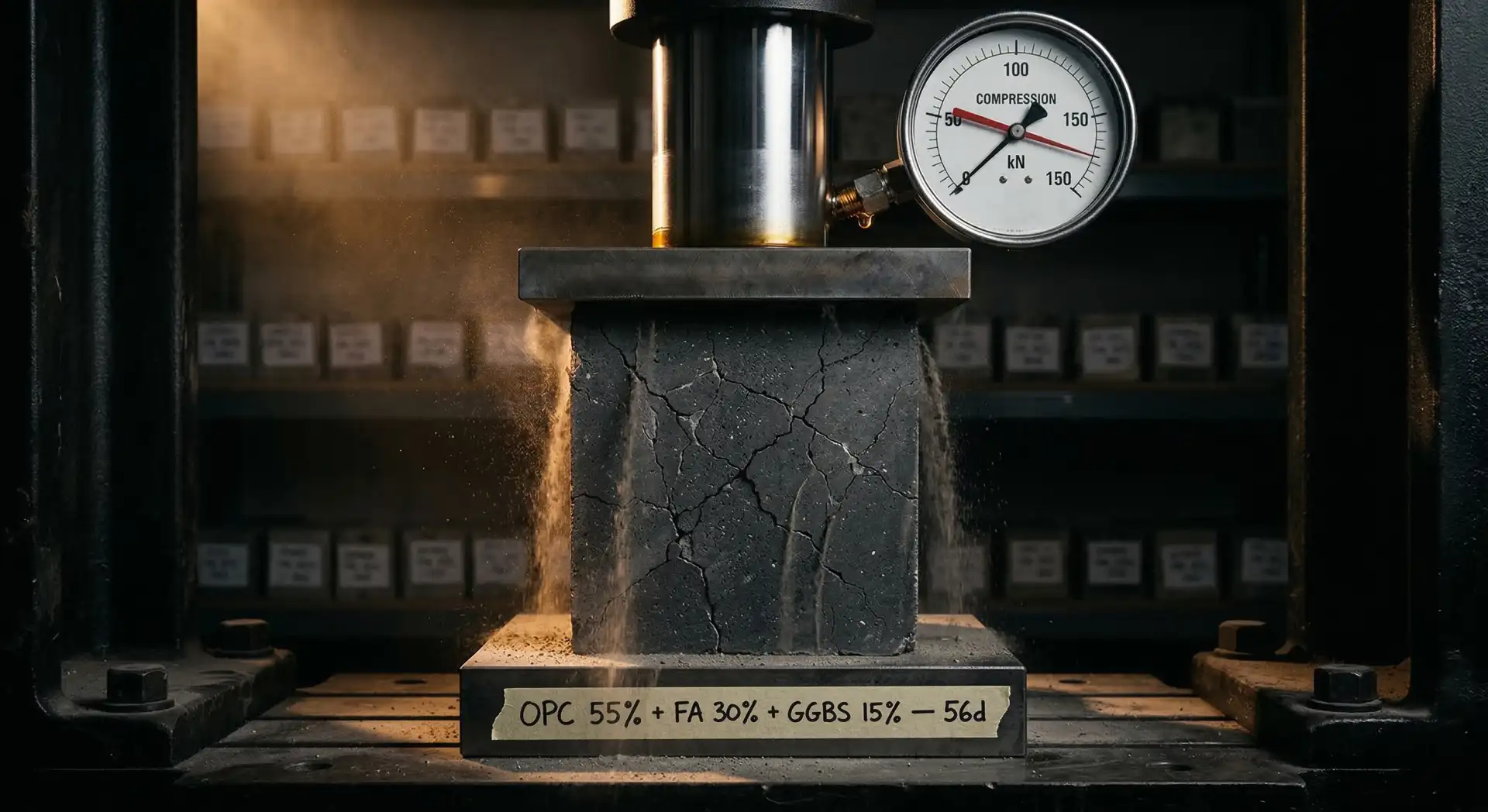
Cement Optimization in Mass Concrete: Reducing Cost and Carbon Without Sacrificing Strength
Cement is the most expensive and carbon-intensive component of concrete. It is also, in mass concrete applications like dam construction, often over-specified. Through performance-based mix design using supplementary cementitious materials (fly ash, GGBS, and silica fume), cement content can be reduced by 30-50% while maintaining or exceeding target strength and durability. The result: lower material costs, lower heat of hydration (reducing thermal cracking risk), and a meaningful reduction in CO₂ emissions per cubic metre.
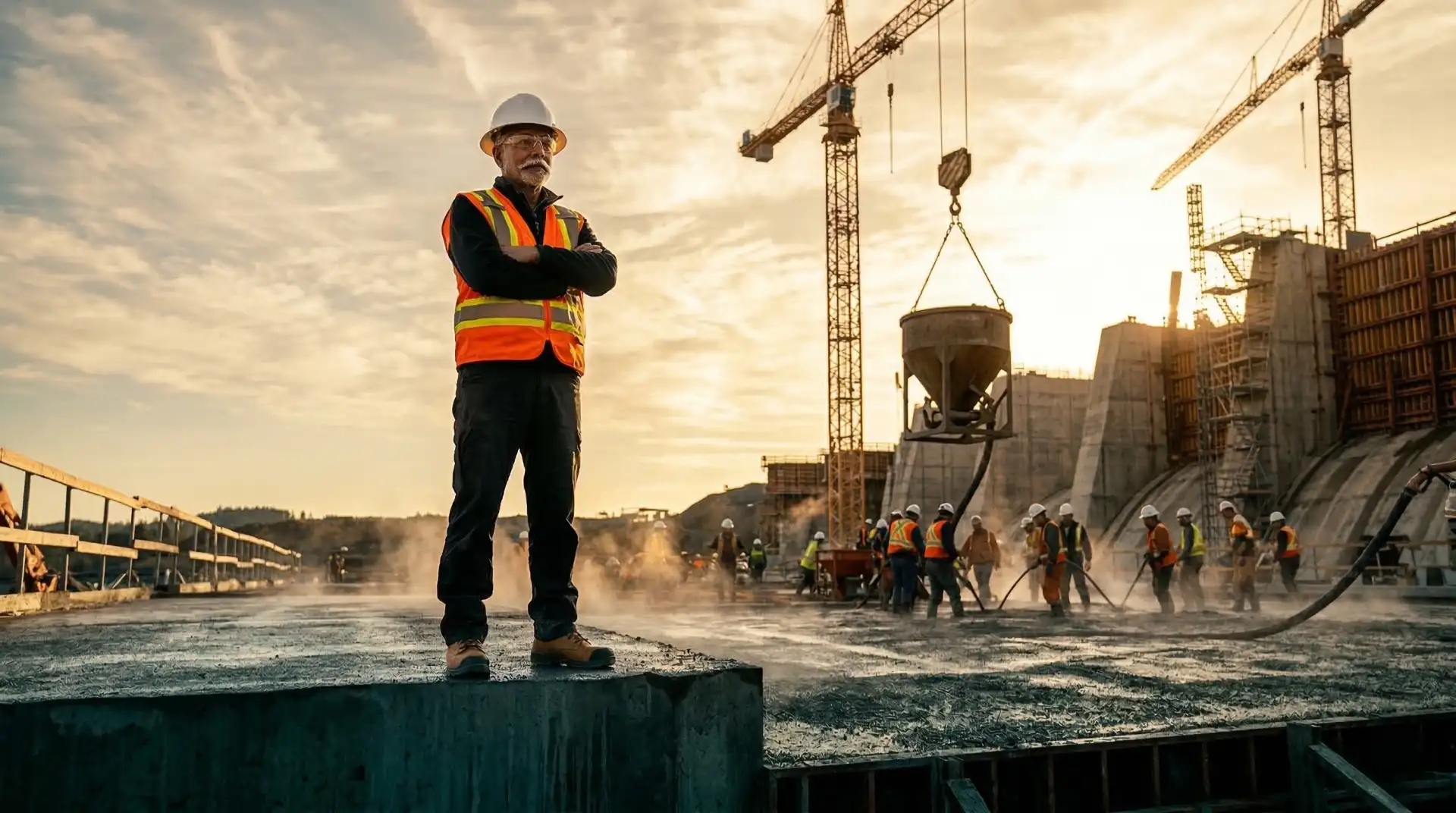
What Does a Concrete Technology Consultant Actually Do on a Hydroelectric Project?
Most people outside the construction industry have no idea this role exists. Even within the industry, the scope is often misunderstood. A concrete technology consultant is not a materials testing lab. Not a structural designer. Not a construction supervisor. The role sits at the intersection of materials science, construction engineering, and quality assurance: an independent technical authority whose job is to ensure that every cubic metre of concrete placed in a dam will perform as intended for its 100-year design life.
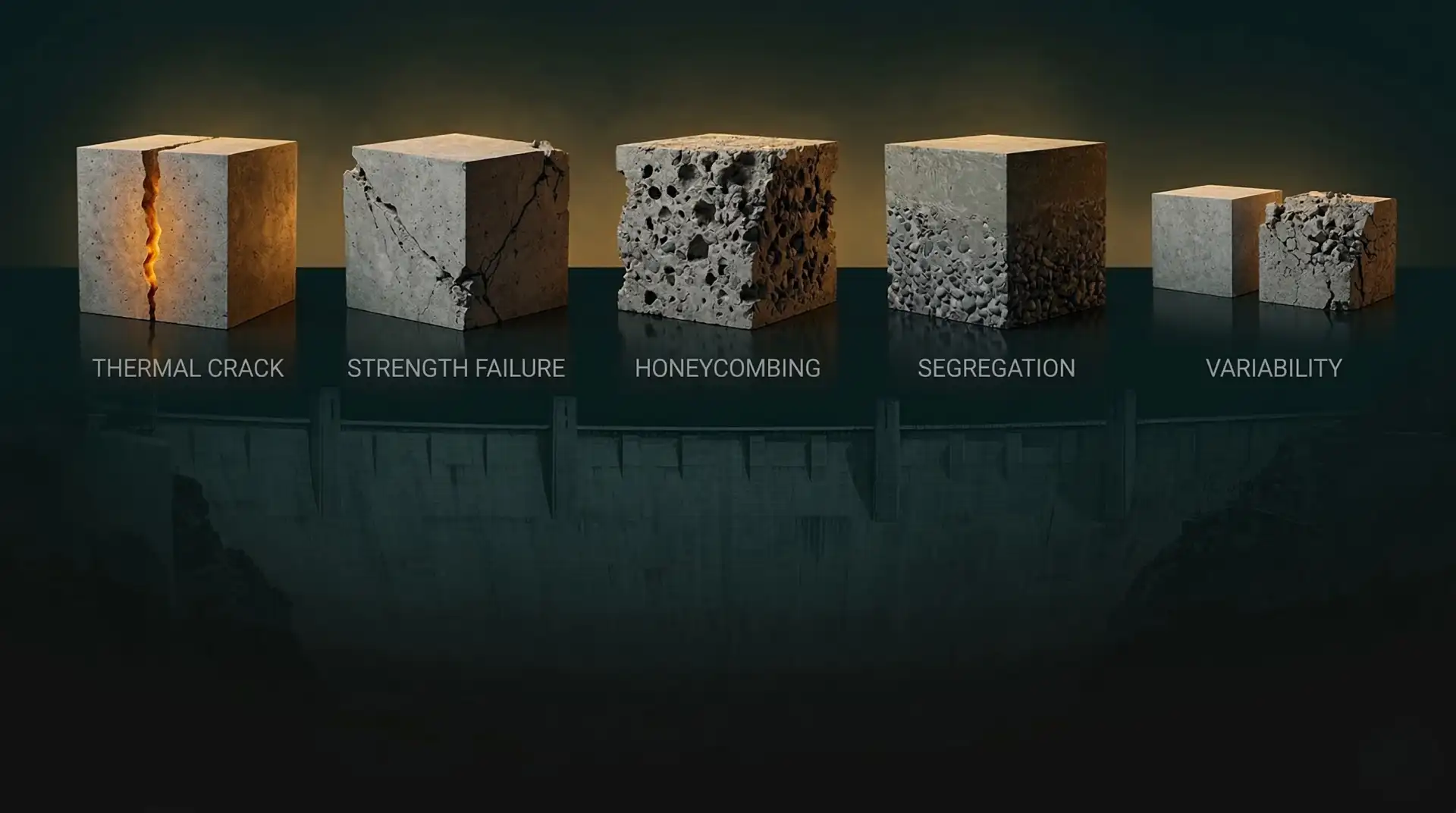
5 Concrete Quality Problems That Delay Hydroelectric Projects (And How to Prevent Them)
Concrete quality problems are the leading controllable cause of schedule delays on hydroelectric projects. A thermal crack in a dam pour can halt construction for weeks while engineers assess structural impact and design repair protocols. A batch of failed strength tests triggers rejection, rework, and formal non-conformance processes. Yet every one of these problems is preventable through proper mix design, material testing, placement procedures, and quality control systems. This article documents the five most common concrete quality failures on dam projects, and the specific QC strategies that prevent each one.
Let's Talk Concrete
Want to discuss these topics with a specialist?
From thermal control and mix design to durability and QA/QC. Our team brings deep, hands-on expertise to every conversation.
Book a Technical CallFrequently Asked Questions
About Our Insights
Does PCCI publish technical content about concrete technology?
What topics does PCCI cover in their technical publications?
Newsletter
Concrete Pulse
Stay ahead on concrete technology. Subscribe to our weekly newsletter. Field-tested insights on mass concrete, dam engineering, and QA/QC, delivered straight to your inbox.
Free. No spam. Unsubscribe anytime.
Talk to a concrete specialist within 24 hours.
Whether you're at pre-tender feasibility or mid-construction troubleshooting. Whether your project is in India, Bhutan, Nepal, or beyond.