
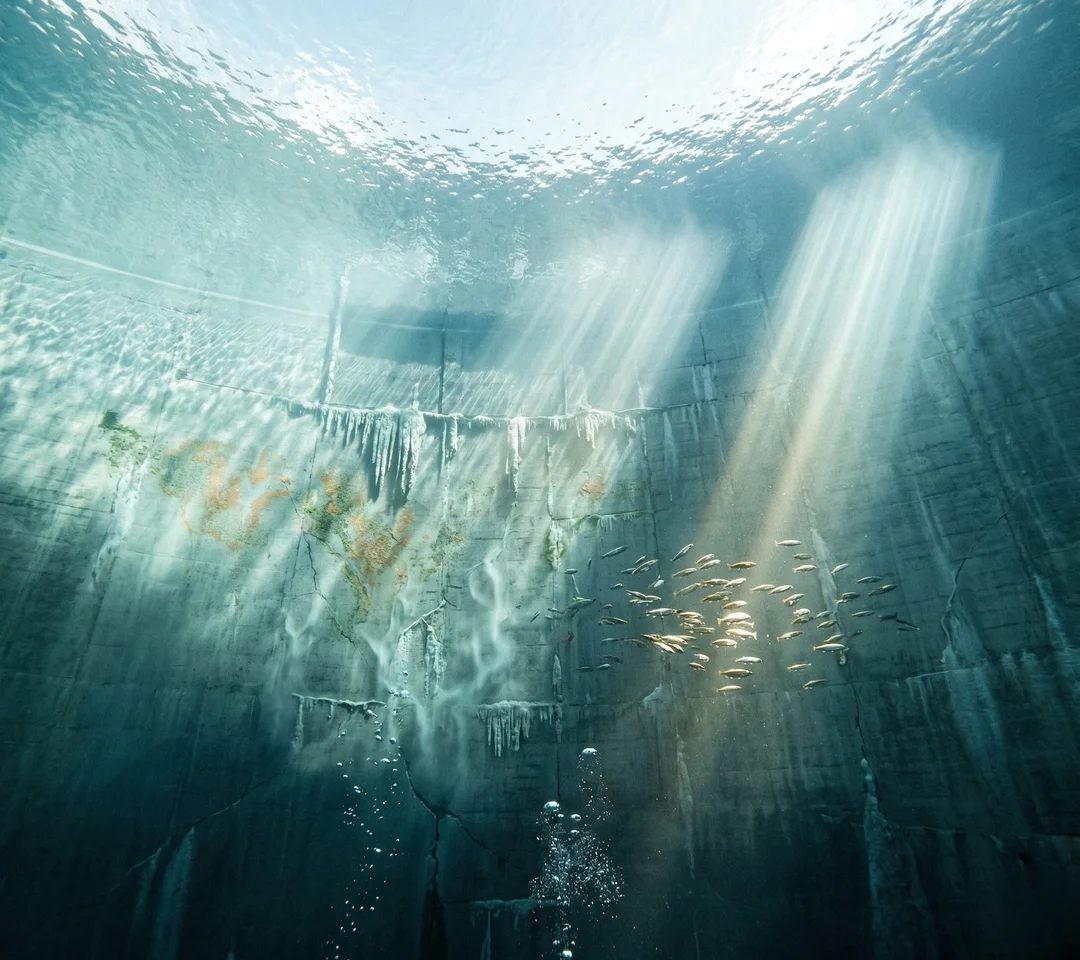
Services / Durability
The greenest concrete is the one you don't have to repair.
Durability assessment, degradation testing, and service-life engineering to ensure your concrete infrastructure performs for its full design life: 75, 100, or 150 years.
Why this matters
Concrete doesn't fail suddenly. It degrades slowly, until it doesn't.
Hydroelectric structures are designed for service lives measured in generations: 75 to 100+ years. But concrete in dam environments faces relentless assault: water penetration, freeze-thaw cycling, chemical attack from aggressive groundwater, alkali-aggregate reactions that silently expand from within, and abrasion from sediment-laden flows.
The cost of getting durability wrong is enormous. Premature deterioration means unplanned shutdowns, emergency repairs, loss of generating capacity, and, in the worst cases, structural safety concerns that can force decommissioning decades before the intended design life. Repair costs on large dams routinely exceed the original concrete placement costs.
The solution is engineering durability into the concrete from the start, not treating it as an afterthought. Through systematic testing of aggregates for reactivity, evaluation of exposure conditions, appropriate SCM selection, and service-life modeling, PCCI ensures every mix is designed to outlast its environment.
Our approach
Full-spectrum durability engineering.
From aggregate reactivity testing before the first mix design to NDT assessment of existing structures, we cover every dimension of concrete longevity.
Alkali-Aggregate Reaction (AAR) Testing
Comprehensive petrographic analysis, accelerated mortar bar tests (ASTM C1260), and concrete prism tests (ASTM C1293) to identify reactive aggregates and engineer mitigation strategies before they cause expansive damage.
Sulfate Resistance Evaluation
Assessment of sulfate exposure risk from ground water, soil conditions, and water chemistry. Engineering mix designs with sulfate-resistant cements and supplementary cementitious materials to prevent ettringite formation and expansion.
Carbonation & Chloride Ingress Analysis
Evaluating the rate of carbonation front advance and chloride ion penetration to predict when reinforcement corrosion may initiate. Critical for structures in marine or de-icing salt environments.
Service-Life Prediction & Modeling
Quantified service-life estimation combining laboratory test data, environmental exposure analysis, and degradation modeling to predict long-term performance and inform design life decisions.
Non-Destructive Testing (NDT)
Rebound hammer, ultrasonic pulse velocity (UPV), and ground-penetrating radar (GPR) assessments to evaluate the condition of existing structures without causing damage, informing rehabilitation and maintenance decisions.
Repair & Rehabilitation Engineering
Designing repair strategies for deteriorated concrete: epoxy injections, crack sealing, surface treatments, patch repairs, and protective coatings. Tailored to restore structural integrity and extend service life.
Project proof
Durability engineered into landmark structures.
Tala Hydroelectric Project
1,020 MW · Bhutan
Durability-focused mix design optimization for the gravity dam, engineered to resist the aggressive water chemistry and high-altitude freeze-thaw exposure over a 100-year design life.
Karchham Wangtoo Hydroelectric Project
1,000 MW · Himachal Pradesh, India
Comprehensive durability engineering across concrete, shotcrete, and grout applications. Long-term performance verification under Himalayan environmental conditions.
Tanahu Hydropower Project
140 MW · Nepal
Advanced AAR testing and thermal parameter analysis under ACI and ASTM standards. High fly ash formulations engineered for both economy and long-term durability.
Technical insights
Deep dives into concrete durability and service-life engineering.
Technical briefs on designing concrete that performs for its full 100-year service life in demanding hydroelectric environments.
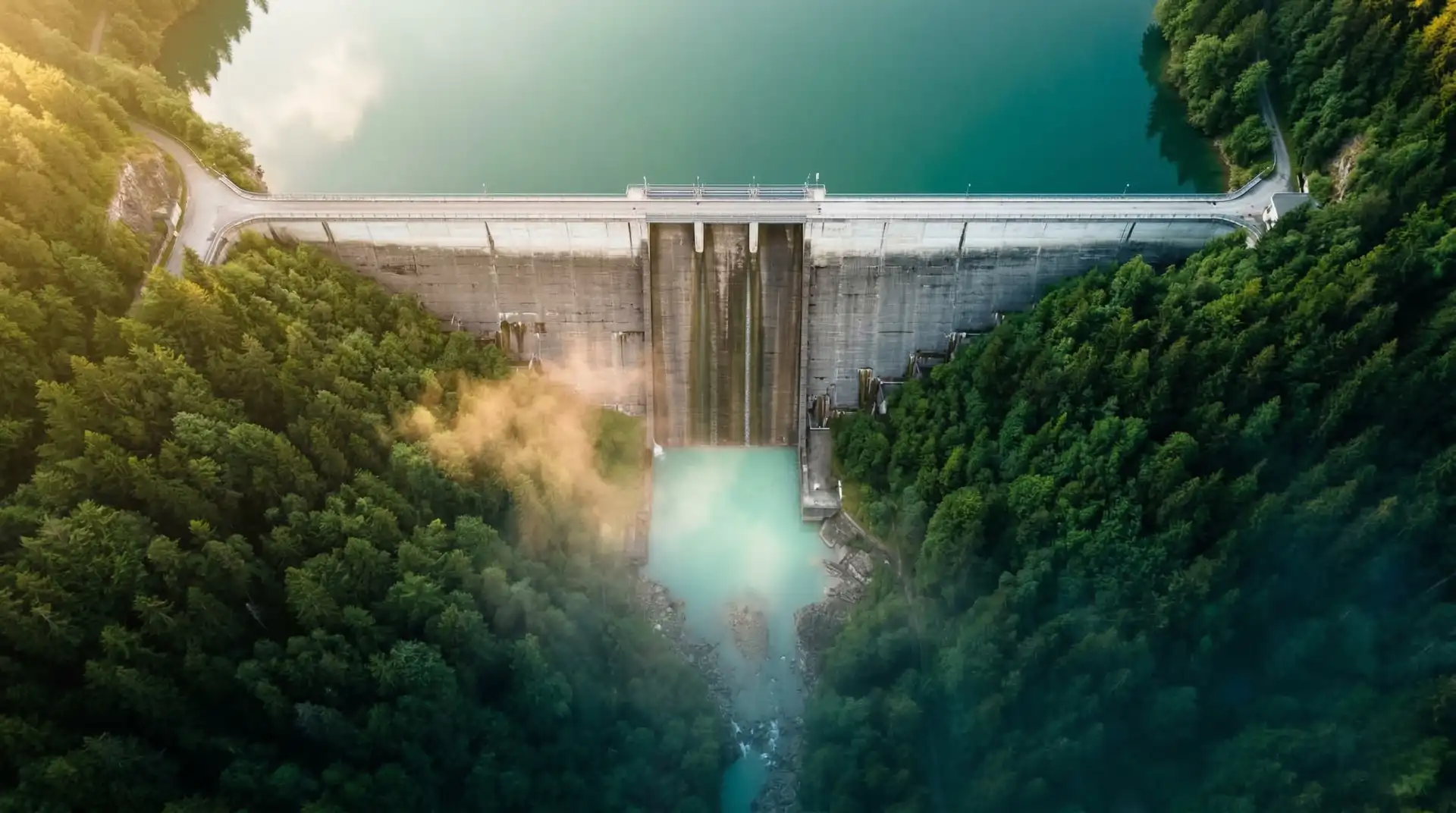
The Greenest Concrete Is the One You Don't Have to Repair
Why designing for durability is the most effective sustainability strategy in concrete infrastructure for hydroelectric projects.
Read article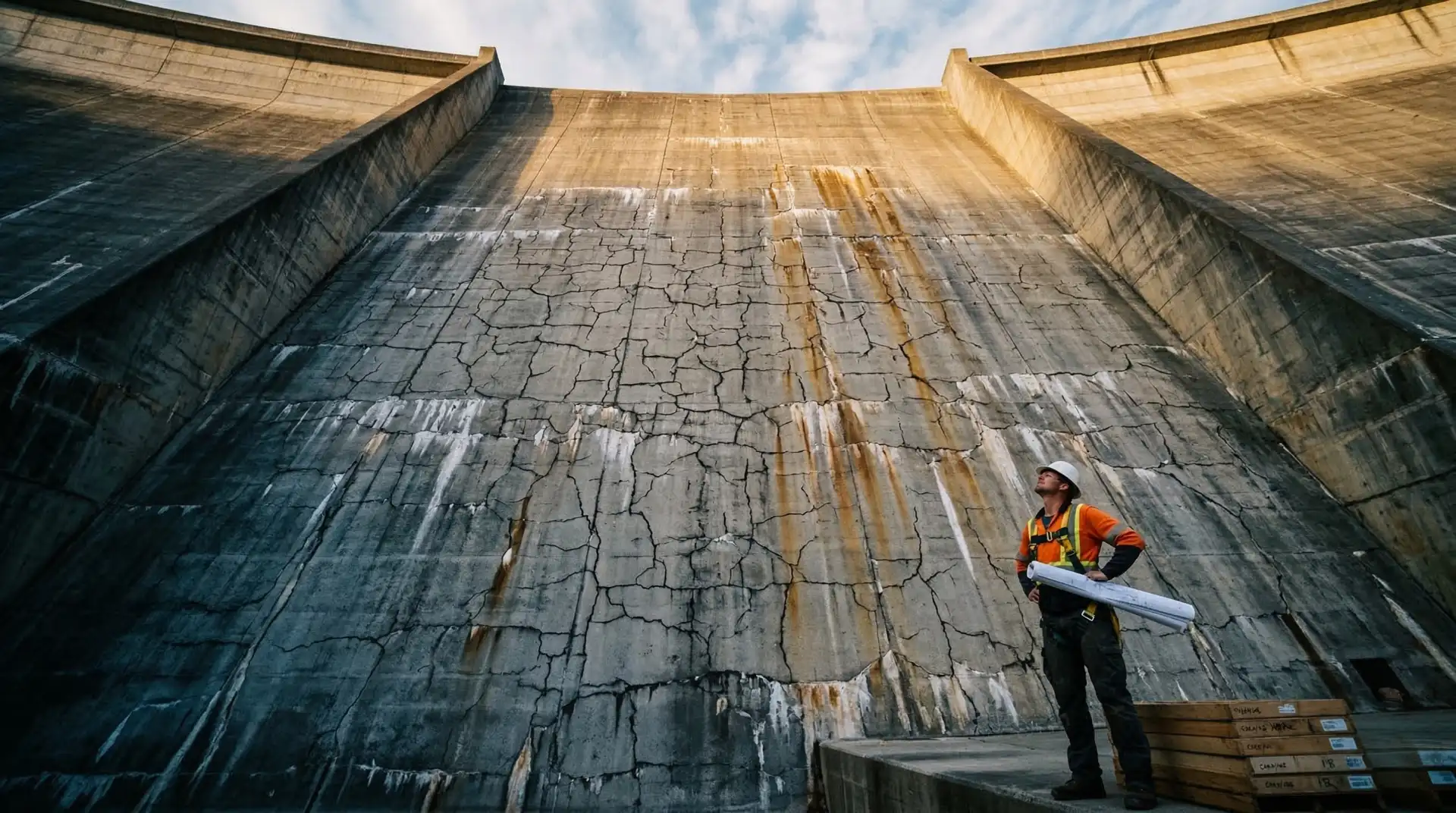
Alkali-Aggregate Reaction in Dam Concrete
AAR is a slow-onset durability threat. Petrographic analysis, SCM selection, and monitoring protocols to prevent it before it starts.
Read article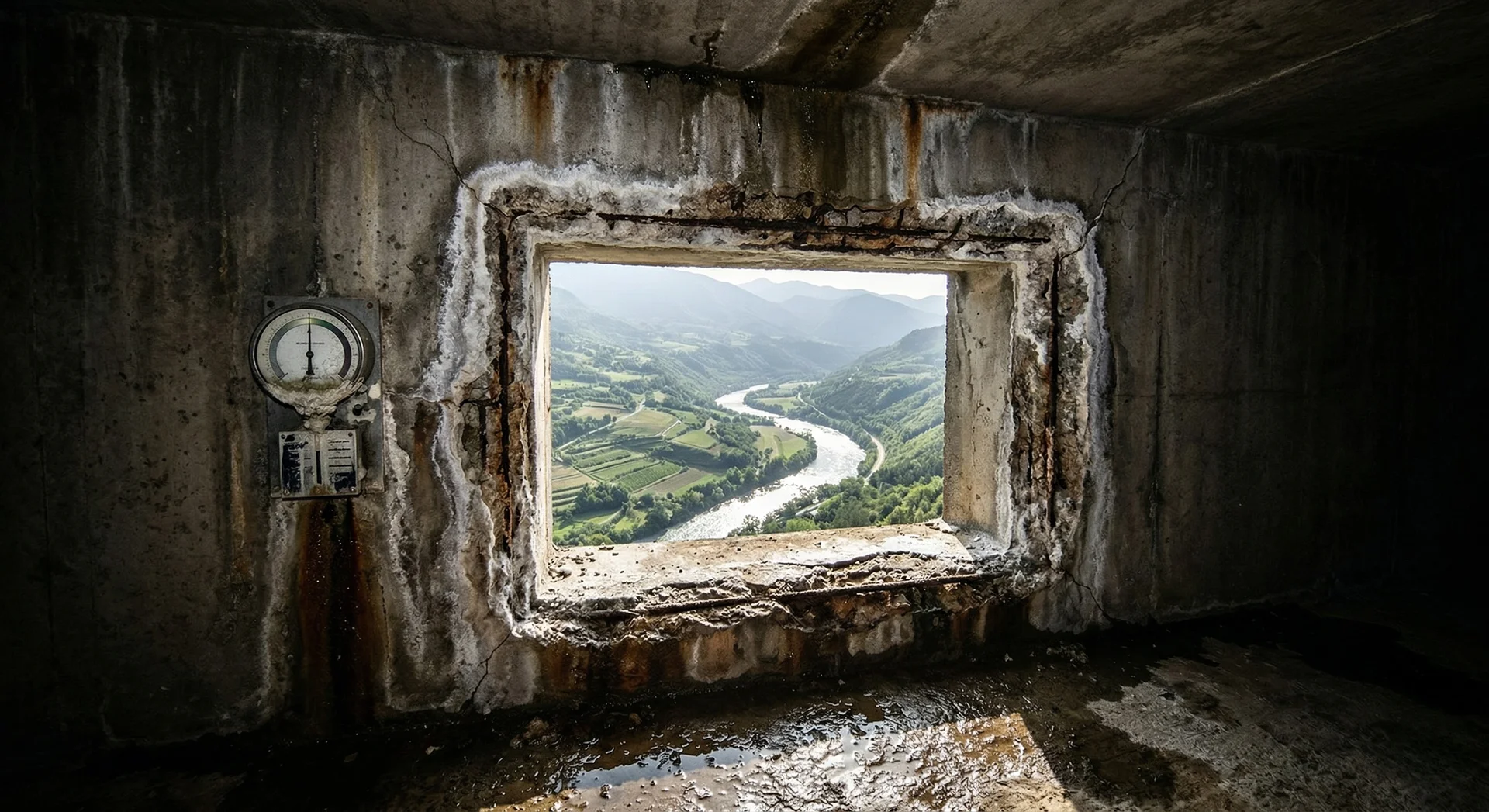
Concrete Deterioration in Indian Dams: Warning Signs Every Dam Owner Should Recognise
AAR, cracking, and gate failure: the warning signs of concrete deterioration in aging Indian dams and what they mean for service life.
Read articleFrequently asked questions
Durability questions, answered.
What is concrete durability assessment and why is it important for dams?
Concrete durability assessment evaluates how well concrete will resist environmental degradation over its design life. For dams, this is critical because these structures must perform for 75-100+ years in aggressive environments: submerged in water, exposed to freeze-thaw cycles, chemical attack, and abrasion. A durability assessment identifies potential failure mechanisms and ensures the concrete mix and design will withstand these conditions throughout the structure's life.
What is alkali-aggregate reaction (AAR) and how does PCCI address it?
Alkali-aggregate reaction (AAR) occurs when alkalis in cement react with certain minerals in aggregates, producing an expansive gel that causes cracking, reduced strength, and structural damage. PCCI addresses AAR through comprehensive petrographic analysis of aggregates, accelerated mortar bar testing (ASTM C1260), concrete prism testing (ASTM C1293), and specification of mitigation strategies including SCM selection, low-alkali cement specification, and lithium-based admixtures where appropriate.
How does PCCI predict the service life of concrete structures?
PCCI predicts service life by combining laboratory durability testing (permeability, chloride diffusion, carbonation depth, sulfate resistance) with environmental exposure analysis and predictive modeling. This includes evaluating the concrete's microstructure, the aggressiveness of the exposure environment, and the protective measures in place. The result is a quantified service-life estimate that informs design decisions, maintenance planning, and lifecycle cost analysis.
What non-destructive testing methods does PCCI use for existing structures?
PCCI employs multiple NDT methods including rebound hammer testing for surface hardness assessment, ultrasonic pulse velocity (UPV) for internal integrity evaluation, ground-penetrating radar (GPR) for detecting voids and reinforcement, and core extraction for calibration. These methods assess concrete condition without damaging the structure, enabling informed maintenance and rehabilitation decisions.
Newsletter
Concrete Pulse
Stay ahead on concrete technology. Subscribe to our weekly newsletter. Field-tested insights on mass concrete, dam engineering, and QA/QC, delivered straight to your inbox.
Free. No spam. Unsubscribe anytime.
Talk to a concrete specialist within 24 hours.
Whether you're at pre-tender feasibility or mid-construction troubleshooting. Whether your project is in India, Bhutan, Nepal, or beyond.