
Why We Exist
The concrete in critical infrastructure deserves better than it usually gets.
PCCI exists because the gap between laboratory specifications and field execution costs projects years, crores, and structural integrity. We close that gap with rigorous science, proven systems, and a team that has spent careers on dam sites, not behind desks.
Performance & Quality
"We prevent failures."
Every structure we advise on is engineered for its full design life: 50, 75, or 100 years. We don't test concrete to confirm compliance after the fact. We design quality systems that make non-conformance structurally impossible from the start.
What This Means in Practice
- Every mix design is performance-validated before a single cubic meter is placed
- QC systems are designed to catch deviations in real-time, not in post-construction reports
- Our leadership is personally present during critical pours, not advising from a distance
- We engineer for the full design life of the structure, not just the specification minimum
Durability = Sustainability
"The greenest concrete is the one you don't have to repair."
The largest carbon cost in concrete infrastructure comes from premature failure: demolition, disposal, rebuilding. A dam that lasts 100 years without major repair is inherently more sustainable than one that needs rehabilitation at 30. Durable concrete is sustainable concrete. That's our starting point, not our afterthought.
What This Means in Practice
- Premature concrete failure drives more CO₂ than initial construction
- Every repair cycle consumes new materials, new energy, and new carbon
- A 100-year service life eliminates 2-3 repair cycles compared to 30-year concrete
- We engineer durability from day one: AAR mitigation, sulfate resistance, carbonation control
Low-Carbon Concrete
"Same performance. Less clinker. Lower CO₂."
Cement production accounts for approximately 8% of global CO₂ emissions. Through optimized cement content, supplementary cementitious materials (fly ash, GGBS, silica fume), and precision mix engineering, we reduce the embodied carbon in every cubic meter, without compromising strength, durability, or workability. Lower cement also means lower heat of hydration, which reduces thermal cracking risk in mass concrete.
What This Means in Practice
- Cement clinker production generates ~0.9 tonnes of CO₂ per tonne of clinker
- PCCI routinely achieves 30-50% cement replacement through optimized SCM blending
- Lower cement content reduces heat of hydration, which is critical for mass concrete thermal control
- Performance-based design ensures strength and durability targets are met or exceeded at lower cement levels
Clean Energy Enablement
"Reliable hydropower needs reliable concrete."
Hydroelectric power is the backbone of the clean energy transition, providing the baseload reliability and energy storage capacity that wind and solar cannot match alone. The dams, powerhouses, and tunnels that make hydropower possible are built from concrete. Ensuring that concrete performs for generations is our direct contribution to a low-carbon energy future.
What This Means in Practice
- Hydropower provides ~16% of global electricity and over 60% of renewable electricity
- Pumped-storage hydropower is the world's largest form of grid-scale energy storage
- A single dam failure can eliminate decades of clean energy generation
- PCCI supports 4,000+ MW of hydroelectric capacity, equivalent to avoiding millions of tonnes of CO₂
The Bigger Picture
These four pillars aren't separate goals. They're the same goal.
High-performance concrete is durable concrete. Durable concrete eliminates repair cycles. Eliminating repair cycles reduces lifetime carbon. And when that concrete is in a hydroelectric dam, it enables clean energy for generations.
Performance. Durability. Sustainability. Clean energy. One engineering approach, four outcomes.
Frequently Asked Questions
About Our Purpose
How does PCCI contribute to sustainability in concrete construction?
What is the connection between concrete quality and clean energy?
Why does PCCI say 'the greenest concrete is the one you don't have to repair'?
From the field
Concrete intelligence, not opinions. Lessons from inside dam sites.
Technical insights grounded in real project experience. Written by engineers, for engineers.
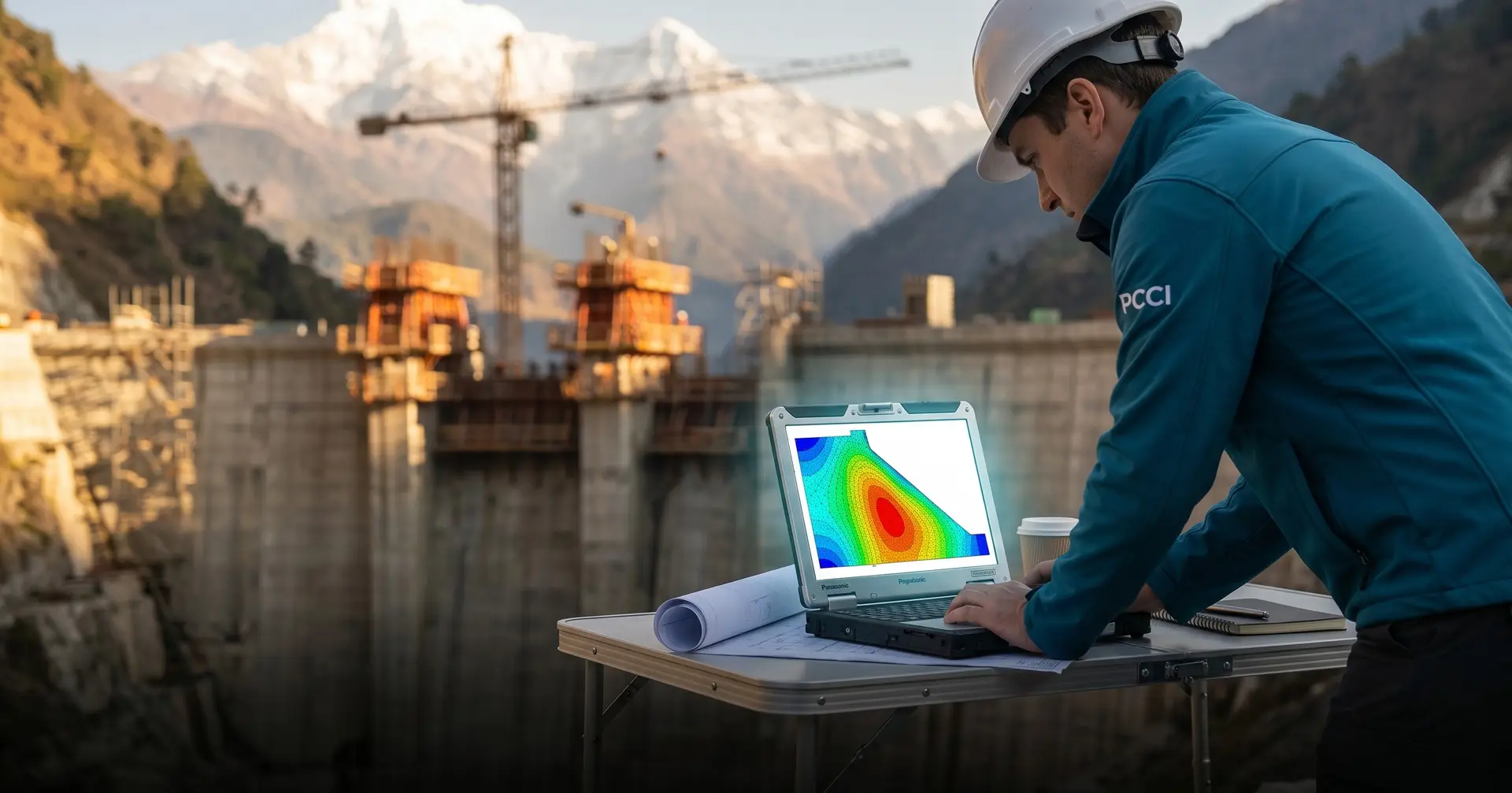
Thermal Modelling for Mass Concrete: FEM Analysis, Input Parameters, and Practical Application
Every thermal control plan for a mass concrete dam rests on a thermal model. The model predicts the temperature at every point inside the concrete, at every time step from placement through years of service. It determines whether the pre-cooling system is adequate, whether the placement schedule allows sufficient heat dissipation, whether the post-cooling pipes are correctly spaced, and whether the resulting thermal stresses will crack the concrete. A thermal model that is wrong does not just produce incorrect numbers. It produces a thermal control plan that either under-protects the concrete (leading to cracking) or over-protects it (wasting resources on unnecessary cooling). Getting the model right requires accurate input parameters, appropriate modelling assumptions, and validation against field measurements.
Read Article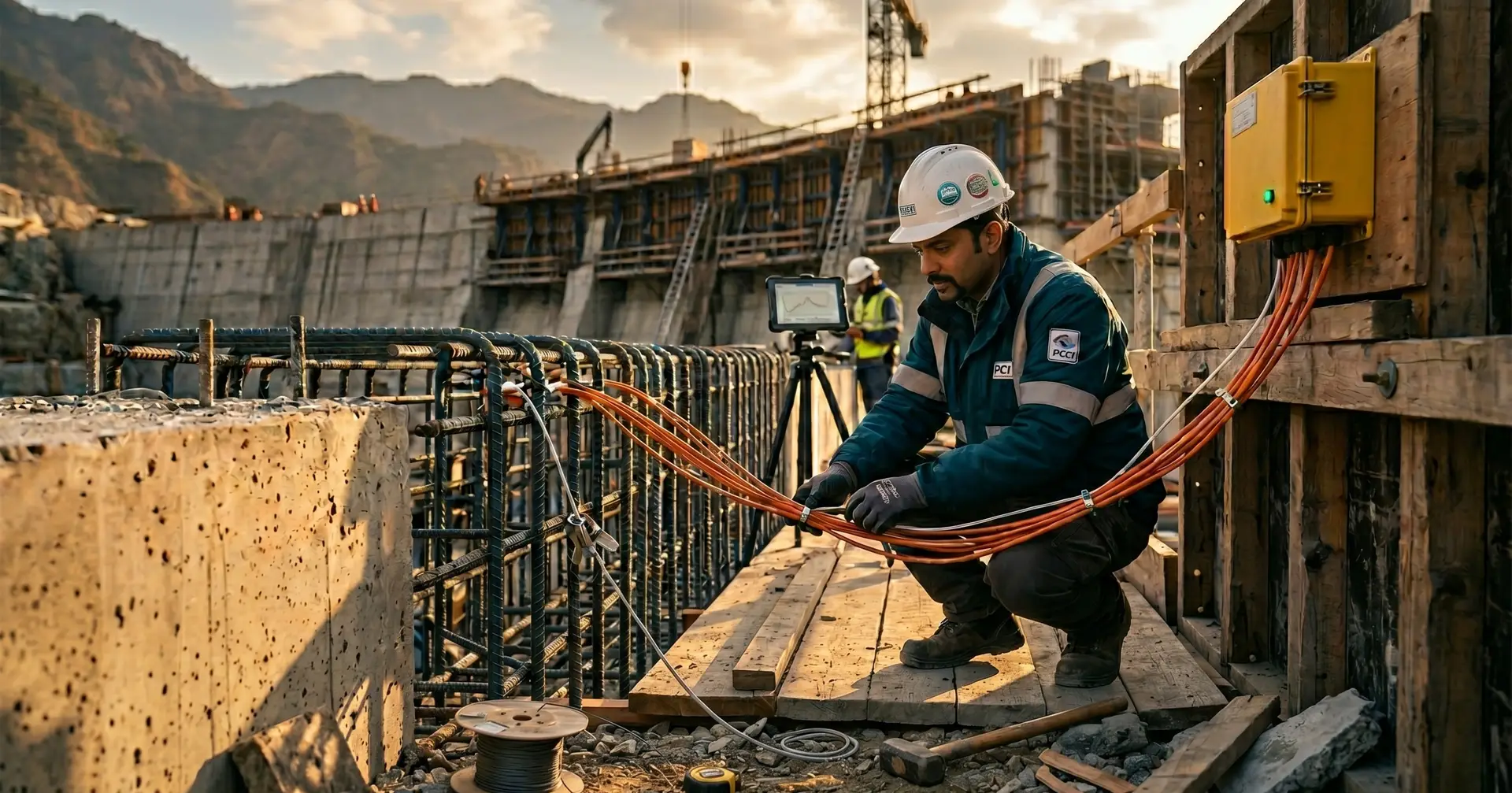
Thermal Instrumentation for Mass Concrete Dams: Sensors, Monitoring, and Real-Time Decision Making
A thermal control plan without instrumentation is a document without feedback. You can model the expected temperature rise, design the pre-cooling system, specify the placement schedule, and calculate the maximum thermal gradients. But unless you measure what actually happens inside the concrete after placement, you have no way of knowing whether the plan is working until a crack appears on the surface. Thermal instrumentation closes this loop: embedded sensors provide real-time temperature data that allows the construction team to verify predictions, adjust cooling operations, and intervene before thermal stresses exceed the concrete's capacity.
Read Article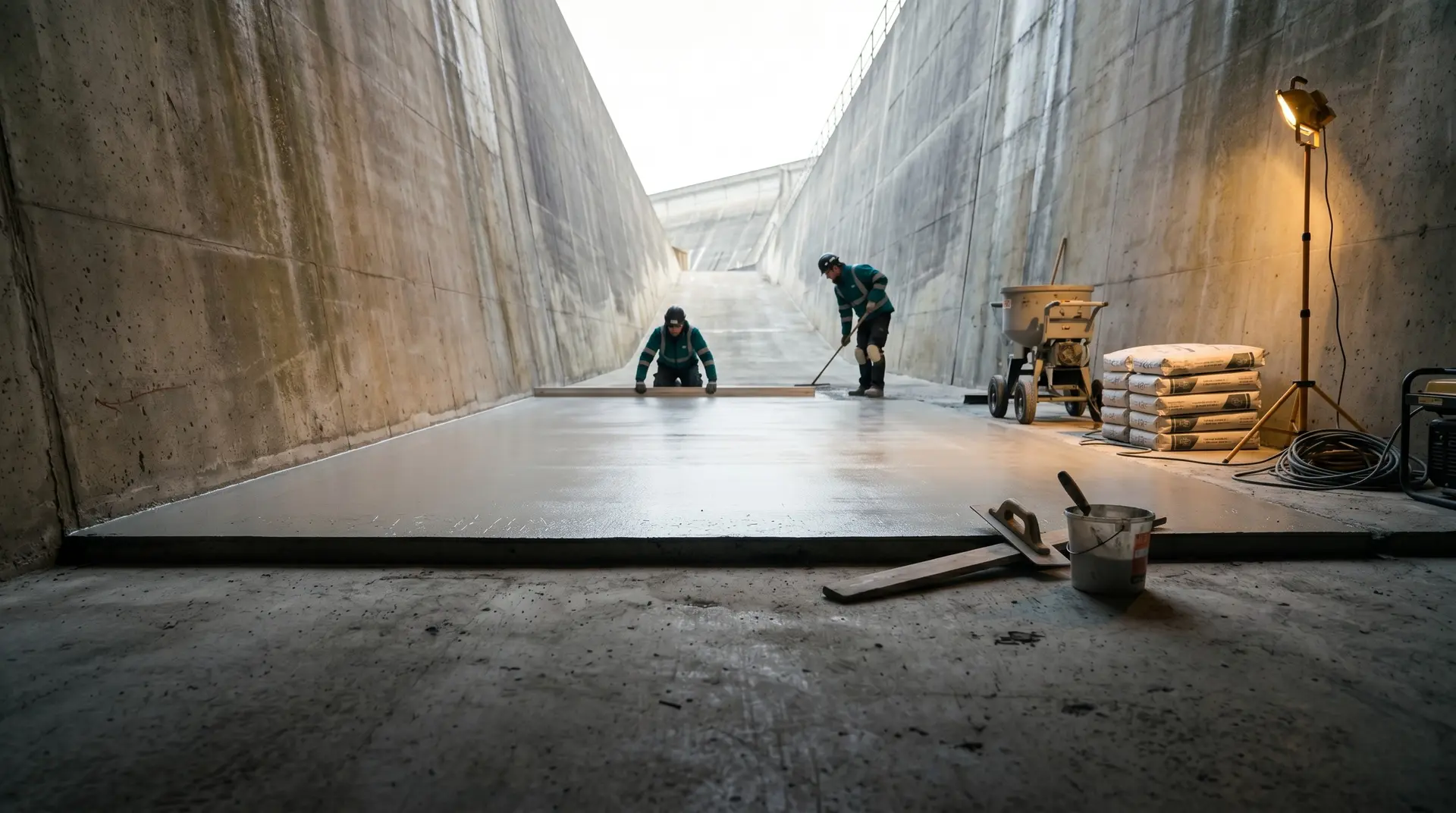
UHPC for Hydroelectric Infrastructure: Where Ultra-High Performance Concrete Fits in Dam Engineering
Ultra-high performance concrete (UHPC) has transformed bridge deck rehabilitation across North America, with more than 20 state departments of transportation using UHPC overlays as thin as 25 mm to extend bridge service lives by decades. The material's compressive strength exceeding 150 MPa, near-zero permeability, and abrasion resistance roughly double that of conventional concrete make it a compelling technology. For dam engineers, the question is specific: where in a hydroelectric project does UHPC's exceptional performance justify its cost, which runs 5 to 10 times higher than conventional concrete per cubic metre? The answer is not everywhere; it is in targeted applications where thin sections, extreme abrasion, cavitation exposure, or permanent submersion demand a material that conventional HPC cannot match. This technical brief examines UHPC's material properties through the lens of dam engineering requirements, identifies the specific applications where it adds genuine value, addresses the cost and constructability challenges, and provides a practical decision framework for dam owners and consulting engineers.
Read Article
Machine Learning for Concrete Mix Design: From BOxCrete to Dam-Specific Optimization
In March 2026, Meta released BOxCrete, an open-source Bayesian Optimization model for concrete mix design, under an MIT license. The model, developed with the University of Illinois and cement producer Amrize, reduces the carbon footprint of concrete by up to 40% while maintaining strength, with some formulations replacing upwards of 70% of cement with fly ash and slag combinations. For dam engineers, this raises an immediate question. Mass concrete for hydroelectric projects already uses high SCM dosages, low cement contents, and extended curing ages that fall outside the training data of most ML models. Can these tools actually help with dam-specific mix design, or are they solving a different industry's problem? This technical brief examines the current state of ML-driven mix design optimization, assesses its relevance to mass concrete for dams and RCC, and outlines a practical framework for integrating ML tools into the trial mix process without abandoning the engineering judgment that keeps dams standing.
Read Article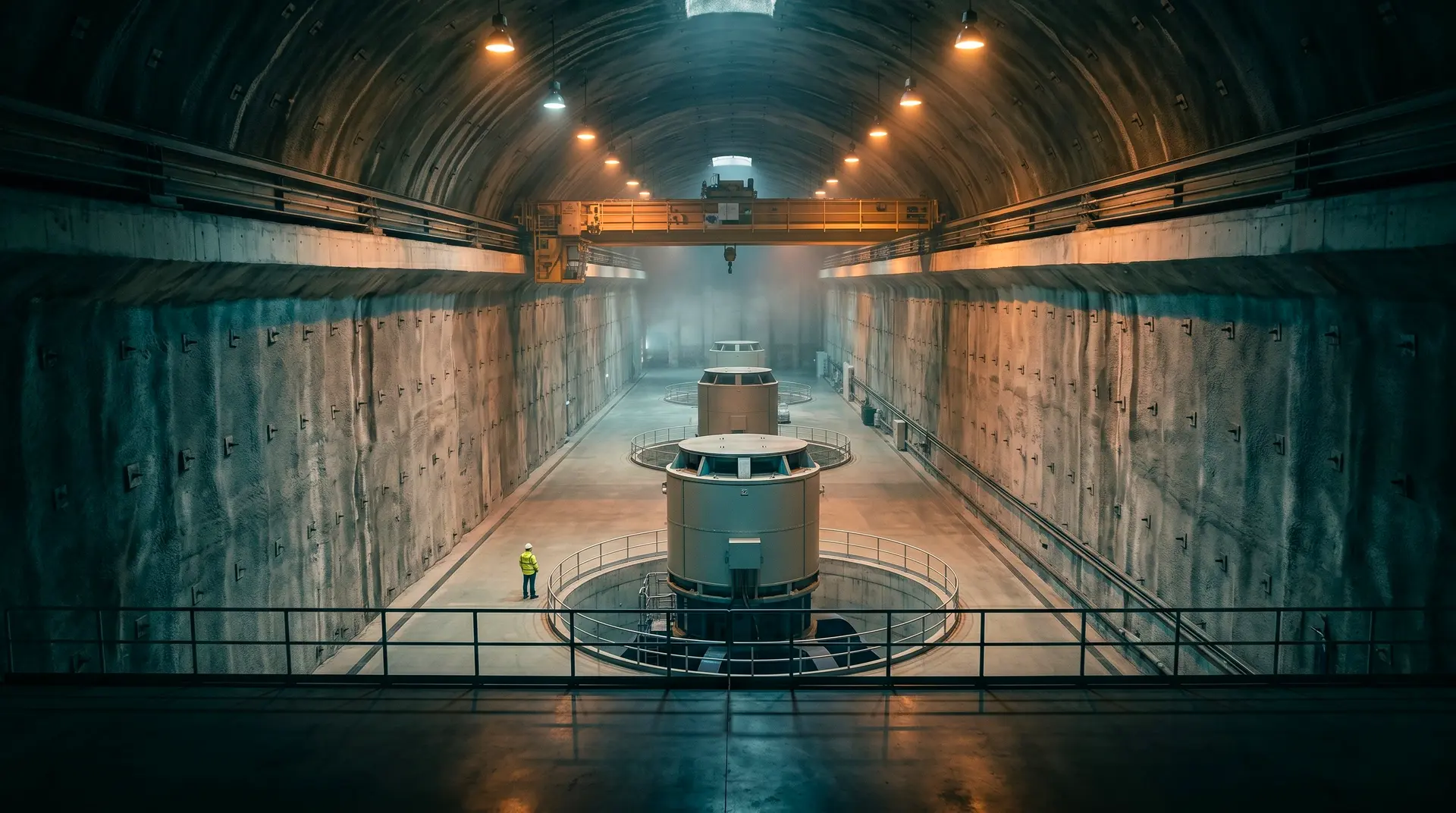
Pumped Storage vs Conventional Hydropower: How Concrete Requirements Differ
A conventional hydropower dam fills its reservoir once and maintains a relatively stable water level for decades. A pumped storage reservoir cycles its water level by tens of metres every single day. This fundamental operational difference transforms every concrete engineering decision: the dam must resist cyclic loading that conventional dams never experience, the waterways must withstand reversible high-velocity flow, and the project must build two reservoirs instead of one, often in remote terrain. Engineers who approach pumped storage concrete with conventional hydropower assumptions will underdesign for the conditions these structures actually face.
Read Article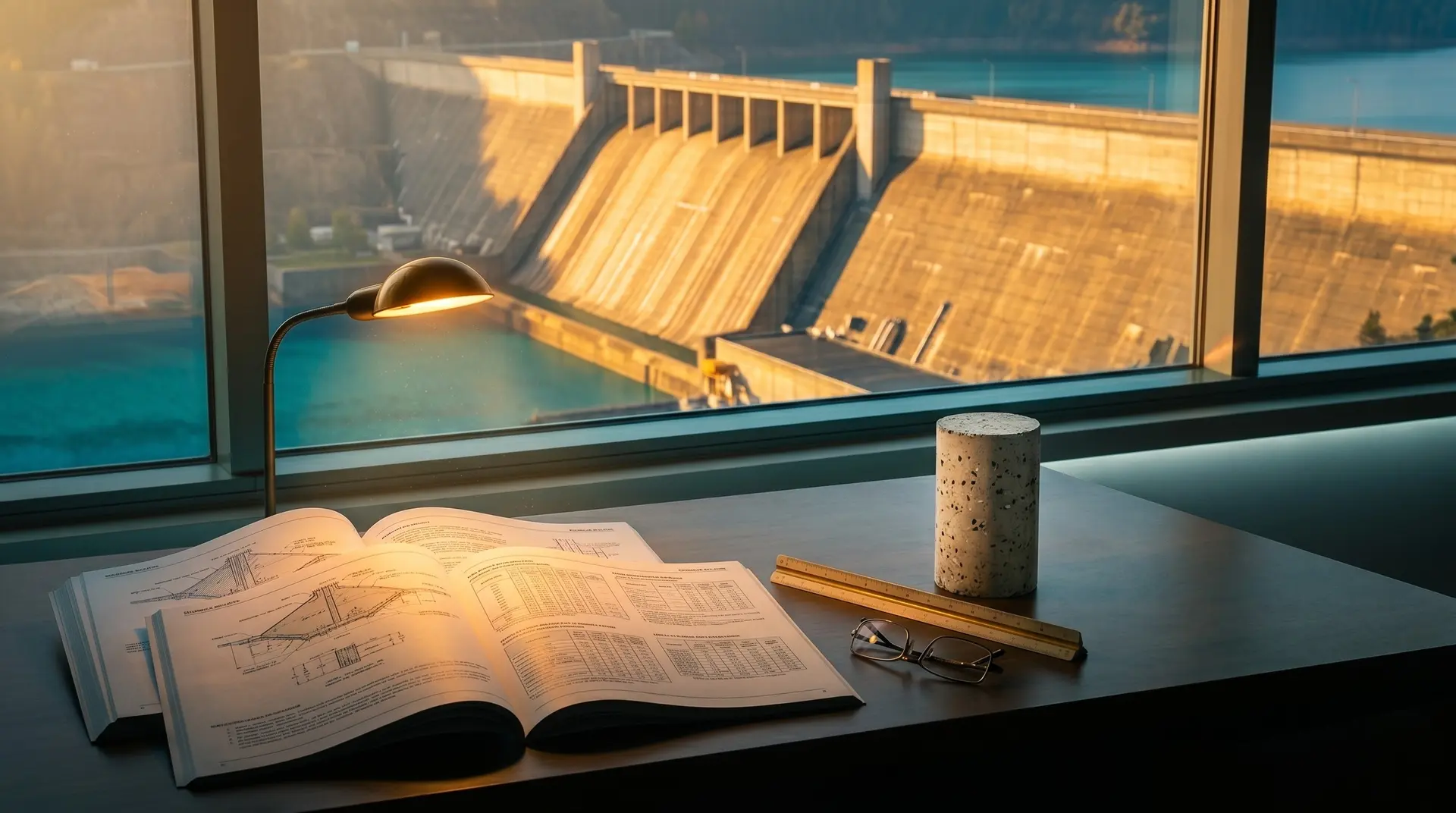
Understanding ICOLD Bulletins: A Practitioner's Guide for Dam Engineers
The International Commission on Large Dams publishes the most authoritative technical guidance on dam engineering in the world. Over 180 bulletins cover every aspect of dam design, construction, safety, and operation. For concrete technology specialists, a handful of these bulletins are essential references that fill gaps left by Indian and American standards. But navigating the ICOLD library is challenging: bulletins are numbered sequentially, not thematically, some are decades old, and not all are freely accessible. This guide identifies the ICOLD bulletins most relevant to concrete technology, explains what each covers, and shows how they integrate with IS and ACI standards in Indian practice.
Read Article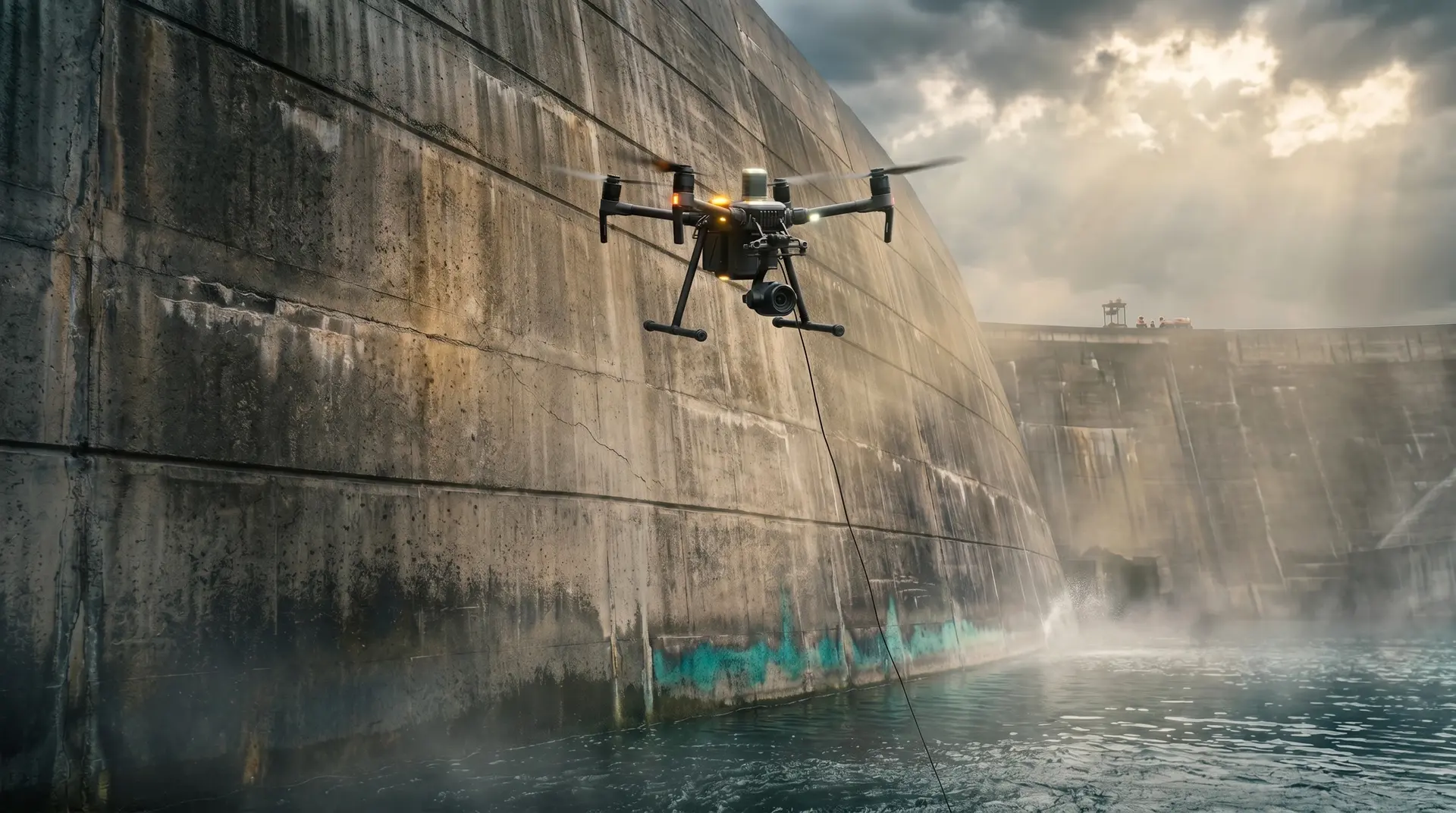
Computer Vision and Drone Inspection for Concrete Dams: A Practical Guide
At the Storfinnforsen Hydroelectric Power Station in Sweden, an autonomous drone system captured over 300,000 location-tagged images of the dam's concrete surfaces in 52 flight hours, completing the inspection 50% faster than manual methods and saving an estimated 40 workdays. No scaffolding, no rope access, no personnel working at height. This is not a research prototype. Drone-based inspection with AI-powered defect detection is commercially deployed and delivering measurable results on operational hydroelectric dams. Deep learning models now detect sub-millimetre cracks on concrete surfaces with precision exceeding 90%, while ROVs extend the same capability to submerged dam faces. For dam owners and engineers responsible for concrete condition assessment, the question has shifted from "does this technology work?" to "how do we integrate it into our inspection programme?" This technical brief examines the available systems, their proven capabilities, their limitations, and a practical deployment framework for hydroelectric projects.
Read Article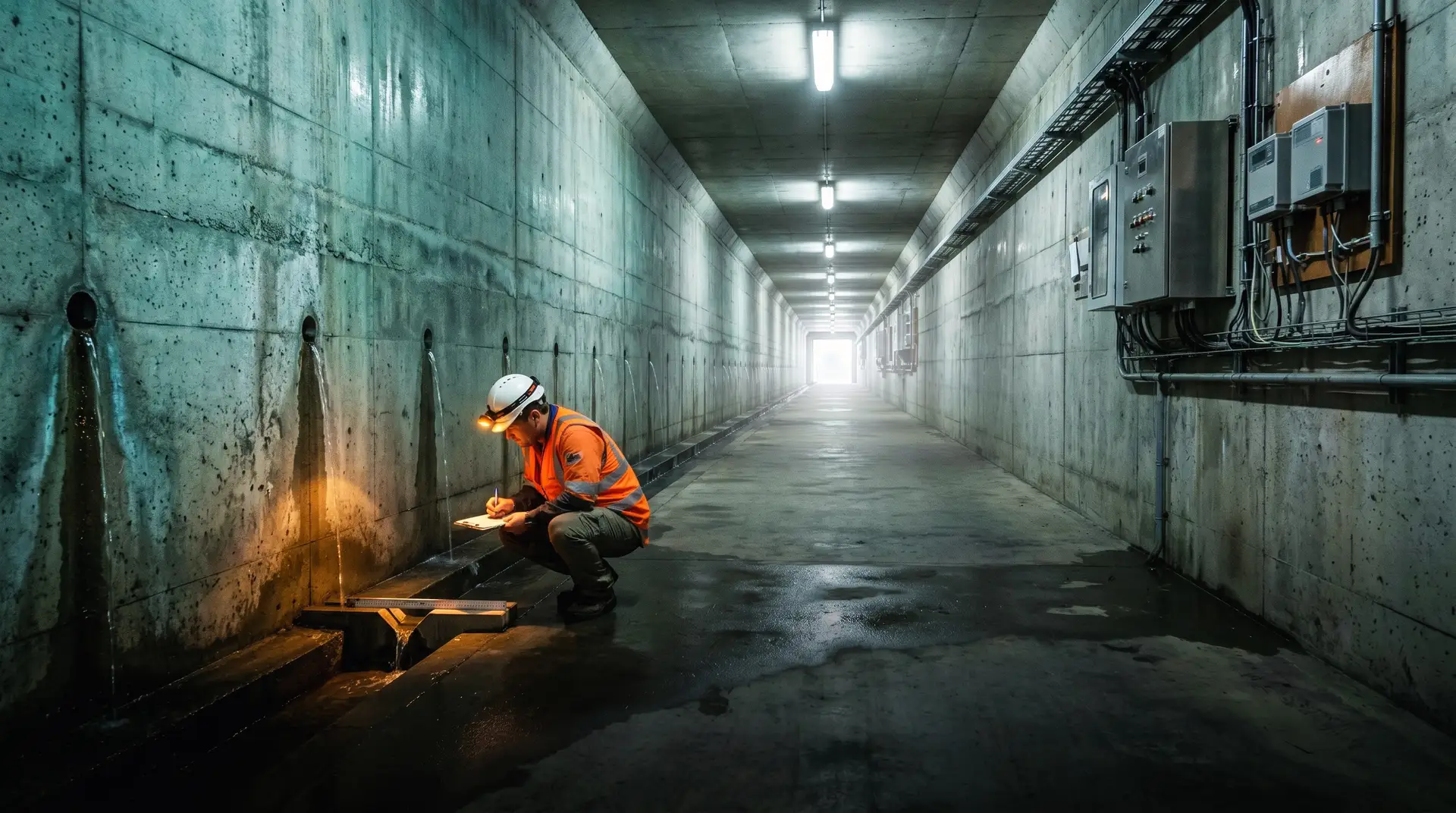
RCC Dam Seepage: Causes, Prevention, and Remediation
Seepage through RCC dams is not a defect. It is a design consideration. The low-paste, zero-slump nature of roller compacted concrete means that lift joints will never be as impermeable as monolithic conventional concrete. The question is not whether seepage will occur, but whether it is controlled within acceptable limits. When it is not, the consequences range from aesthetic staining to structural instability. This article examines why RCC dams seep, how upstream facing systems and internal drainage control it, and what to do when seepage exceeds design assumptions.
Read ArticleNewsletter
Concrete Pulse
Stay ahead on concrete technology. Subscribe to our weekly newsletter. Field-tested insights on mass concrete, dam engineering, and QA/QC, delivered straight to your inbox.
Free. No spam. Unsubscribe anytime.
Talk to a concrete specialist within 24 hours.
Whether you're at pre-tender feasibility or mid-construction troubleshooting. Whether your project is in India, Bhutan, Nepal, or beyond.