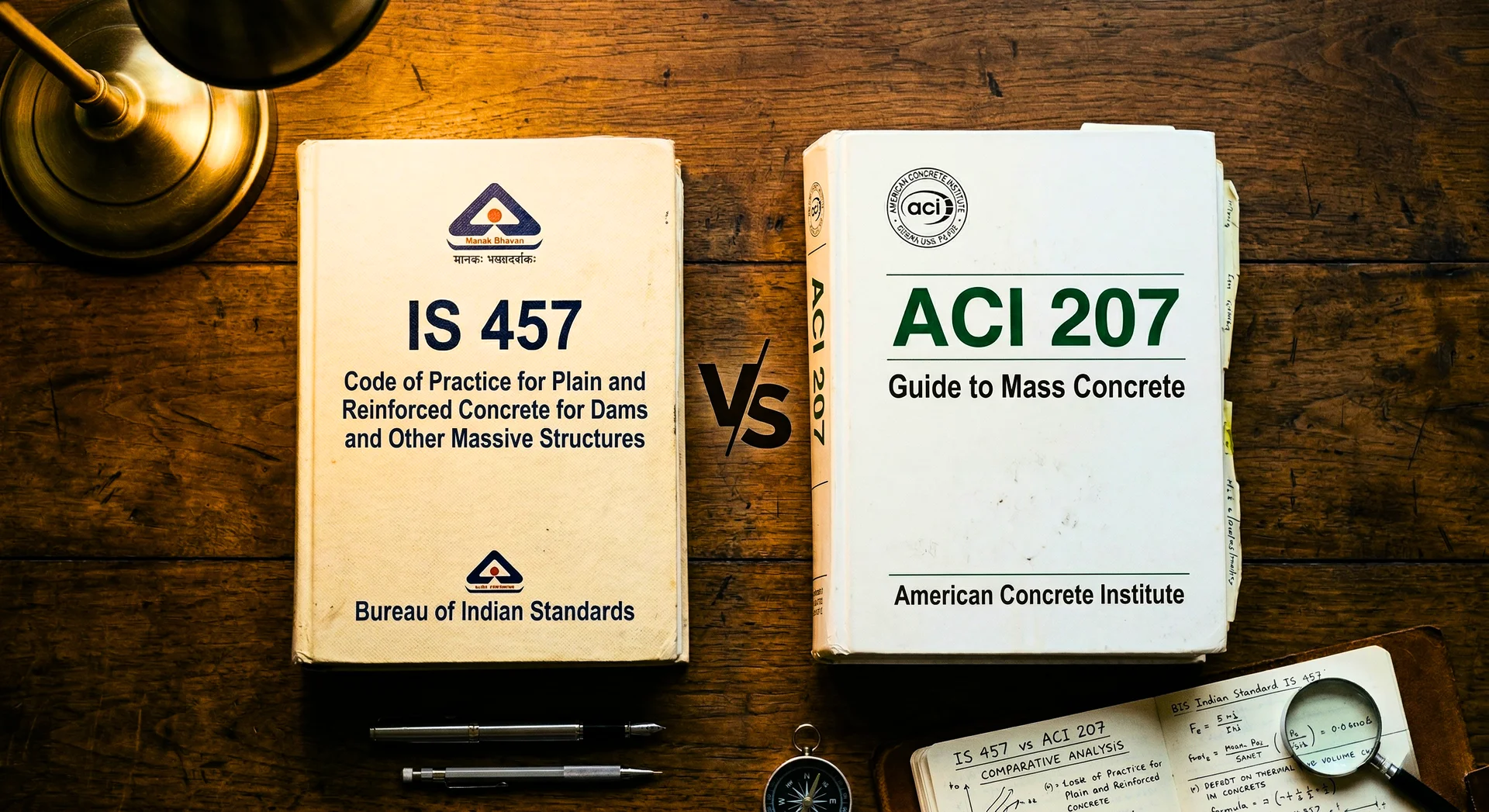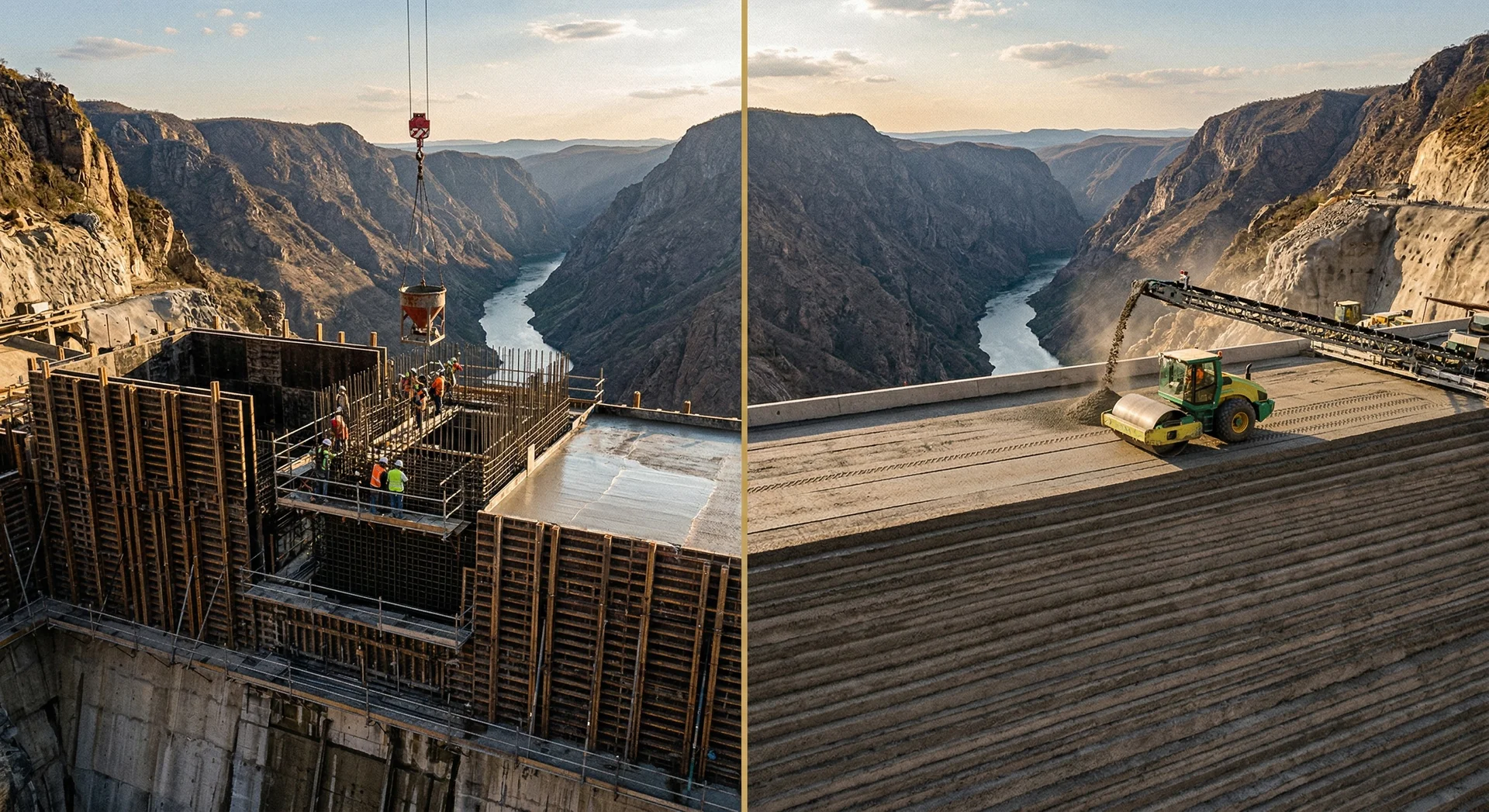

When an Indian dam engineer needs guidance on roller compacted concrete, there is no Indian standard to consult. IS 457 predates RCC by two decades. IS 456:2000 does not mention it. The ACI 207.5R covers the American practice.
For the international consensus, the definitive reference is ICOLD Bulletin 126 (and its successor, Bulletin 177).
ICOLD, the International Commission on Large Dams, has published over 180 technical bulletins since its founding in 1928. These bulletins represent the collective expertise of dam engineers from over 100 countries, developed through specialised technical committees that spend years assembling global knowledge on specific topics.
For concrete technology specialists working on dam projects, ICOLD bulletins fill critical gaps that neither Indian standards nor ACI documents fully address. They provide the international benchmark against which project specifications are written, design decisions are justified, and construction practices are evaluated.
But navigating the ICOLD library is not straightforward. Bulletins are numbered sequentially (not thematically), span nearly a century, and cover topics from environmental impact to fish passage that are irrelevant to concrete technology. This guide identifies the bulletins that matter for concrete dam engineers, explains what each covers, and shows how they fit alongside IS and ACI standards in Indian practice.
The Essential ICOLD Bulletins for Concrete Technology
Bulletin 126: Roller-Compacted Concrete Dams (2003)
Why it matters: The foundational reference for RCC dam design and construction. For Indian dam projects using RCC, this bulletin (and its updated version, Bulletin 177) is typically the primary specification reference.
What it covers:
- RCC mix design principles and optimisation
- Placement methods and equipment
- Lift joint treatment (hot, warm, cold joint classification and treatment)
- Facing systems (CVC facing, geomembrane, GERCC)
- Thermal control specific to RCC (thin lifts, no cooling pipes)
- Quality control and testing protocols
- Case studies from RCC dams worldwide
How it integrates with Indian practice: IS 457 has no RCC provisions. ACI 207.5R covers RCC from an American perspective. ICOLD Bulletin 126/177 provides the international consensus that bridges both. Indian RCC dam specifications typically reference both ACI 207.5R and ICOLD 126/177.
Bulletin 165: Selection of Materials for Concrete in Dams (2013)
Why it matters: Provides comprehensive guidance on selecting cementitious materials, aggregates, admixtures, and water for dam concrete. Addresses topics that IS 457 (1957) does not cover, including modern SCMs, aggregate reactivity testing, and material quality control.
What it covers:
- Cement types and selection criteria for dam concrete
- Supplementary cementitious materials (fly ash, GGBS, silica fume, natural pozzolans)
- Aggregate properties, testing, and acceptance (including AAR testing)
- Admixtures: air-entraining, water-reducing, retarding, accelerating
- Water quality requirements
- Material quality control programmes
How it integrates with Indian practice: Supplements IS 456 and IS 383 (aggregates) with dam-specific guidance. Particularly valuable for AAR prevention (not addressed in IS 457) and SCM selection beyond the basic provisions in IS 456.
Bulletin 107: Concrete Dams: Control and Treatment of Cracks (1997)
Why it matters: The most comprehensive reference on why concrete dams crack, how to assess the severity of cracking, and what repair methods are available.
What it covers:
- Causes of cracking: thermal, structural, AAR, sulphate attack, freeze-thaw, foundation movement
- Crack classification and severity assessment
- Monitoring methods for crack progression
- Repair methods: epoxy injection, cement grouting, slot cutting and grouting, surface sealing
- Case studies of crack repair on dams worldwide
How it integrates with Indian practice: Essential reference for dam rehabilitation under DRIP. Provides the diagnostic framework for assessing whether cracks in existing Indian dams are stable (construction-origin, not progressing) or active (requiring intervention).
Bulletin 148: Selecting Seismic Parameters for Large Dams (2016)
Why it matters: Provides the international framework for determining the seismic design parameters for dams. For Indian dams in Seismic Zones IV and V, this bulletin supplements IS 1893 with dam-specific guidance.
What it covers:
- Seismic hazard assessment methodology for dam sites
- Operating Basis Earthquake (OBE) and Maximum Credible Earthquake (MCE) definition
- Site-specific seismotectonic study requirements
- Reservoir-induced seismicity assessment
- Seismic input for dynamic analysis
How it integrates with Indian practice: IS 1893 Part 5 (Dams and Embankments) is under revision. ICOLD 148 provides the interim international reference. The NCSDP 2024 revised guidelines align with ICOLD 148 methodology.
Bulletin 155: Guidelines for Use of Numerical Models in Dam Engineering (2013)
Why it matters: As finite element analysis becomes standard for dam design (thermal analysis, seismic analysis, structural assessment), this bulletin provides guidance on modelling methodology, calibration, and validation.
What it covers:
- Numerical modelling approaches for concrete dams (static, thermal, dynamic)
- Material models for concrete (linear elastic, nonlinear, cracking models)
- Foundation modelling and dam-foundation interaction
- Thermal analysis methods and input parameters
- Seismic analysis methods (pseudo-static, response spectrum, time history, nonlinear)
- Validation and calibration of numerical models
How it integrates with Indian practice: No Indian standard addresses numerical modelling of dams. Engineers rely on ICOLD 155 and the USBR’s technical references for modelling methodology.
Bulletin 71: Exposure of Dam Concrete to Special Aggressive Waters (1989)
Why it matters: Addresses chemical attack on dam concrete from aggressive water, relevant to dams in areas with sulphate-bearing groundwater, acidic water, or soft water.
What it covers:
- Types of aggressive water exposure (sulphate, acidic, soft water, seawater)
- Concrete deterioration mechanisms under chemical attack
- Material selection for aggressive environments
- Protective measures and rehabilitation
How it integrates with Indian practice: Relevant for dams in geologically diverse India, where some sites encounter sulphate-bearing foundations (Rajasthan, Gujarat) or acidic groundwater. Supplements IS 456 durability provisions.
Bulletin 164: Internal Erosion of Existing Dams, Levees, and Dikes (2013)
Why it matters: Internal erosion (piping) is a leading cause of dam failure. This bulletin covers how seepage through cracks, joints, and permeable zones can erode material from within the dam or foundation.
What it covers:
- Internal erosion mechanisms: backward erosion, concentrated leak erosion, suffusion
- Assessment methods for internal erosion susceptibility
- Monitoring for internal erosion indicators
- Remedial measures
How it integrates with Indian practice: Directly relevant to aging Indian dams with seepage through concrete and masonry dams. Essential reference for DRIP rehabilitation assessments.
ICOLD Bulletins vs. IS and ACI Standards
| Topic | IS Standard | ACI Standard | ICOLD Bulletin |
|---|---|---|---|
| Mass concrete construction | IS 457 (1957) | ACI 207.1R-05 | Bulletin 165 |
| RCC dams | None | ACI 207.5R-11 | Bulletin 126/177 |
| Thermal control | IS 14591 (1999) | ACI 207.2R-07, 207.4R-05 | Bulletin 165 |
| Concrete materials for dams | IS 456/383 | ACI 207.1R | Bulletin 165 |
| Crack assessment/repair | None | ACI 207.3R-13 | Bulletin 107 |
| Seismic parameters | IS 1893 Pt 5 (under revision) | None dam-specific | Bulletin 148 |
| Numerical modelling | None | None dam-specific | Bulletin 155 |
| Chemical attack | IS 456 (limited) | ACI 201.2R | Bulletin 71 |
| Internal erosion | None | None | Bulletin 164 |
The pattern is clear: ICOLD bulletins fill the gaps where Indian standards are absent or outdated and where ACI documents focus on American practice. For Indian dam engineers, the ICOLD library provides the international consensus that supplements domestic standards.
How to Use ICOLD Bulletins in Practice
In Project Specifications
Reference specific ICOLD bulletins in the concrete specification for topics not covered by IS or ACI:
- “RCC mix design and placement shall comply with ICOLD Bulletin 126 and ACI 207.5R”
- “Seismic parameters shall be determined in accordance with ICOLD Bulletin 148 and IS 1893”
- “Crack repair methods shall follow ICOLD Bulletin 107 guidelines”
In Design Justification
When a design decision is questioned, ICOLD bulletins provide the international consensus that supports (or challenges) the decision. A thermal control plan justified by reference to ICOLD 165, ACI 207.2R, and IS 14591 is more defensible than one citing only one standard.
In Expert Review
Independent review consultants (Owner’s Engineers) use ICOLD bulletins as the benchmark for evaluating whether a project’s concrete technology meets international best practice. A review that cites specific ICOLD provisions carries more authority than one based on general experience.
In Dispute Resolution
Contract disputes about concrete quality often involve competing interpretations of specifications. ICOLD bulletins provide a neutral, international reference that can resolve disputes by establishing what internationally accepted practice requires for the contested topic.
Accessing ICOLD Bulletins
Free Access
Selected bulletins are available for free download from the ICOLD website under the Publications section. The free library includes some of the older bulletins and occasional newer releases.
Purchase
Most current bulletins are available for purchase from the ICOLD website. Prices typically range from EUR 20-60 per bulletin.
India’s ICOLD National Committee
India’s national committee for ICOLD operates through the Central Water Commission (CWC). Engineers affiliated with CWC, state dam safety organisations, or ICOLD member organisations may have access to the bulletin library through institutional channels.
University and Research Libraries
IIT libraries, CWC library, and CBIP (Central Board of Irrigation and Power) library typically maintain ICOLD bulletin collections accessible to researchers and practitioners.
Key Takeaway
ICOLD bulletins are not optional reading for concrete dam engineers. They are the international knowledge base that Indian dam engineering depends on for topics where domestic standards are outdated (IS 457, 1957), absent (RCC, numerical modelling, crack repair), or under revision (IS 456:2025, IS 1893 Part 5).
An engineer who works on dam concrete with only IS and ACI standards is working with two-thirds of the available knowledge. The ICOLD library provides the other third: the global experience, the international consensus, and the case study evidence that no single national standard can match.
For dam projects funded by multilateral lenders, ICOLD compliance is increasingly expected. For all dam projects, regardless of funding source, ICOLD bulletins provide the technical depth that turns a good concrete specification into an internationally defensible one.