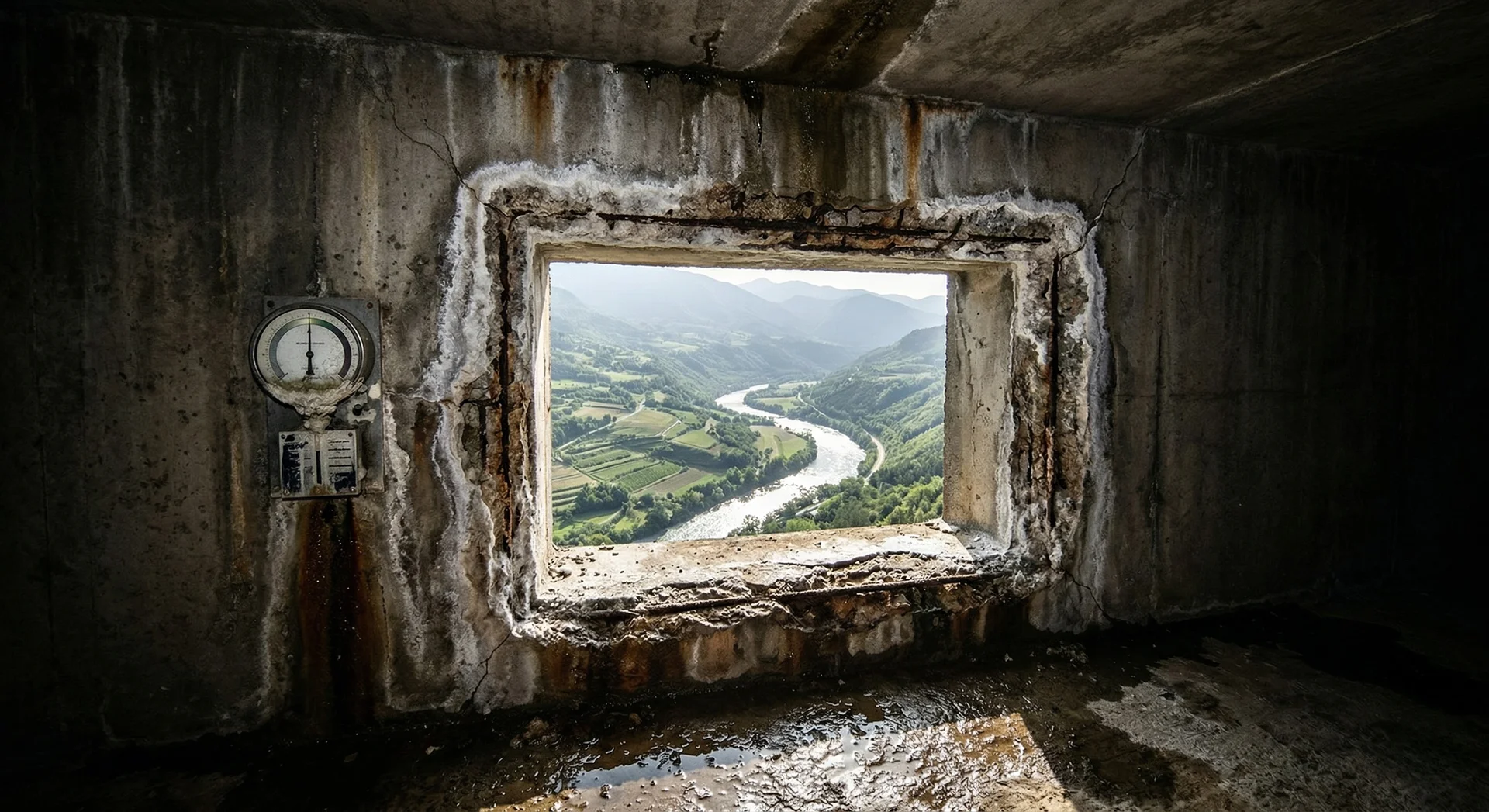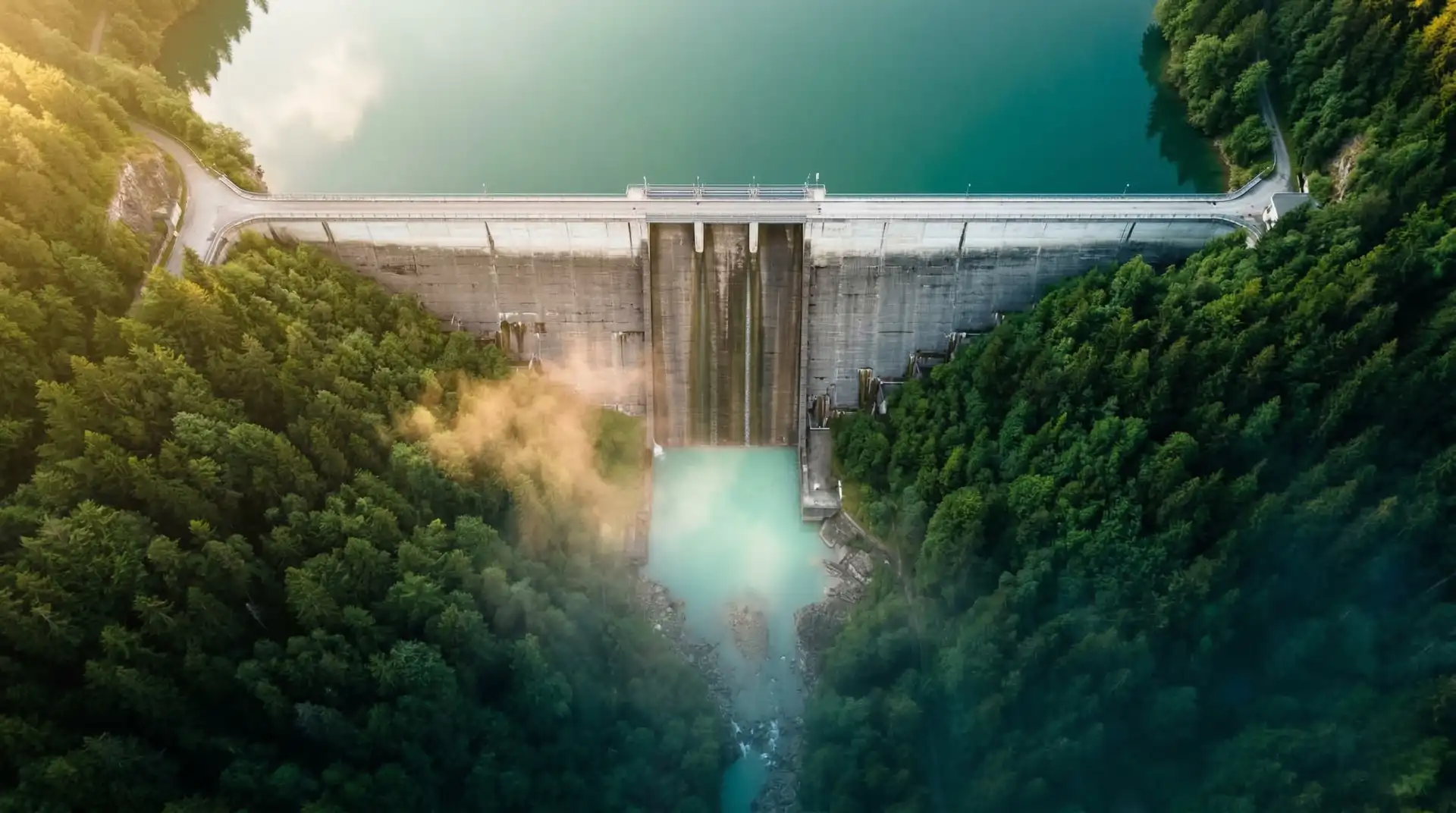
The reaction that concrete engineers fear most
Every concrete deterioration mechanism has a timeline. Corrosion of reinforcing steel takes 15-25 years to initiate in well-designed concrete. Sulphate attack requires sustained exposure to aggressive groundwater. Freeze-thaw damage accumulates over decades of seasonal cycles.
Alkali-aggregate reaction operates on a similar timescale, but with one critical difference: it is built into the concrete at the time of mixing. The reactive aggregate and the alkali-rich cement are locked together in the hardened matrix from day one. All the reaction needs is time and moisture, and in a dam, moisture is permanent.
The first documented case of AAR was identified at Parker Dam in the USA in 1941. Since then, ICOLD surveys have catalogued AAR damage in dams across all five continents. A 1985 survey documented 76 confirmed cases in hydraulic structures alone. That number has grown significantly in the decades since, as more dams built in the mid-20th century reach the age where slow-reacting aggregates begin to manifest symptoms.
The scale of the problem
The Mactaquac Dam in New Brunswick, Canada — a 660 MW hydroelectric facility built in 1968 — is perhaps the most studied AAR-affected dam in the world. AAR-induced expansion of up to 5 mm/year has been measured since the 1980s. The dam has swelled 230-300 mm in height since construction. The estimated rehabilitation cost has escalated from CAD 2.9 billion in 2016 to CAD 7.5-9 billion as of 2025. The work will continue until 2068 — the dam's centenary.
AAR is not a rare occurrence. It is not limited to specific geographies or aggregate types. And it is not something that can be fixed once it starts. Prevention at the construction stage, through proper aggregate testing, mix design, and specification, is the only reliable strategy.
Understanding the mechanism
AAR is an umbrella term covering two distinct reactions:
Alkali-Silica Reaction (ASR) is by far the more common form. It occurs between the hydroxyl ions (OH⁻) associated with sodium and potassium alkalis in the cement paste and reactive forms of silica in the aggregate. These reactive silica forms include opal, chalcedony, chert, tridymite, cristobalite, strained quartz in greywacke and gneiss, and volcanic glasses.
The mechanism proceeds in three stages:
- Dissolution: The highly alkaline pore solution (pH 13-14) attacks and dissolves silica at the surface and within microcracks of reactive aggregate particles.
- Gel formation: The dissolved silica combines with alkalis and calcium to form a hydrophilic alkali-silica gel within and around the aggregate particles.
- Expansion: The gel absorbs water from the surrounding paste, swells, and generates internal pressure. When this pressure exceeds the tensile strength of the concrete (typically 2-4 MPa), cracking initiates.
Alkali-Carbonate Reaction (ACR) involves certain dolomitic limestones and is less common. The reaction mechanism is different — it involves dedolomitisation rather than gel formation — but the result is similar: internal expansion and cracking.
Three conditions must be present simultaneously for ASR to occur:
| Condition | Role | Dam-Specific Context |
|---|---|---|
| Reactive aggregate | Provides the silica that reacts with alkalis | Aggregates sourced from local quarries may contain reactive minerals, especially in Himalayan geology (greywacke, gneiss, quartzite) |
| Sufficient alkalis | Provides the hydroxyl ions that attack silica | High cement content in structural concrete increases total alkali loading; external alkalis from seawater or de-icing salts can also contribute |
| Moisture | Enables gel swelling and sustains the reaction | Dams are permanently saturated — the one condition that cannot be eliminated |
Remove any one of these three conditions, and ASR cannot proceed. In dam construction, moisture cannot be eliminated. Prevention therefore focuses on eliminating reactive aggregates or controlling alkali availability, or both.
What AAR looks like in the field
The insidious nature of AAR is that symptoms typically appear 10-30 years after construction, long after the construction team has demobilised and warranties have expired. Recognising the early signs is critical for dam owners and operators.
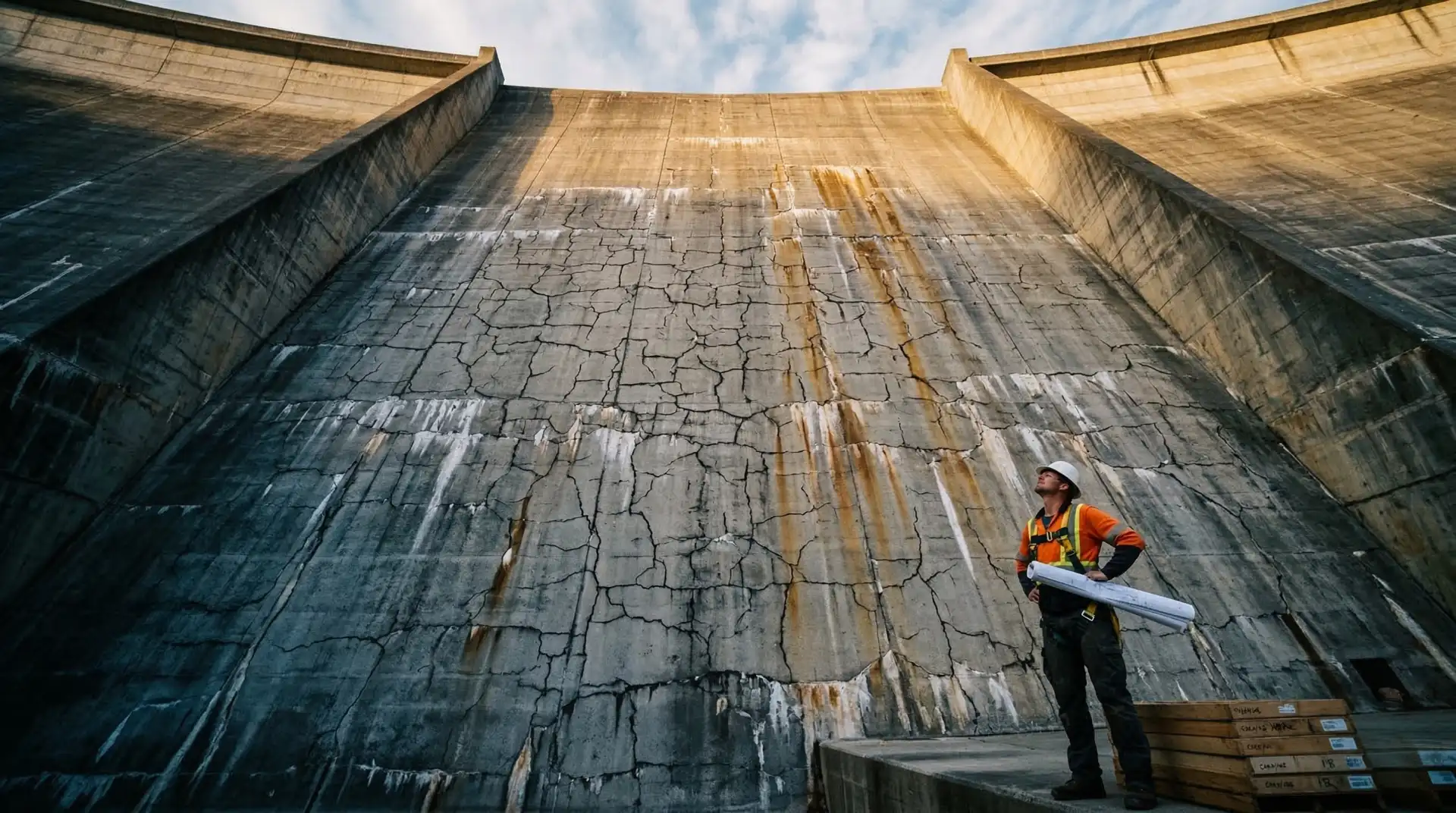
Map cracking
The most characteristic visual indicator. ASR-induced expansion creates a network of irregular, interconnected cracks on exposed concrete surfaces, resembling a dried mud pattern. In plain (unreinforced) concrete, the cracks are randomly oriented. In reinforced concrete, they tend to align with the primary reinforcement direction, because the steel restrains expansion perpendicular to its axis.
Gel exudation
A clear to amber, viscous liquid seeping from cracks or surface pores. This is the alkali-silica gel itself, migrating to the surface under internal pressure. Fresh gel is fluid and transparent; aged gel becomes white, chalky, and calcium-rich. The presence of fresh gel indicates that the reaction is still active and expansion will continue.
Structural deformation
In dams, AAR expansion manifests as measurable structural movements:
- Vertical growth — the dam height increases as lift joints expand
- Upstream displacement — the crest moves upstream as the dam body swells
- Closing of contraction joints — expansion consumes the designed gap between monoliths
- Misalignment of gates and mechanical equipment — expansion of intake and spillway structures displaces embedded steelwork
At the Mactaquac Dam, AAR expansion has displaced turbine and generator alignments, requiring periodic re-alignment to maintain safe operation. Spillway gates have required modification to accommodate structural movement.
Pop-outs and surface deterioration
Reactive aggregate particles near the surface expand and break free, leaving small conical voids. This is particularly common in concrete exposed to wetting-drying cycles at the waterline of reservoir structures.
Key Takeaway
If you observe map cracking, gel exudation, or unexpected structural movement on a dam older than 15 years, AAR should be investigated immediately. Confirmation requires petrographic examination of concrete cores (ASTM C856) with SEM/EDS analysis to positively identify ASR gel composition. Early diagnosis enables proactive management before the reaction causes irreversible damage to critical equipment.
Real-world consequences: what AAR has cost the dam industry
AAR is not an academic curiosity. It has driven some of the most expensive rehabilitation programmes in civil engineering history.
Mactaquac Dam, Canada (660 MW) — CAD 7.5-9 billion
Built in 1968 with locally quarried greywacke aggregate containing reactive silica minerals. AAR was detected in the 1980s. Concrete expansion of up to 5 mm/year has displaced embedded equipment, cracked structural elements, and required annual slot-cutting operations since 1988. NB Power entered a technical assistance agreement with Hydro-Québec in 2020 for AAR-specific concrete repair expertise. The rehabilitation programme will continue until 2068, with turbine replacements occurring one at a time over six years to maintain partial generation capacity.
Alto Ceira Dam, Portugal (built 1949) — demolished and replaced
A thin concrete arch dam built with quartzite aggregate. ASR was first diagnosed in 1986. Progressive expansion caused upstream displacement, extensive cracking, and loss of structural integrity. By the 2000s, the dam was assessed as beyond rehabilitation. It was decommissioned and partially demolished, and a new Alto Ceira II Dam was constructed 200 metres downstream in 2014 — designed with rigorously tested non-reactive aggregates and high fly ash content to prevent recurrence.
Kariba Dam, Zambia/Zimbabwe (1,626 MW) — ongoing safety concern
Africa’s largest hydroelectric dam, completed in 1959. AAR-induced swelling of concrete walls has affected gate functioning and raised dam safety concerns. The Zambian government has publicly stated that the dam wall developed weaknesses that required urgent repair to prevent potential failure.
Fontana Dam, USA (Tennessee Valley Authority) — periodic slot-cutting since the 1980s
AAR expansion in the spillway piers required vertical slot cuts using diamond wire saws to relieve compressive stresses. Re-cutting intervals of approximately 5 years have been necessary to manage ongoing expansion.
Bhakra Dam, India — AAR investigation under DRIP
India’s iconic 226-metre gravity dam has been investigated for AAR under the Dam Rehabilitation and Improvement Project (DRIP). Core samples underwent petrographic analysis, SEM examination, and mineralogical studies. Findings confirmed the simultaneous occurrence of alkali-silica reaction and internal sulphate attack — a rare but devastating combination of deleterious reactions.
India's exposure
India's Central Water Commission has reported that the safety audit of approximately 5,000 large dams is pending. Many of these dams were built 40-60 years ago, precisely the age range where slow-reacting aggregates begin to show AAR symptoms. The Central Soil and Materials Research Station (CSMRS), under the Ministry of Jal Shakti, is India's premier institution for AAR research in dam concrete and has published a dedicated monograph on the subject. PCCI works within this standards framework, applying IS/BIS and ASTM testing protocols on every engagement.
How to test for AAR potential
AAR prevention begins with aggregate qualification. No aggregate should be used in dam concrete without systematic reactivity testing. The testing framework follows a tiered approach, from rapid screening to long-term confirmation.
Tier 1: Petrographic examination (ASTM C295 / IS 2386 Part VIII)
The essential first step. A trained petrographer examines thin sections of the aggregate under polarised light microscopy to identify potentially reactive minerals: strained quartz, microcrystalline quartz, chalcedony, opal, volcanic glass, chert, and argillaceous or phyllitic textures.
Petrography does not quantify reactivity — it identifies the potential for reaction. If reactive minerals are found, further testing is mandatory. If the aggregate is petrographically innocuous, it may still undergo confirmatory testing for critical structures like dams, where the consequences of AAR are severe and irreversible.
Tier 2: Accelerated mortar bar test (ASTM C1260 / IS 2386 Part VII)
A rapid screening test that delivers results in 16 days. Mortar bars are stored at 80°C in sodium hydroxide solution — a severely accelerated environment that forces any reactive silica to respond.
| Expansion at 16 days | Interpretation |
|---|---|
| < 0.10% | Innocuous behaviour indicated |
| 0.10% - 0.20% | Potentially deleterious — further testing required |
| > 0.20% | Deleterious expansion indicated |
Limitation: The test’s aggressive conditions can produce false positives (aggregates that perform well in the field may fail the test) and, less commonly, false negatives for slowly reacting aggregates like certain greywackes. For dam projects, it should be used for screening, not for final acceptance.
Tier 3: Concrete prism test (ASTM C1293)
The gold standard for assessing aggregate reactivity. Concrete prisms are stored over water at 38°C for 1 year (aggregate assessment) or 2 years (evaluation of preventive measures such as SCMs). Expansion exceeding 0.04% at one year indicates potentially reactive aggregate.
| Purpose | Duration | Expansion limit |
|---|---|---|
| Aggregate reactivity | 1 year | 0.04% |
| SCM effectiveness | 2 years | 0.04% |
Limitation: The test’s duration makes it impractical for time-sensitive projects. Alkali leaching from test prisms during the storage period can underestimate the actual reactivity, particularly for slowly reactive aggregates.
Tier 4: Miniature concrete prism test (AASHTO T380)
A more recent development combining aspects of ASTM C1260 and C1293. It uses smaller specimens stored at elevated temperature, delivering results in 56 days. Increasingly accepted as a practical alternative to the 1-2 year concrete prism test, especially for evaluating SCM effectiveness.
Investigation of existing structures (ASTM C856 / C1723)
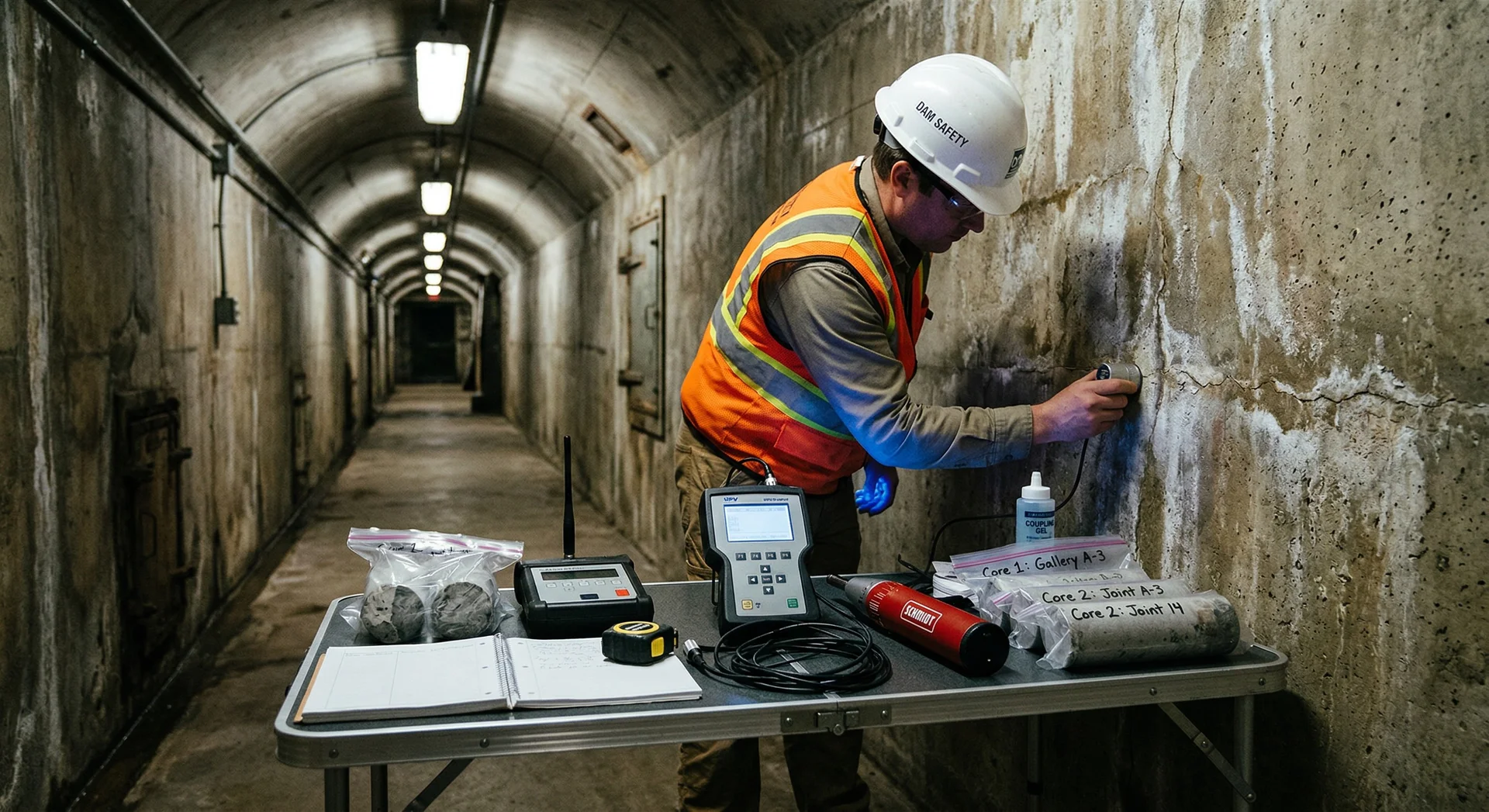
When AAR is suspected in an existing dam, petrographic examination of concrete cores is the primary diagnostic tool. Thin-section petrography under polarised light identifies the characteristic features of ASR: gel-filled cracks, reaction rims around aggregate particles, and alteration of reactive minerals.
Scanning Electron Microscopy with Energy Dispersive Spectroscopy (SEM/EDS) confirms the chemical composition of the gel — the presence of silicon, sodium, potassium, and calcium in characteristic ratios is diagnostic.
The uranyl acetate fluorescence test can be applied to freshly broken concrete surfaces to detect ASR gel under UV light, providing a rapid field screening method.
Prevention: the mix design approach
Once reactive aggregates are identified, or when aggregate reactivity cannot be conclusively ruled out, the concrete mix must be designed to suppress the reaction. Three strategies are available, and best practice employs all three in combination.
Strategy 1: Control the total alkali loading
The traditional approach was to specify low-alkali cement (Na₂O equivalent < 0.60%). This is necessary but no longer considered sufficient on its own.
A landmark finding published in the Canadian Journal of Civil Engineering in 2025 documented the case of the Lady Evelyn Lake dam in northern Ontario. The original dam, built around 1925 with reactive greywacke and argillite aggregates, suffered severe AAR and was demolished in 1971. The replacement dam was built using the same local aggregates but with low-alkali cement to prevent recurrence. An inspection in 2025 revealed cracking due to ASR — after more than 50 years, the low-alkali cement alone was not sufficient.
The reason: the relevant parameter is not the cement alkali content, but the total alkali loading — the product of cement alkali content and cement content per cubic metre. As concrete strength requirements have increased over the decades, cement contents have risen correspondingly, delivering more total alkalis to the mix even when the percentage is below 0.60%.
Modern specifications for dam concrete should limit total alkali loading to 3.0 kg Na₂O equivalent per cubic metre of concrete, independent of the cement’s alkali percentage.
Strategy 2: Supplementary cementitious materials (SCMs)
SCMs are the most effective and widely used strategy for AAR prevention in mass concrete. They work through two mechanisms:
- Alkali binding: The pozzolanic reaction consumes calcium hydroxide (CH) in the paste, reducing the pH and hydroxyl ion concentration that drives silica dissolution.
- Pore refinement: SCMs produce additional C-S-H gel that densifies the microstructure, binding alkalis and reducing their mobility in the pore solution.
| SCM | Typical replacement level for AAR mitigation | Key advantage | Consideration |
|---|---|---|---|
| Class F fly ash | 25-40% of cement | Low cost, widely available in India, reduces heat of hydration simultaneously | Higher replacement levels needed with higher-alkali cements; Class C fly ash is less effective |
| GGBS | 40-65% of cement | Excellent alkali binding, up to 50% reduction in heat of hydration, improves sulphate resistance | Slower early strength gain; specify minimum replacement of 40% for AAR mitigation |
| Silica fume | 7-12% of cement | Extremely effective at low dosages due to high fineness and reactivity; densifies microstructure | Reduces workability; typically used in combination with fly ash or GGBS, not alone |
| Ternary blends | Fly ash + GGBS + silica fume | Synergistic benefits: low heat, high durability, superior AAR resistance | Requires careful proportioning and trial mix verification |
On PCCI’s engagement at the Tanahu Hydropower Project (140 MW) in Nepal, high fly ash content with low cement was specified to achieve economy, thermal control, and AAR resistance simultaneously — addressing alkali-aggregate reactivity as part of an integrated durability design, not as an afterthought.
Key Takeaway
Do not rely on low-alkali cement alone to prevent AAR. The 2025 Canadian evidence confirms what many researchers have suspected: cement alkali content is a necessary but insufficient control. The reliable approach combines three measures: (1) limit total alkali loading, (2) use adequate SCM replacement levels, and (3) verify effectiveness through the concrete prism test (ASTM C1293) or miniature concrete prism test (AASHTO T380). For dam concrete in regions with reactive geology — including the Himalayan belt — this triad is non-negotiable.
Strategy 3: Lithium compounds
Lithium-based admixtures (lithium nitrate, lithium hydroxide monohydrate) have been demonstrated to reduce ASR expansion by converting the expansive gel into a non-expansive lithium-bearing form. They are primarily used in two contexts:
- In new concrete: As an admixture when reactive aggregates must be used and SCMs are insufficient or unavailable. Dosage requirements vary by aggregate type — rapidly reactive aggregates (opal, chert) respond well, while slowly reactive aggregates (strained quartz) may require higher dosages.
- In existing structures: Topical application or electrochemical impregnation to treat shallow ASR damage. Laboratory studies confirm positive effects on small specimens, but penetration depth is limited in large structures.
For dam concrete, lithium admixtures are typically considered a supplementary measure rather than a primary prevention strategy, due to cost and dosage uncertainty. SCMs remain the mainstay.
The Indian and South Asian context
The Himalayan region, where PCCI’s project portfolio is concentrated, presents specific AAR challenges that warrant attention.
Reactive aggregate geology
The geological formations of the Himalayan belt include greywackes, gneisses, quartzites, and metamorphic rocks that can contain strained quartz, microcrystalline silica, and other potentially reactive minerals. These are the slowly reactive aggregates — the most dangerous type, because they may pass rapid screening tests (ASTM C1260) while still producing long-term deleterious expansion.
Aggregates sourced from rivers in the Himalayan foothills, the primary source for most dam projects in India, Bhutan, and Nepal, are geological mixtures containing particles from multiple formations. A single aggregate stockpile may contain both innocuous and reactive particles, making representative sampling and thorough petrographic examination essential.
Indian testing standards
IS 2386 Part VII (Methods of Test for Aggregates for Concrete: Alkali Aggregate Reactivity), reaffirmed by BIS in 2021, prescribes the accelerated mortar bar method with the same expansion limits as ASTM C1260. IS 2386 Part VIII covers petrographic examination.
However, for major dam projects, Indian practice increasingly supplements IS standards with ASTM C1293 (concrete prism test) for long-term reactivity assessment, particularly when borderline results are obtained from the accelerated test. CSMRS in New Delhi, the government’s premier concrete research facility, has capabilities for both accelerated and long-term AAR testing.
Climate factors
Higher ambient temperatures in tropical and subtropical climates accelerate ASR. The reaction rate approximately doubles for every 10°C increase in temperature. Himalayan dam sites with summer temperatures exceeding 35-40°C in the lower valleys will experience faster AAR progression than comparable structures in temperate climates — making prevention even more critical.
Managing AAR in existing structures
When AAR is confirmed in an operating dam, the objective shifts from prevention to management: controlling the rate of deterioration, maintaining structural safety, and extending service life.
Structural monitoring
Continuous instrumentation is essential. Measurement systems typically include:
- Extensometers — measuring expansion in three dimensions within the concrete mass
- Joint meters — monitoring contraction joint closure
- Pendulum or alignment surveys — tracking crest displacement
- GPS/satellite monitoring — for large-scale deformation tracking
- Crack mapping and photography — documenting progression over time
Slot cutting
The most established intervention for AAR-affected gravity dams. Diamond wire saws cut vertical or transverse slots through the dam structure to relieve compressive stresses from expansion and provide space for ongoing growth. The Mactaquac Dam has used slot cutting since 1988, with slots up to 20 metres deep. Re-cutting intervals of 10-20 years are typical, based on measured closure rates.
Moisture control
Since water is essential for the ASR gel to swell, reducing moisture availability can slow the reaction. Strategies include improved internal drainage galleries, upstream waterproofing membranes, and crack injection. However, in dams where the upstream face is permanently submerged, complete moisture control is impractical — this is why prevention at the construction stage is so critical.
Lithium treatment
Topical application of lithium compounds has shown promise in laboratory settings and for shallow surface treatment. Electrochemical impregnation using applied DC voltage can drive lithium ions deeper into the concrete (effective to approximately 50 mm depth at 60 volts). However, for mass concrete dam sections metres thick, lithium treatment is limited to surface zones and is not a whole-structure solution.
The economic argument for prevention
The cost asymmetry between AAR prevention and AAR rehabilitation is staggering.
Prevention costs (at the construction stage):
- Aggregate testing programme (petrography + mortar bar + concrete prism): included in standard QC budgets for dam projects
- SCM procurement (fly ash, GGBS): often cost-neutral or cost-positive, since SCMs replace more expensive Portland cement
- Total alkali loading specification and verification: a specification clause, not an additional cost
- Net cost of AAR prevention: negligible to negative (SCM use typically reduces overall concrete cost)
Rehabilitation costs (after AAR has developed):
- Mactaquac Dam: CAD 7.5-9 billion over 40+ years
- Alto Ceira Dam: complete demolition and replacement — the cost of an entirely new dam
- Annual monitoring and slot-cutting programmes: USD 6-7 million per year at Mactaquac alone
The bottom line
AAR prevention costs essentially nothing when designed into the original concrete mix. AAR rehabilitation costs billions and continues for the remaining life of the structure. For any dam project in a region with potentially reactive aggregate geology — which includes the Himalayan belt — comprehensive aggregate testing and SCM-based mix design are not optional line items. They are the most cost-effective risk management decisions available to the project.
A checklist for dam project stakeholders
Whether you are a project developer, EPC contractor, or owner’s engineer, the following checklist ensures AAR is addressed systematically.
During pre-tender and design:
- Commission petrographic examination of all candidate aggregate sources (ASTM C295 / IS 2386 Part VIII)
- If reactive minerals are identified, initiate ASTM C1260 and ASTM C1293 testing
- Specify total alkali loading limits in concrete specifications (≤ 3.0 kg Na₂O eq/m³)
- Specify minimum SCM replacement levels appropriate to the aggregate reactivity class
- Include AAR testing in the concrete qualification programme
During construction:
- Verify aggregate source consistency — reactive mineral content can vary within a quarry
- Monitor cement alkali content on every delivery (mill certificates)
- Verify SCM replacement levels at the batching plant
- Maintain QC testing records for aggregate reactivity throughout the project
- If aggregate sources change during construction, repeat the full testing programme
During operations (for existing dams):
- Include AAR-specific inspection in periodic dam safety reviews
- Monitor for map cracking, gel exudation, joint closure, and structural displacement
- If AAR is suspected, commission petrographic examination of cores (ASTM C856 / C1723)
- Establish baseline instrumentation for ongoing deformation monitoring
- Develop a management plan with specialist input before symptoms become severe
How PCCI approaches AAR risk
AAR prevention is integral to PCCI’s Durability & Service-Life Design and Mix Design & Performance Concrete services. Our approach treats AAR as a design parameter — addressed at the mix design stage through systematic aggregate testing, SCM optimisation, and alkali loading control.
On the Tanahu Hydropower Project in Nepal, PCCI’s engagement specifically included advanced testing for potential alkali-aggregate reactions alongside thermal parameter optimisation. The concrete mix design incorporated high fly ash content to achieve simultaneous AAR resistance, thermal control, and economy — demonstrating that durability, sustainability, and cost-effectiveness are not competing objectives.
With deep expertise across landmark hydroelectric projects totalling 4,000+ MW in India, Bhutan, and Nepal, PCCI brings field-tested knowledge of Himalayan aggregate geology, Indian and international testing standards, and performance-based mix design to every engagement.
Book a Technical Call → to discuss aggregate reactivity testing and AAR-resistant mix design for your project.