

Services / QA/QC
Quality you can measure, verify, and defend.
QA/QC system design, laboratory setup and management, material testing programs, and on-site construction supervision, ensuring every cubic meter meets specification.
Why this matters
Without a quality system, you're not building. You're gambling.
On a hydroelectric project placing hundreds of thousands of cubic meters of concrete, quality cannot be left to individual judgment. Every batch, every placement, every cure cycle needs systematic verification against clear acceptance criteria. Without it, defects accumulate undetected, and the cost of finding them later is orders of magnitude higher than preventing them.
The most common quality failures in dam concrete aren't dramatic. They're insidious. Marginally low strengths. Slightly high placement temperatures. Inadequate vibration. Insufficient curing duration. Each individual deviation might pass unnoticed, but their cumulative effect on the structure's 100-year service life can be devastating.
A well-designed QA/QC system catches these deviations in real-time, before concrete sets and problems become permanent. It provides the data to make informed decisions, the documentation to demonstrate compliance, and the framework to prevent recurring issues. This is what PCCI builds: quality systems that work in the field, not just on paper.
Our approach
Quality systems built for the field, not just the filing cabinet.
From laboratory setup to construction supervision, we design, implement, and manage quality programs that deliver verifiable results at every stage.
QA/QC System Design
Designing comprehensive quality systems from scratch: quality plans, inspection test plans (ITPs), hold/witness points, acceptance criteria, NCR procedures, and documentation frameworks tailored to each project's specifications and standards.
Laboratory Setup & Management
End-to-end site laboratory services: layout design, equipment specification, staff training, testing SOPs, calibration programs, and quality management systems. We build labs that deliver reliable results from day one.
Material Testing Programs
Systematic testing of cement, aggregates, SCMs, admixtures, and water at source qualification and throughout construction. Fresh and hardened concrete testing per IS/BIS, ACI, and ASTM standards.
Construction Supervision
On-site quality oversight during concrete production, transport, placement, and curing. Real-time monitoring of batching accuracy, placement temperature, vibration adequacy, and finishing quality.
Compliance & Standards Verification
Ensuring all concrete work meets IS/BIS, ACI, ASTM, and project-specific requirements. Audit programs, compliance matrices, and third-party coordination for independent verification.
Documentation & Reporting
Structured reporting systems for test results, quality metrics, trend analysis, and compliance status. Real-time dashboards and periodic reports that keep all stakeholders informed on quality performance.
Project proof
Quality programs delivered from inception to commissioning.
Mangdechhu Hydroelectric Project
720 MW · Bhutan
Managed the complete quality control program from inception through commissioning: materials testing, construction supervision, and quality documentation across all concrete structures.
Punatsangchhu-1 Hydroelectric Project
1,200 MW · Bhutan
Comprehensive QA/QC implementation for the 65m gravity dam, one of the largest concrete volumes in Bhutan's hydropower program. Full laboratory management and construction quality oversight.
Dhaulasidh Hydroelectric Project
66 MW · Himachal Pradesh, India
Quality assurance and quality control services ensuring concrete performance compliance across all project structures, from diversion works through the powerhouse.
Technical insights
Deep dives into concrete quality assurance for infrastructure.
Technical briefs on preventing quality failures and building robust QA/QC frameworks for dam and hydropower projects.
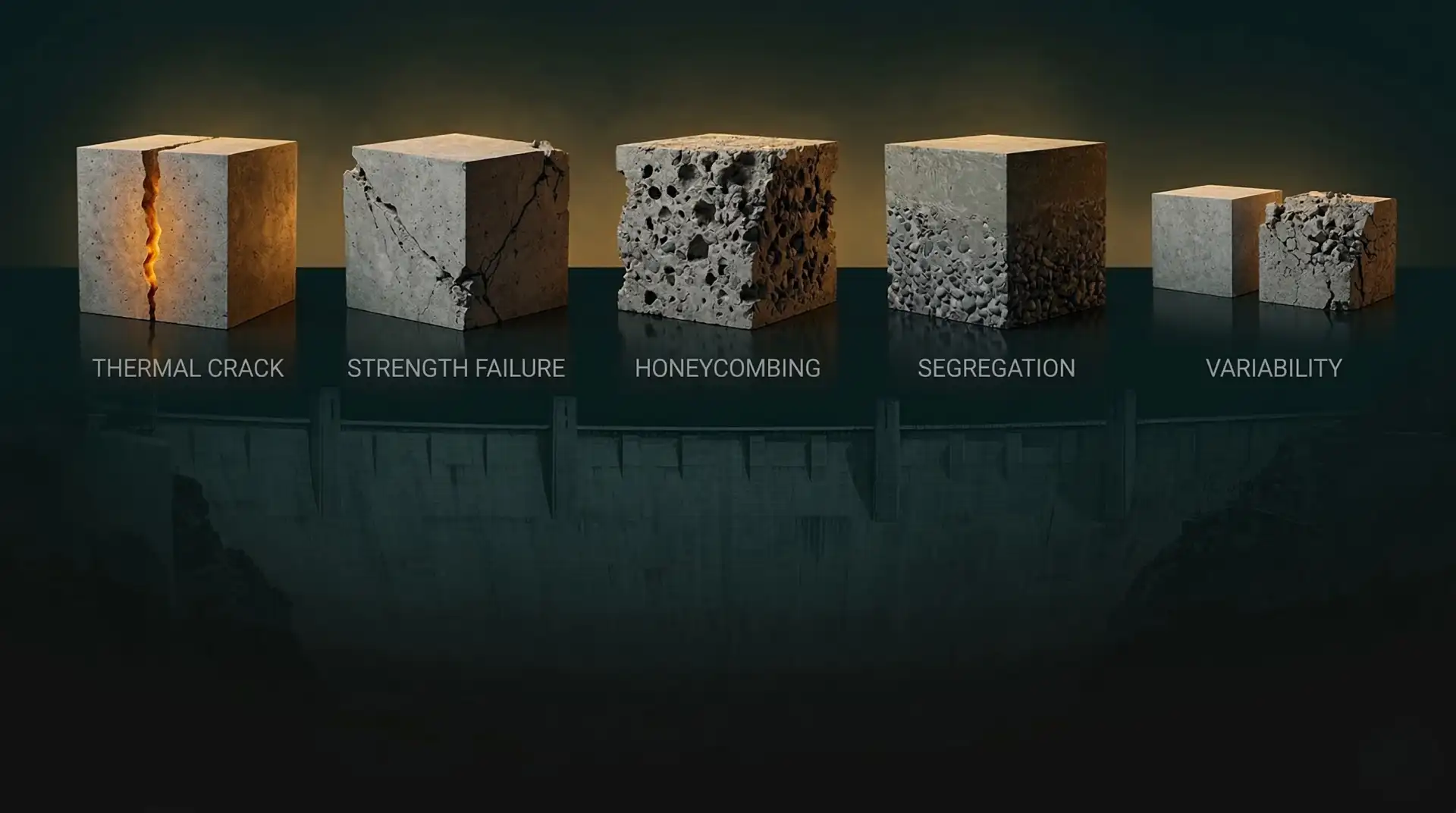
5 Concrete Quality Problems That Delay Hydroelectric Projects
The recurring quality failures that cause schedule overruns on dam projects, and how to prevent them before they start.
Read article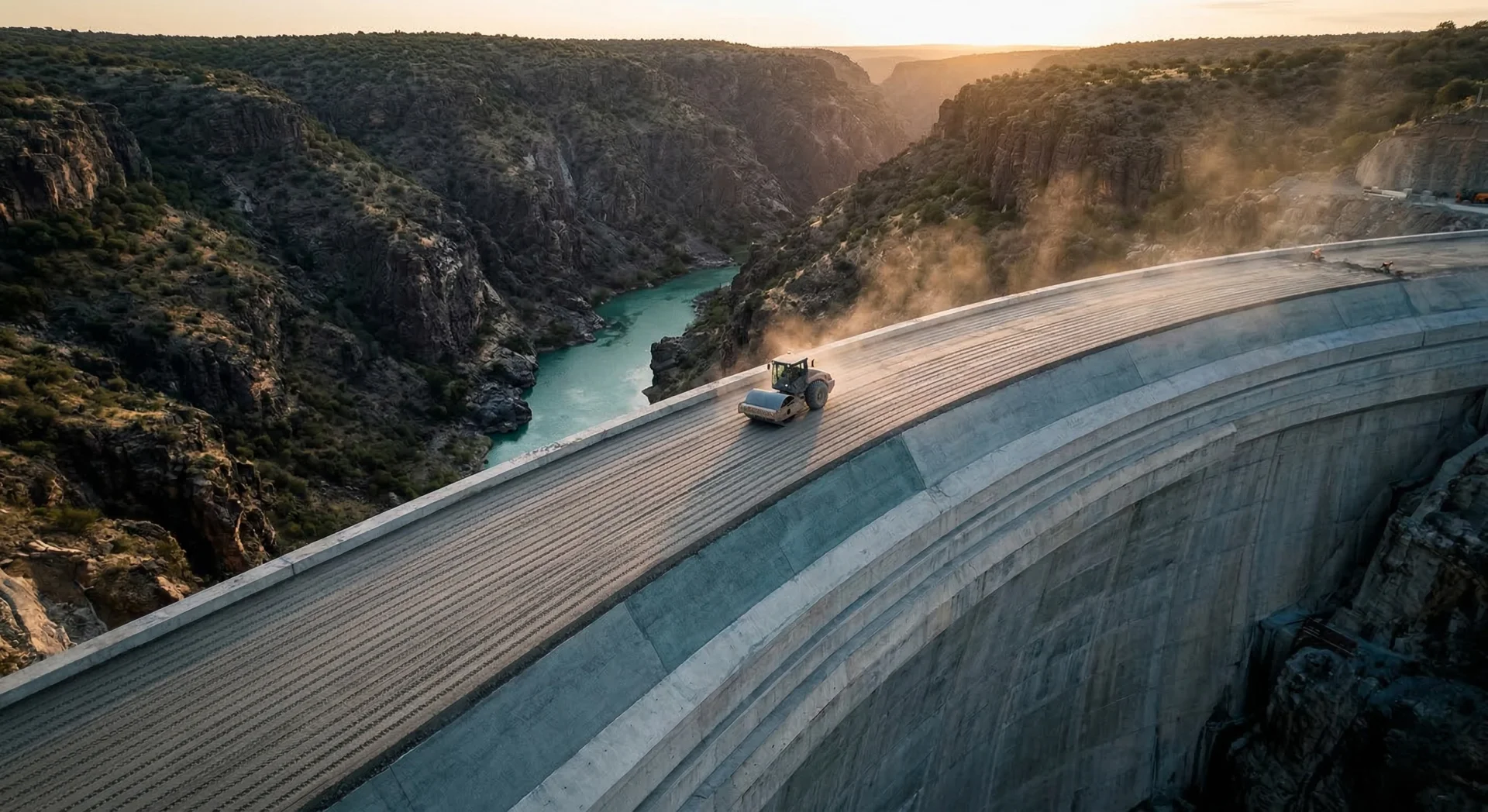
RCC Lift Joint Quality: Why It Fails and How to Fix It
Surface preparation, maturity timing, and bedding mortar application determine whether lift joints bond or become failure planes.
Read article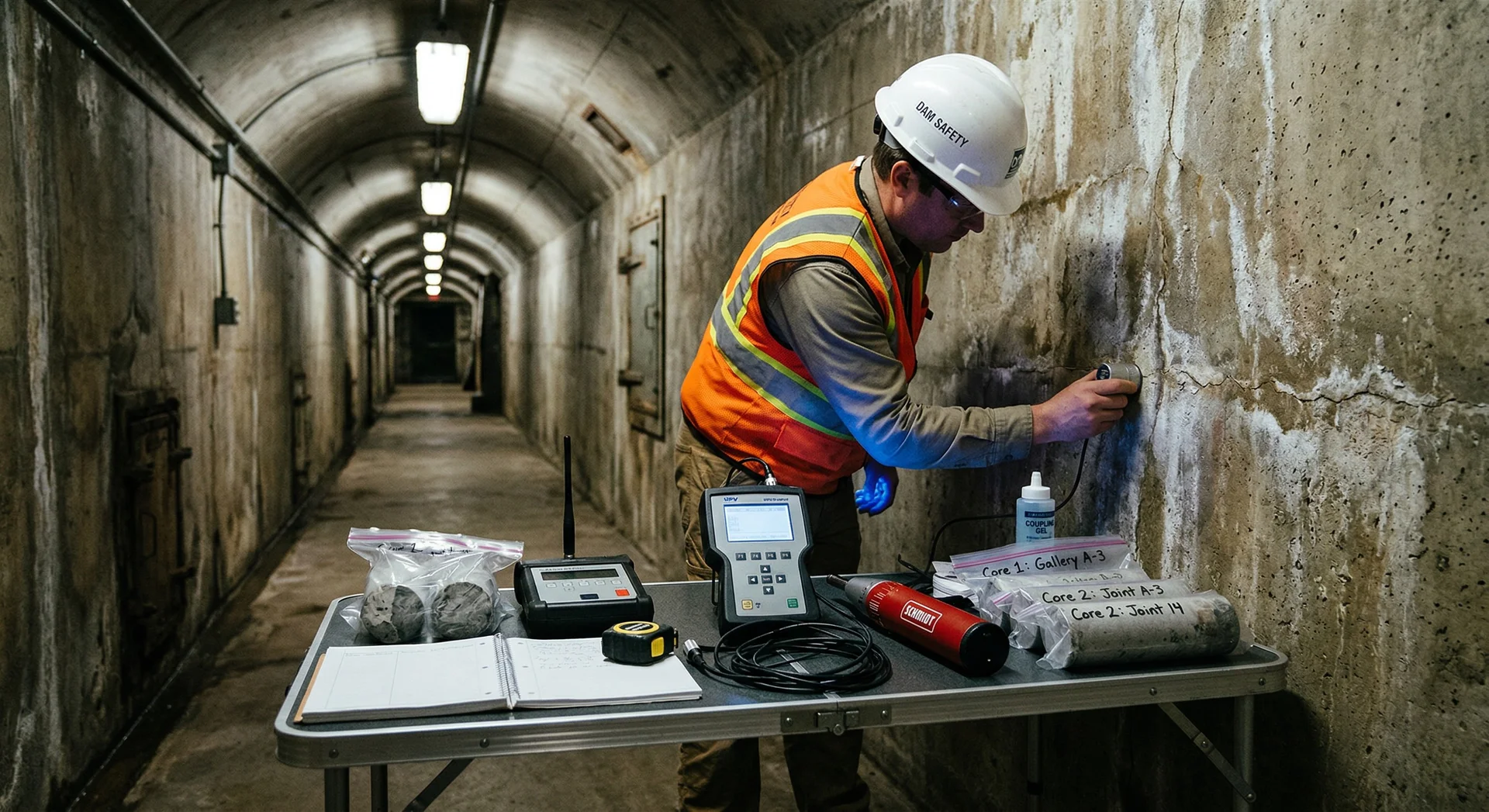
The 5 Non-Destructive Tests Every Dam Owner Should Know
Rebound hammer, UPV, impact echo, GPR, and core extraction: the essential NDT methods for assessing concrete integrity in dams.
Read articleFrequently asked questions
QA/QC questions, answered.
What does a concrete QA/QC system include for a hydroelectric project?
A comprehensive concrete QA/QC system for hydroelectric projects includes quality plans and inspection test plans (ITPs), material qualification and source approval procedures, batching and mixing controls, placement and curing protocols, testing schedules for fresh and hardened concrete properties, temperature monitoring and thermal compliance checks, non-conformance reporting and corrective action procedures, and documentation and reporting systems. PCCI designs these systems to cover every stage from material sourcing through final acceptance.
How does PCCI set up and manage site testing laboratories?
PCCI provides end-to-end laboratory services including lab layout design, equipment specification and procurement guidance, staff training and competency development, testing procedure documentation (SOPs), calibration and maintenance schedules, quality management system implementation, and accreditation support. The laboratory becomes a fully operational testing facility capable of performing all required concrete, aggregate, and cement tests per IS/BIS, ACI, and ASTM standards.
What material testing does PCCI perform during construction?
PCCI performs comprehensive testing of all concrete constituent materials including cement (physical and chemical properties), aggregates (gradation, specific gravity, absorption, abrasion, soundness, petrography), supplementary cementitious materials (fly ash, GGBS, silica fume), admixtures (compatibility testing), and water (chemical analysis). During production, fresh concrete is tested for workability, air content, temperature, and unit weight. Hardened concrete is tested for compressive strength, tensile strength, modulus of elasticity, permeability, and durability parameters.
Newsletter
Concrete Pulse
Stay ahead on concrete technology. Subscribe to our weekly newsletter. Field-tested insights on mass concrete, dam engineering, and QA/QC, delivered straight to your inbox.
Free. No spam. Unsubscribe anytime.
Talk to a concrete specialist within 24 hours.
Whether you're at pre-tender feasibility or mid-construction troubleshooting. Whether your project is in India, Bhutan, Nepal, or beyond.