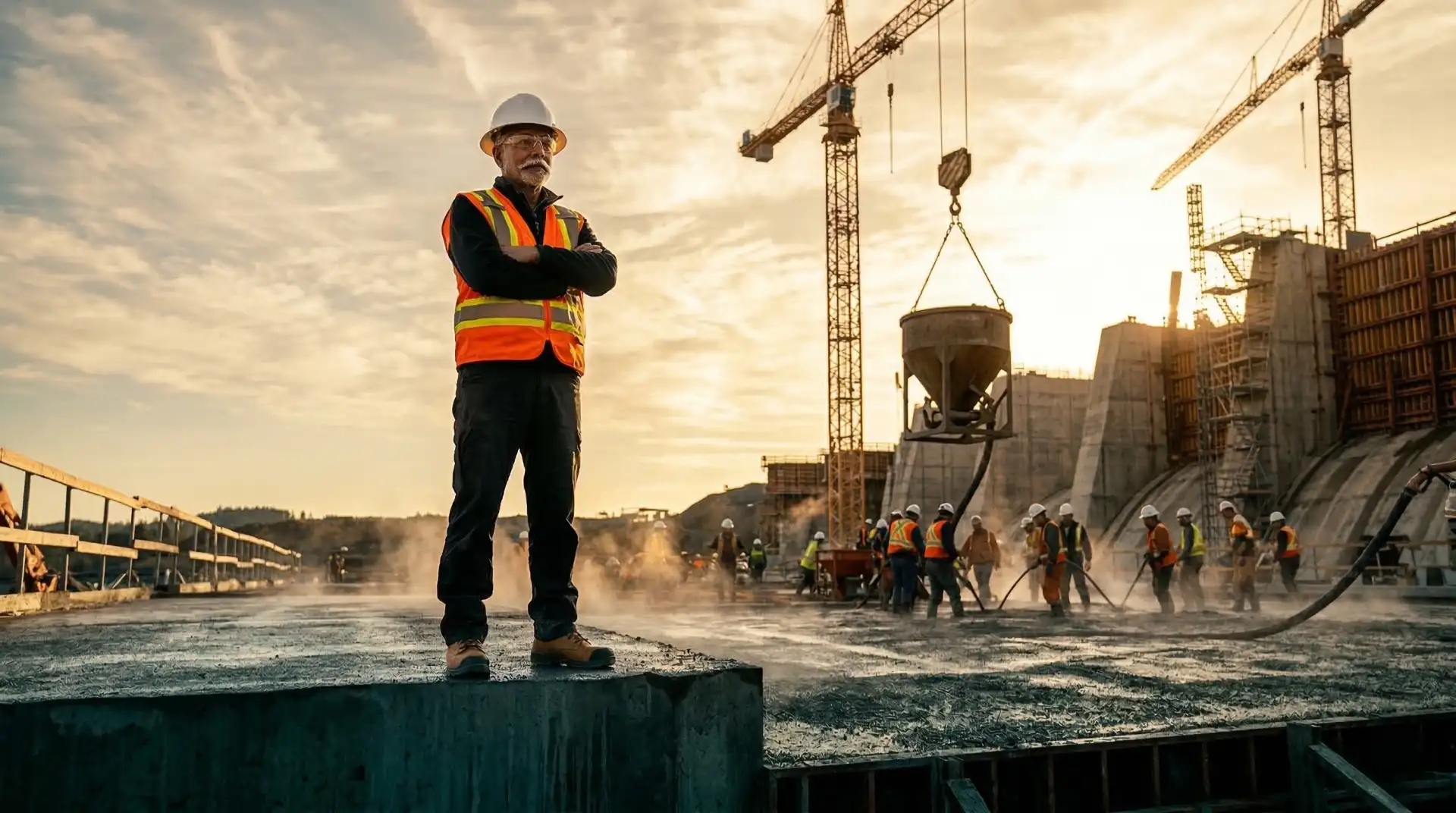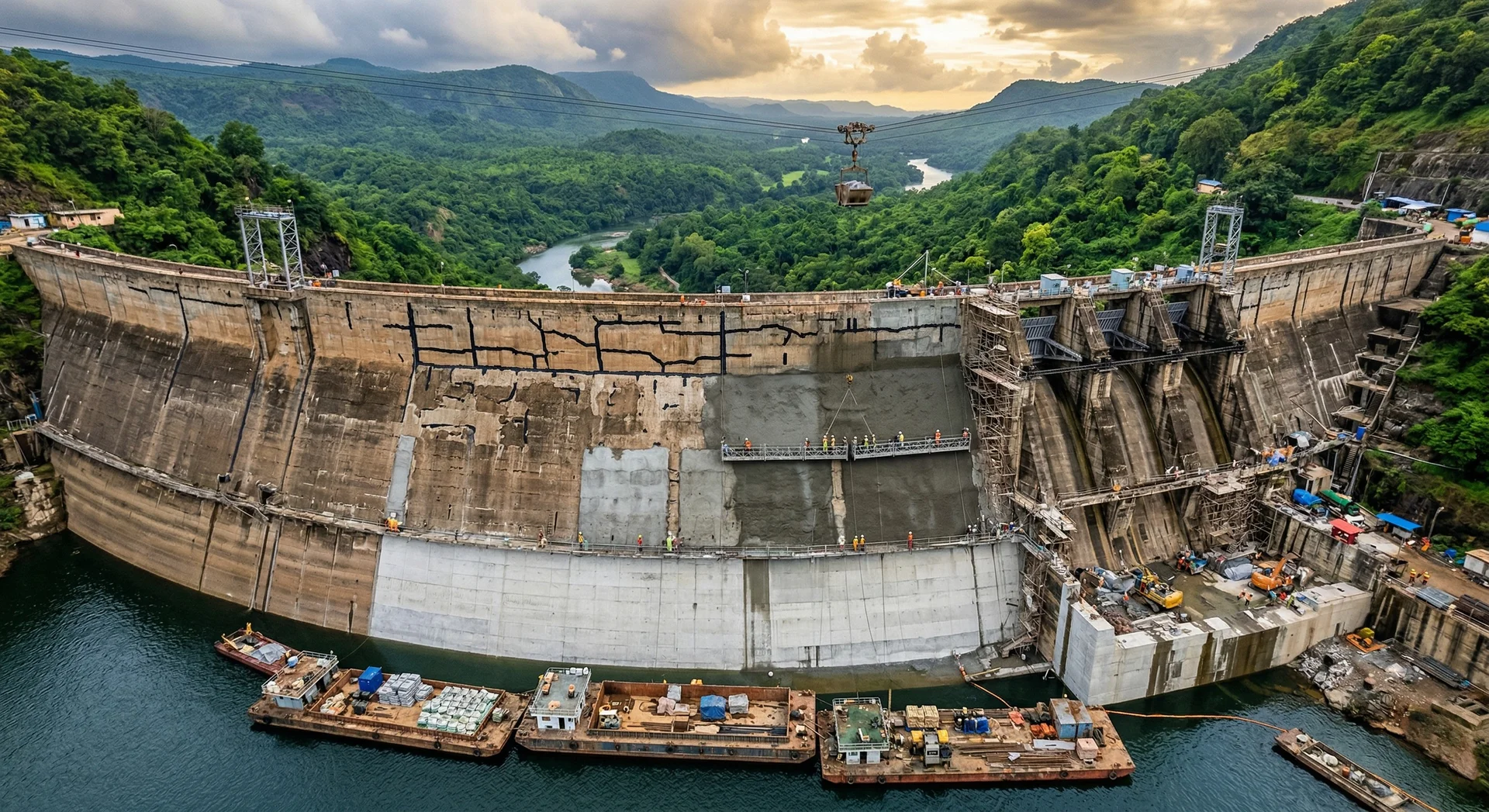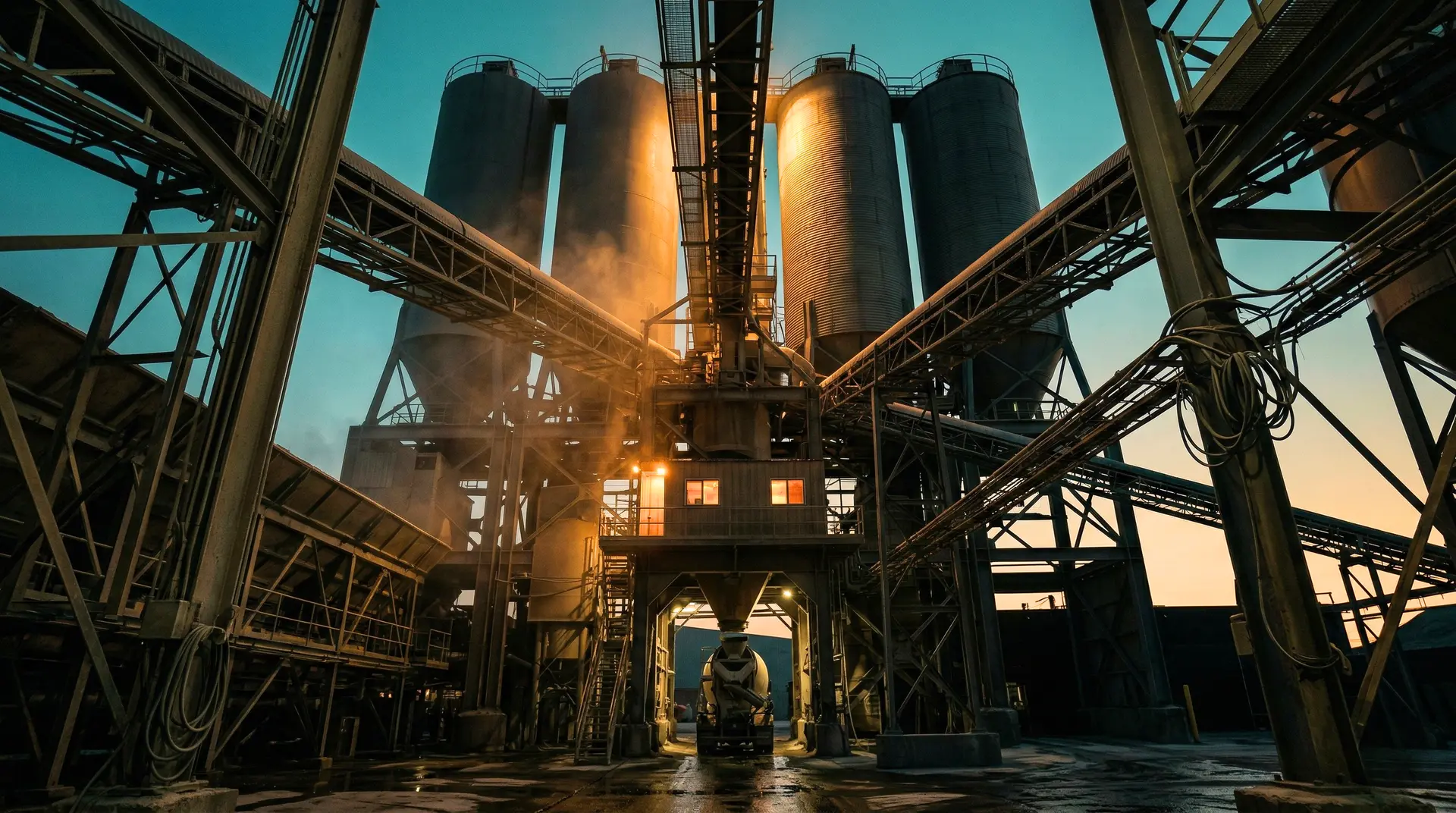
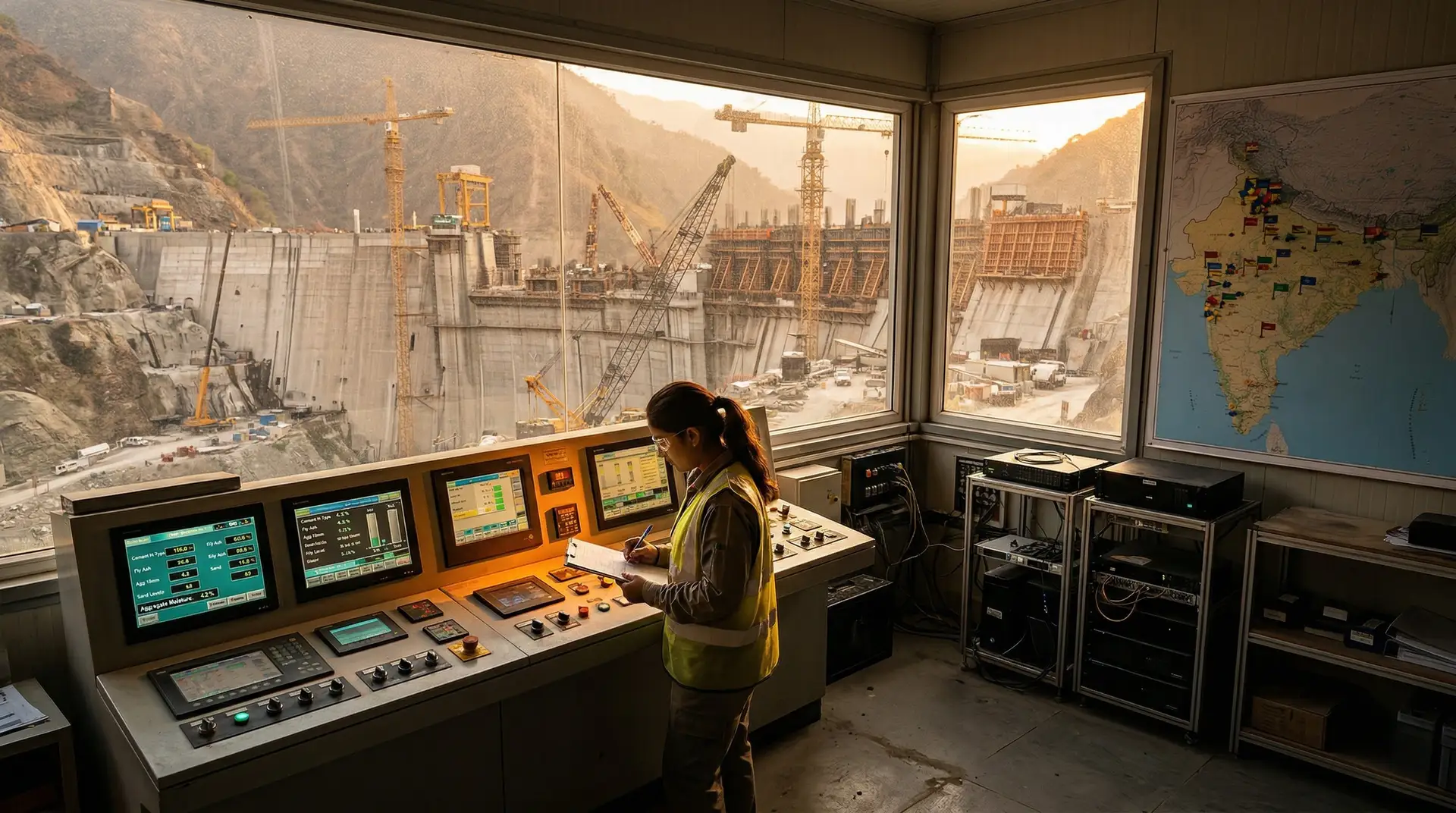
India’s hydropower sector is not growing incrementally. It is scaling up across three simultaneous construction programmes that together represent the largest concrete-intensive infrastructure buildout the country’s power sector has undertaken in decades.
The numbers tell the story: 8,514 MW of conventional hydropower under active construction. A pumped storage hydropower (PSH) pipeline that has swelled to approximately 51 GW in various stages of approval. And the Dam Rehabilitation and Improvement Programme (DRIP), covering 736 ageing dams that need assessment, repair, and modernisation.
Each of these programmes demands concrete technology expertise: engineers who can design mixes for specific dam conditions, control temperature in mass placements, manage quality across remote construction sites, and solve problems when the concrete does not behave as expected. The question facing the industry is straightforward: where will these specialists come from?
The Construction Pipeline
Conventional Hydropower: 8,514 MW Under Construction
According to the Central Electricity Authority (CEA), India has approximately 8,514 MW of large hydropower capacity under active construction. The projects span the Himalayan arc from Jammu and Kashmir through Himachal Pradesh, Uttarakhand, Sikkim, and Arunachal Pradesh.
The major projects include:
| Project | State | Capacity (MW) | Developer | Dam Type |
|---|---|---|---|---|
| Subansiri Lower | Arunachal Pradesh / Assam | 2,000 | NHPC | Concrete gravity |
| Pakal Dul | J&K | 1,000 | CVPPL (NHPC-JK) | Concrete face rockfill |
| Kiru | J&K | 624 | CVPPL | Concrete gravity |
| Ratle | J&K | 850 | RHPPL (NHPC-JK) | Concrete gravity |
| Dibang | Arunachal Pradesh | 2,880 | NHPC | Concrete gravity |
| Sawalkot | J&K | 1,856 | NHPC | Concrete gravity |
| Teesta Stage VI | Sikkim | 500 | NHPC | Concrete gravity |
Each of these projects involves placing hundreds of thousands to millions of cubic metres of concrete. The Subansiri Lower dam alone is a 116-metre-high concrete gravity dam requiring approximately 4.5 million cubic metres of concrete. Each project needs dedicated concrete technology teams for mix design, trial mixes, production quality control, thermal analysis, and placement supervision.
Pumped Storage Hydropower: The 51 GW Pipeline
India’s ambitious renewable energy targets (500 GW non-fossil capacity by 2030) require grid-scale energy storage to manage solar and wind variability. Pumped storage hydropower is the most mature and cost-effective large-scale storage technology, and India is pursuing it aggressively.
The Ministry of Power and CEA have identified approximately 103 GW of PSH potential across the country. Of this, roughly 51 GW is in various stages of investigation, survey, and approval. PSH projects are distributed across multiple states, with significant clusters in:
- Maharashtra. Multiple sites in the Western Ghats leveraging existing reservoir infrastructure.
- Karnataka. Sites utilising elevation differences in the Deccan Plateau.
- Tamil Nadu. Pumped storage projects complementing the state’s wind and solar capacity.
- Rajasthan. Off-river PSH sites near solar generation centres.
- Andhra Pradesh and Telangana. Sites integrated with existing irrigation reservoirs.
From a concrete technology perspective, each PSH project requires two reservoirs (upper and lower), connected by a waterway system. The concrete requirements include:
- Upper reservoir dam. Typically a concrete gravity dam, RCC dam, or concrete-face rockfill dam, placed at elevation in terrain with limited access.
- Lower reservoir dam. Similar construction at a lower elevation, often integrated with existing infrastructure.
- Waterway system. Pressure tunnels, penstocks, and surge chambers, all requiring high-performance concrete lining.
- Underground powerhouse. Concrete cavern construction requiring specialised placement techniques and high-strength concrete.
- Surge chamber. A vertical shaft requiring slip-formed or jump-formed concrete.
A single 1,000 MW PSH project typically requires 1.5 to 3.0 million cubic metres of concrete across all components. Multiply this by the pipeline, and the concrete volume is staggering.
DRIP Phase II: 736 Dams for Rehabilitation
The Dam Rehabilitation and Improvement Programme (DRIP), supported by the World Bank and the Asian Infrastructure Investment Bank (AIIB), addresses the safety and performance of India’s ageing dam portfolio. Phase II covers 736 dams across 19 states and 2 central agencies.
The concrete-related work on each dam includes:
- Condition assessment. Visual inspection, core extraction, laboratory testing, and non-destructive evaluation of existing concrete.
- Structural analysis. Evaluating whether the existing concrete meets current safety standards, particularly for seismic loading.
- Repair and rehabilitation. Addressing deterioration from alkali-aggregate reaction, freeze-thaw damage, sulphate attack, carbonation, and mechanical erosion.
- Spillway and stilling basin rehabilitation. Repairing erosion and cavitation damage on hydraulic surfaces.
- Instrumentation. Installing monitoring equipment in boreholes and galleries, requiring grouting and precision concrete work.
Unlike new construction, dam rehabilitation requires diagnostic expertise: the ability to determine why concrete has deteriorated, how far the deterioration has progressed, and what repair strategy will be effective for the remaining service life. This is a specialised skill set that few Indian engineers possess.
The Workforce Gap
Supply-Side Constraints
The concrete technology workforce available for India’s hydropower sector is insufficient for the construction pipeline ahead. Several structural factors explain this gap.
Retirement of the experienced generation. The engineers who gained hands-on experience on India’s major dam construction projects of the 1980s and 1990s (Nathpa Jhakri, Tehri, Sardar Sarovar, and the Bhutanese projects including Tala and Chukha) are now in their 60s and 70s. Many have retired. Their practical knowledge of mass concrete behaviour, thermal control techniques, and field problem-solving has not been systematically transferred to a successor generation.
University curriculum deficiency. Indian civil engineering programmes teach concrete technology as a general subject. Mass concrete, dam-specific mix design, thermal analysis, RCC technology, and grouting are rarely covered. A graduate entering a dam project faces a steep learning curve that takes 5 to 10 years to climb.
Limited training infrastructure. India has no dedicated training centre for dam concrete technology comparable to the USBR technical service centre or the ICOLD training programmes. The Indian Concrete Institute (ICI) conducts periodic seminars, but these are short courses, not the sustained training programmes needed to build deep competence.
Remote site conditions. Dam sites are in mountainous terrain, far from urban centres, with limited housing, medical facilities, and educational options for families. This makes recruitment difficult, particularly for mid-career engineers who have alternatives in the urban construction industry.
Salary disparity. The private sector commercial construction industry (metro projects, highways, real estate) offers competitive salaries in urban locations. Hydropower projects, many executed by government or public sector entities, often cannot match these compensation levels, particularly for specialised roles.
Demand-Side Pressures
The demand for concrete specialists is amplified by several factors:
Multiple concurrent projects. Unlike the historical pattern where India built one or two major dams at a time, the current pipeline has dozens of projects in various stages of construction simultaneously. Each project needs its own concrete technology team, and teams cannot be shared across remote sites.
Quality expectations. Funding agencies (World Bank, AIIB, ADB) and dam safety regulations (Dam Safety Act, 2021) impose quality management requirements that exceed what many contractors have traditionally provided. The compliance burden requires more specialists, not fewer.
Technology evolution. Modern dam construction techniques, including RCC, self-compacting concrete, high-performance concrete with SCMs, and digital monitoring, require skills that the previous generation did not need. A concrete specialist trained on conventional dam construction in the 1990s needs additional training to work with these technologies.
Regional projects. India is also involved in hydropower construction in Bhutan and Nepal. Projects like the Punatsangchhu-1 (1,200 MW), Tanahu (140 MW), and Wangchhu (570 MW) draw on the same limited pool of Indian concrete specialists.
Concrete Volume Estimates
To quantify the demand, consider the concrete volumes associated with the active and near-term pipeline.
| Programme | Estimated Projects | Avg. Concrete per Project (m³) | Total Concrete (million m³) |
|---|---|---|---|
| Conventional hydro (under construction) | 15-20 | 500,000-2,000,000 | 10-25 |
| PSH pipeline (near-term) | 10-15 | 1,500,000-3,000,000 | 15-45 |
| DRIP (rehabilitation) | 736 | 5,000-50,000 | 5-15 |
| Total estimated range | 30-85 |
Even the lower bound, 30 million cubic metres of concrete, represents a massive construction programme. At a placement rate of 1,000 cubic metres per day per project (a typical rate for a medium dam), this represents over 80,000 project-days of concrete placement across the pipeline.
Each project-day of placement requires concrete technologists for mix design validation, production QC, placement supervision, temperature monitoring, and testing. The staffing requirement across the entire pipeline runs to thousands of specialists, a number that India’s current training pipeline cannot produce quickly.
The Opportunity
For Engineers
The supply-demand imbalance creates exceptional career opportunities for civil engineers willing to specialise in concrete technology for hydropower.
Entry points. Engineers can enter through dam project site laboratories, working as testing technicians and progressing to quality control engineers. The learning is practical, and the skills transfer directly to higher-responsibility roles.
Specialisation paths. Within concrete technology for dams, several specialisation paths offer distinct career trajectories:
- Mix design and materials engineering
- Thermal analysis and temperature control
- RCC technology
- Grouting technology
- Non-destructive testing and condition assessment
- Dam safety and rehabilitation
International demand. India’s hydropower expertise is sought in South Asia (Bhutan, Nepal, Bangladesh), Southeast Asia (Laos, Myanmar), and Africa (Ethiopia, Tanzania). Engineers with Indian dam experience and English proficiency can access international project opportunities.
For Consulting Firms
The market for concrete technology consulting services in India’s hydropower sector is expanding across three dimensions:
New construction consulting. Mix design development, thermal analysis, QA/QC system design, and independent review for projects under construction. Each project represents a multi-year engagement with recurring revenue.
Rehabilitation consulting. The DRIP programme and similar state-level dam safety programmes create demand for condition assessment, repair design, and rehabilitation supervision. These engagements are typically shorter (6 to 18 months per dam) but numerous.
Training and capacity building. The workforce gap itself creates a consulting opportunity. Dam owners, contractors, and government agencies need training programmes for their engineers, and this training is best delivered by practitioners with project experience.
For Contractors
Contractors who invest in concrete technology capabilities, equipping their teams with specialised engineers, modern laboratories, and quality management systems, gain a competitive advantage in bidding and execution. Dam owners and funding agencies increasingly evaluate contractor capability in concrete technology as part of the prequalification process.
What Needs to Change
Training Infrastructure
India needs institutional programmes dedicated to dam concrete technology. These could take several forms:
- A national centre of excellence for dam concrete. Similar to the USBR technical service centre, this facility would provide long-duration (3 to 6 month) training programmes, maintain reference laboratories, and conduct applied research.
- University specialisation. IITs and NITs should offer elective streams or certificate programmes in mass concrete technology, dam engineering, and hydraulic structures.
- Industry-academia partnerships. Dam developers (NHPC, SJVN, THDC) should sponsor graduate research and summer internships at project sites, exposing students to real dam construction before graduation.
Knowledge Transfer Mechanisms
The retiring generation of dam concrete specialists holds decades of practical knowledge that exists nowhere in textbooks. Structured knowledge transfer programmes, including documented case studies, mentorship arrangements, and technical advisory roles for retired specialists, should be established before this knowledge is lost.
The Indian Concrete Institute (ICI) and the Association of Consulting Civil Engineers India (ACCE(I)) are positioned to facilitate this knowledge transfer, but the scale of effort required exceeds what voluntary professional associations can deliver alone. Government and industry funding is needed.
Technology Adoption
India’s dam construction industry has been slow to adopt technologies that are standard in other countries: digital batching plant controls, real-time temperature monitoring with wireless sensors, statistical process control for concrete quality, and building information modelling (BIM) for construction planning. Adopting these technologies would increase the productivity of the available specialist workforce, partially offsetting the shortage.
Conclusion
India’s hydropower expansion is not a future possibility. It is a present reality with construction underway, budgets allocated, and deadlines approaching. The concrete technology workforce needed to execute this expansion responsibly, meaning to build dams that are structurally sound, durable, and safe, does not currently exist in sufficient numbers.
The gap is not insurmountable. India has the engineering talent base, the academic institutions, and the project experience to build this workforce. What is needed is recognition that concrete technology for dams is a specialised discipline that requires dedicated training, mentorship, and career development, not a generic skill that any civil engineer can pick up on the job.
For engineers considering where to invest their careers, and for firms considering where to invest their capabilities, the hydropower sector offers something increasingly rare in Indian infrastructure: a multi-decade construction programme with clear demand, meaningful technical challenges, and the satisfaction of contributing to clean energy infrastructure that will serve for generations.
The concrete is waiting to be placed. The question is whether the people who know how to place it correctly will be there when it is needed.