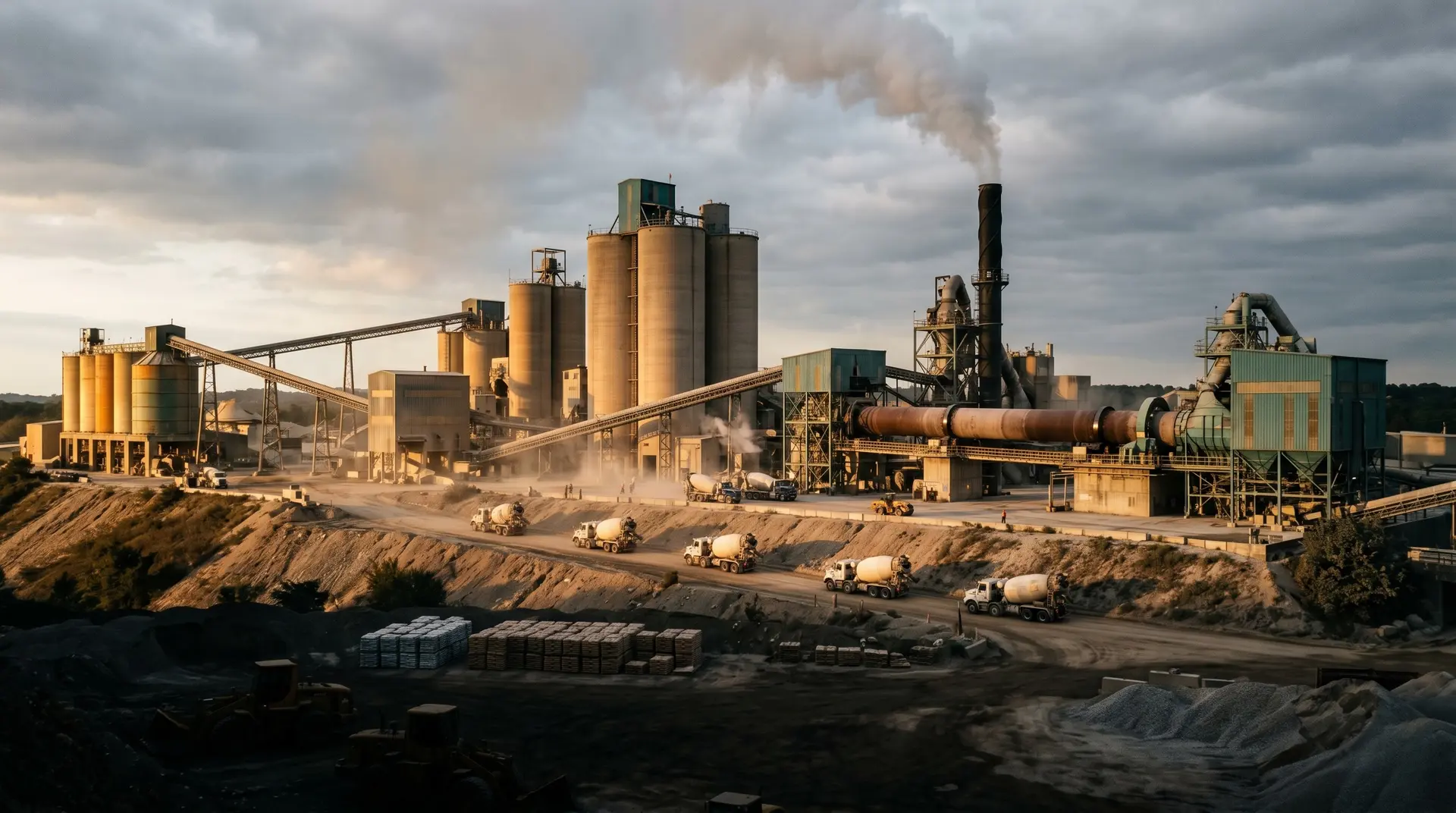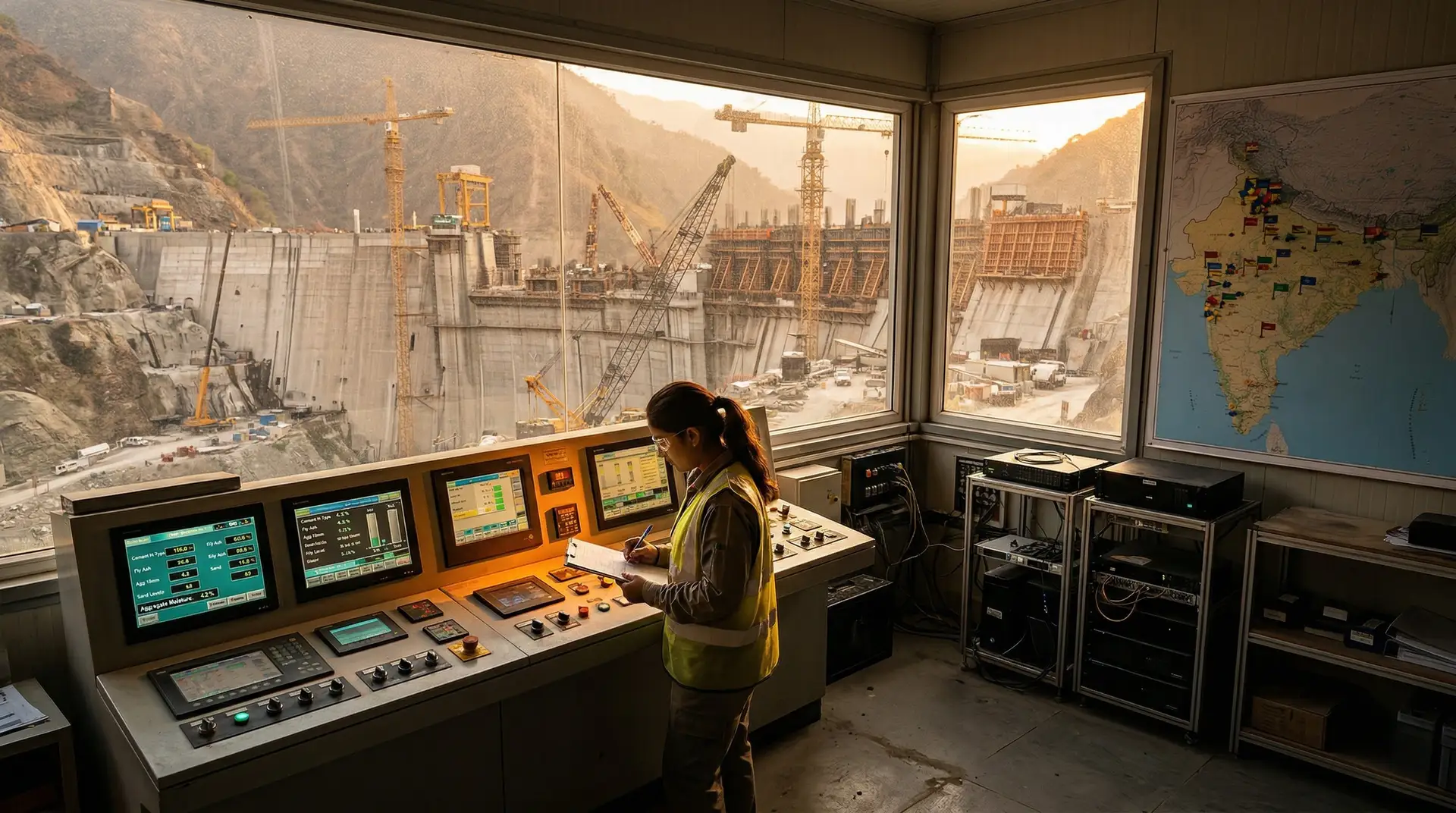
Indian dam construction has always been an industry that changes slowly. This conservatism is not irrational: when a structure must last 100 years and its failure can destroy communities downstream, caution in adopting new technologies is a safety measure, not a limitation.
But the pace of change is accelerating. The convergence of digital technology, materials science, and environmental regulation is creating both the necessity and the capability to transform how India designs, produces, places, and monitors dam concrete.
The necessity comes from three directions. India’s hydropower expansion demands faster, more efficient construction. The climate imperative demands lower carbon emissions from cement production. And the ageing dam portfolio demands better monitoring and maintenance technologies.
The capability comes from technologies that have matured in other industries and are now reaching the readiness level required for infrastructure application. This article examines the most significant of these technologies and assesses their realistic timeline for adoption in Indian dam construction.
Digital Twins for Dam Concrete
The Concept
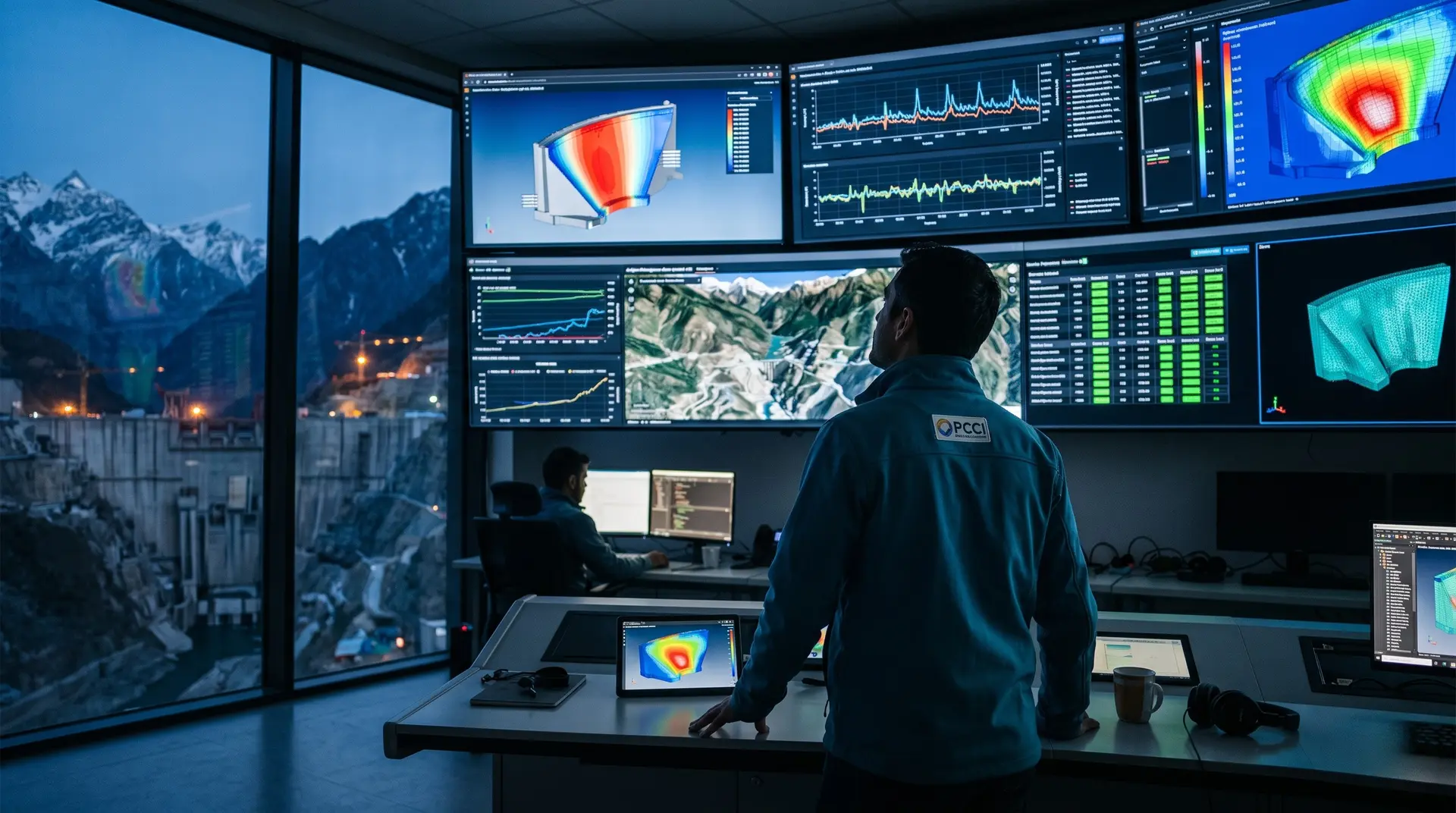
A digital twin is a computational model that represents a physical asset and updates itself continuously with real-world data. For a concrete dam, the digital twin integrates:
- Geometry. The as-built shape of the dam, captured by 3D scanning or photogrammetry
- Material properties. Concrete strength, elastic modulus, thermal properties, creep and shrinkage parameters for every zone of the dam
- Loading. Real-time reservoir level, temperature distributions, and seismic loading
- Monitoring data. Continuous feeds from embedded sensors (thermocouples, piezometers, extensometers, pendulums)
The twin runs finite element simulations in real time, comparing predicted behaviour (displacements, stresses, temperatures) with measured behaviour. When the predicted and measured values diverge, the twin flags an anomaly that may indicate concrete deterioration, foundation movement, or instrumentation malfunction.
Application to Concrete Technology
During construction, a digital twin can optimise concrete placement in ways that manual analysis cannot:
Thermal simulation. Before each lift is placed, the twin runs a finite element thermal model simulating the temperature rise, peak temperature, and cooling curve based on the specific mix design, placement temperature, ambient conditions, and the thermal history of surrounding concrete. This allows real-time optimisation of lift height, placement interval, and cooling pipe operation.
Crack risk prediction. By combining the thermal analysis with the concrete’s developing mechanical properties (tensile strength, creep, elastic modulus), the twin predicts the cracking risk at every point in the dam. Placements can be scheduled to minimise this risk.
Construction sequence optimisation. The twin evaluates different placement sequences (which monolith to pour next, how long to wait between lifts) and identifies the sequence that minimises thermal cracking risk and construction time simultaneously.
Research institutions globally are developing dam-specific digital twin frameworks. The ICOLD Committee on Computational Aspects of Analysis and Design of Dams has been documenting advances in this area. Indian adoption will require investment in sensor infrastructure, computational capability, and the engineering expertise to interpret the results.
Timeline for India
Near-term (2026-2030). Pilot digital twin implementations on 2 to 3 major dam projects, likely NHPC or SJVN projects with international consulting support. Limited to thermal simulation during construction.
Medium-term (2030-2035). Standard practice on large dam projects (greater than 500 MW). Integration with dam safety monitoring systems per the Dam Safety Act, 2021.
Long-term (2035+). Routine use across all dam sizes, with cloud-based platforms that multiple projects can access.
AI and Machine Learning in Concrete Quality Control
Strength Prediction from Early-Age Data
The most immediately applicable AI technology for dam concrete is strength prediction. Traditional practice requires waiting 28 days (or 90 days for mass concrete with high SCM content) for cube test results. Machine learning models trained on historical data from the same project can predict 28-day and 90-day strength from 1-day or 3-day test results, combined with mix proportions, placement temperature, and curing conditions.
Published research demonstrates prediction accuracy within 5 to 8% of actual 28-day strength using neural network models trained on as few as 50 to 100 data points. For a dam project that generates thousands of test results, the training data is abundant.
The practical impact is significant. If a mix design problem is detected from 3-day results rather than 28-day results, corrective action can be implemented 25 days earlier, potentially saving hundreds of cubic metres of non-conforming concrete from being placed.
Computer Vision for Surface Inspection
Automated inspection of concrete surfaces after formwork removal can identify honeycombing, surface voids, cracks, and other defects with consistency and speed that human inspectors cannot match. Camera systems (including drone-mounted cameras for dam faces) capture high-resolution images, and convolutional neural networks classify the defects by type and severity.
This technology is already operational in tunnel construction and bridge inspection. Its application to dam surfaces is a straightforward extension.
Sensor Fusion and Anomaly Detection
Modern dam projects install hundreds of sensors: thermocouples, strain gauges, piezometers, extensometers, and seepage measurement devices. AI algorithms that analyse the combined data from all sensors simultaneously can detect patterns that indicate developing problems, patterns that no human could identify from individual sensor readings.
For concrete technology, sensor fusion can detect:
- Concrete that is gaining strength slower than expected (low temperature + low strain + normal curing conditions = potential mix problem)
- Thermal cracking in progress (sudden strain change + temperature differential + specific location = crack forming)
- Joint movement exceeding waterstop capacity (displacement + temperature correlation = structural movement)
The Central Water Commission (CWC) and the Dam Safety Organisation are developing data management frameworks that could host AI-powered monitoring systems for India’s dam portfolio.
Advanced Materials
LC3 (Limestone Calcined Clay Cement)
LC3 is the most significant cementitious material innovation relevant to Indian dam construction. Developed through research led by EPFL (Switzerland) and IIT Madras, LC3 replaces up to 50% of Portland cement clinker with a combination of calcined kaolinitic clay and limestone.
Relevance to dam concrete:
- Reduces CO2 emissions by 30 to 40% compared to OPC
- Produces comparable 28-day and superior 90-day strengths
- Provides excellent resistance to chloride ingress and alkali-silica reaction
- Uses raw materials (clay and limestone) that are abundant across India
- Can be produced in existing cement plants with minimal modification
The Global Cement and Concrete Association (GCCA) has identified LC3 as one of the key technologies for decarbonising the cement industry globally.
Challenges for dam application:
- Heat of hydration behaviour must be characterised for mass concrete thermal analysis
- Long-term creep and shrinkage data specific to dam exposure conditions are limited
- An IS standard for LC3 is under development but not yet published
- Indian dam specifications currently reference OPC and PPC; LC3 adoption requires specification updates
Timeline. LC3 is likely to be available for non-critical dam applications (gallery concrete, auxiliary structures) within 3 to 5 years. Adoption for dam body mass concrete will follow once long-term performance data and IS standards are established, probably 5 to 10 years.
Geopolymer Concrete
Geopolymer concrete uses alkali-activated fly ash or slag instead of Portland cement as the binder. It offers near-zero cement content, reduced CO2 emissions, and excellent durability in certain exposure conditions.
Current status for dams:
- Demonstrated in laboratory and pilot projects for structural applications
- Heat curing requirement (60 to 80 degrees Celsius) is a practical limitation for on-site mass concrete
- Ambient-cured geopolymer formulations are improving but not yet reliable at scale
- No IS standard exists for geopolymer concrete in structural applications
- Long-term durability data (50+ years) is unavailable
Realistic assessment. Geopolymer concrete is unlikely to replace Portland cement-based concrete in dam bodies within the next 15 years. However, it may find application in precast elements, shotcrete, and repair materials where heat curing is feasible.
Self-Healing Concrete
Three self-healing mechanisms are under active research for hydraulic structure applications:
Bacterial self-healing. Bacteria (typically Bacillus species) are encapsulated in lightweight aggregate or microcapsules and mixed into the concrete. When a crack forms and water enters, the bacteria activate and produce calcium carbonate that fills the crack. Published research shows crack healing of widths up to 0.5 mm within 4 to 8 weeks.
Crystalline admixtures. Proprietary chemical admixtures that react with water entering cracks to form insoluble crystals. These products are already commercially available and have been used in water-retaining structures, though not yet in major dam construction. ACI 212.3R includes crystalline admixtures in its guide to chemical admixtures for concrete.
Shape memory alloy reinforcement. Reinforcement made from shape memory alloys (nickel-titanium) that contract when heated, actively closing cracks. This technology is still in the laboratory stage and is unlikely to be economically viable for dam-scale application in the foreseeable future.
Realistic assessment for dams. Crystalline admixtures are ready for trial use in dam concrete now, particularly in gallery linings, drainage galleries, and construction joints. Bacterial self-healing is 5 to 10 years from dam application. Shape memory alloys are 15+ years away.
Carbon Capture in Concrete
Two approaches to carbon capture are relevant to dam concrete:
CO2 curing. Injecting CO2 into fresh concrete during mixing or curing, where it reacts with calcium silicates to form calcium carbonate. This permanently sequesters the CO2 and can improve early-age strength. However, the carbonation process consumes calcium hydroxide, which is essential for maintaining the alkaline environment that protects reinforcement. For unreinforced mass concrete (typical of dam bodies), this concern is less relevant.
Carbonation of recycled concrete aggregate. Using CO2 to treat recycled concrete aggregate (from demolished structures) before using it in new concrete. The CO2 reacts with the old cement paste on the aggregate surface, sequestering carbon and improving the aggregate quality.
Neither technology is ready for dam-scale application today, but both are progressing through pilot stages in the commercial construction industry. Their adaptation to dam concrete could begin within 5 to 10 years.
Construction Technology Advances
3D Printing
Large-scale concrete 3D printing has made remarkable progress in building construction, with entire houses and commercial structures now being printed. However, dam construction presents challenges that current printing technology cannot address:
| Requirement | 3D Printing Capability | Dam Requirement |
|---|---|---|
| Volume per day | 10-50 m³ | 500-5,000 m³ |
| Maximum aggregate size | 5-10 mm | 75-150 mm |
| Layer bond strength | 0.5-1.5 MPa | 2.0+ MPa (monolithic) |
| Height capability | 10-15 m | 50-300 m |
| Reinforcement integration | Limited (post-tensioning) | Full reinforcement cage |
| Environmental tolerance | Controlled conditions | Open-air, all weather |
Realistic near-term applications:
- Complex formwork fabrication (spillway profiles, gate slot templates)
- Precast drainage elements and gallery fixtures
- Construction planning mockups at full scale
- Decorative or non-structural elements (visitor centre, interpretive displays)
Long-term potential. Robotic concrete placement systems (not strictly “printing” but sharing the same automation principles) could enable automated placement of conventional dam concrete, with robots positioning vibrators, controlling pour rates, and monitoring compaction in real time. This would address the skilled labour shortage rather than replace the concrete itself.
Automated Batching and Quality Control
Modern batching plants already incorporate computerised proportioning and recording. The next generation integrates:
- Real-time moisture sensing. Microwave moisture sensors on aggregate conveyors adjust water content continuously, not batch-by-batch, eliminating the most common source of concrete variability.
- Automated admixture dosing. Admixture pumps adjusted by algorithms that respond to ambient temperature, aggregate moisture, and target workability.
- Automated cube casting. Robotic systems that cast, label, and cure test specimens with consistent technique, eliminating human variability in specimen preparation.
- Cloud-based quality reporting. Test results uploaded automatically from the laboratory, generating control charts, trend analyses, and alerts without manual data entry.
These technologies are available now and are being adopted on major infrastructure projects globally. Indian dam projects could implement them within 2 to 5 years with minimal technology risk.
Regulatory and Standards Evolution
IS 456 and Related Updates
The Bureau of Indian Standards (BIS) is working on updates to IS 456 and related concrete standards that will affect dam construction:
- Performance-based specification. Moving from prescriptive requirements (minimum cement content, maximum w/c ratio) to performance requirements (strength, durability, permeability), allowing greater flexibility in material selection and mix design.
- SCM recognition. Expanding the range of recognised supplementary cementitious materials beyond fly ash and GGBS to include calcined clay, natural pozzolans, and silica fume.
- Durability provisions. Enhanced requirements for exposure classification, cover depth, and durability testing, reflecting advances in service-life design.
- Sustainability requirements. Introduction of carbon footprint considerations into concrete specification, potentially including limits on embodied carbon.
Dam Safety Act Implementation
The Dam Safety Act, 2021, creates a regulatory framework that will drive technology adoption. The Act requires:
- Regular safety inspections by qualified engineers
- Instrumentation and monitoring of all large dams
- Emergency action plans based on dam failure analysis
- Maintenance of dam safety records
Compliance with these requirements will accelerate the adoption of digital monitoring, AI-powered analysis, and automated inspection technologies. Dam owners who invest in these technologies will find compliance easier and less expensive than those who rely on manual methods.
Workforce Implications
New Skills Required
The technologies described above require engineering skills that the current dam construction workforce largely lacks:
- Data science and machine learning for AI-powered quality control
- Computational modelling for digital twin development and operation
- Materials science for next-generation SCM evaluation and application
- Robotics and automation for advanced construction technologies
- Environmental engineering for carbon footprint assessment and reduction
Training Needs
India’s engineering education system must evolve to produce graduates with these interdisciplinary skills. The Indian Concrete Institute (ICI) and professional bodies like ACCE(I) can play a role through continuing education programmes, but the scale of training needed exceeds what voluntary professional associations can deliver.
Structured training programmes, potentially embedded in the DRIP programme or in NHPC’s internal capability development, would be the most effective mechanism for building this workforce at scale.
A Realistic Timeline
Not all these technologies will arrive simultaneously. A realistic adoption timeline for Indian dam construction:
| Technology | Readiness | Adoption Barrier | Expected Adoption |
|---|---|---|---|
| Automated batching/QC | Available now | Cost, training | 2026-2028 |
| AI strength prediction | Available now | Data, validation | 2027-2029 |
| Computer vision inspection | Available now | Integration, standards | 2027-2030 |
| LC3 cement (non-critical) | Near-ready | Standards, supply | 2028-2030 |
| Digital twin (construction) | Pilot stage | Expertise, cost | 2028-2032 |
| Crystalline self-healing | Available now | Dam-specific data | 2028-2030 |
| LC3 cement (dam body) | Research stage | Long-term data, standards | 2030-2035 |
| Bacterial self-healing | Lab/pilot stage | Scale-up, durability data | 2032-2036 |
| CO2 curing | Pilot stage | Scale, cost, standards | 2032-2038 |
| Robotic concrete placement | Early development | Scale, reliability | 2035+ |
| Geopolymer dam concrete | Research stage | Curing, standards, data | 2035+ |
Conclusion
The future of concrete technology in Indian dam construction is not a distant horizon. Many of the technologies discussed here are available now or will be within the next five years. The question is not whether they will be adopted, but how quickly and how effectively.
The dam construction industry’s historical conservatism is justified by the consequences of failure. But conservatism should not become inertia. The technologies that offer the clearest near-term benefits, automated quality control, AI-powered strength prediction, digital thermal modelling, and LC3 cement, can be adopted incrementally, validated on specific projects, and scaled across the industry as confidence grows.
The payoff is substantial: dams built faster with fewer defects, operated with better monitoring, maintained with less disruption, and constructed with a significantly lower carbon footprint. For an industry that will place tens of millions of cubic metres of concrete over the coming decades, even incremental improvements in technology translate to enormous aggregate benefits.
The engineers and organisations that invest in these capabilities now will define how India builds its next generation of hydropower infrastructure. Those that wait will find themselves applying 20th-century methods to 21st-century challenges, at increasing cost and decreasing competitiveness.