The climate has already shifted
The dam concrete that India has built over the last several decades was specified to a climate that no longer fully exists. Design assumptions about summer maximum temperatures, monsoon patterns, design floods, and atmospheric chemistry were appropriate for the 1980s, 1990s, and 2000s. They are increasingly inappropriate for the 2020s, and they will be more inappropriate for the 2050s when many of those dams will still be operating.
The concrete itself does not adapt. Once placed, its water-cement ratio is fixed, its cover is fixed, its thermal mass is fixed. What changes is the environment in which it operates. Higher ambient temperatures, more frequent extreme heat days, monsoon shifts, increased atmospheric CO2, accelerated glacial retreat, and the cascade of secondary effects from each of these.
This article is a forward look for owners, designers, and operators of Indian dam concrete infrastructure. The intention is not to alarm, but to inform: what climate trends are most relevant to dam concrete, what they imply for existing and new projects, and how the industry can adapt practically.
Six pathways from climate change to dam concrete
Climate change reaches dam concrete through six pathways. They are not equally important for every project, but every project is affected by at least some of them.
1. Temperature extremes
Indian summer maximum temperatures have been trending upward. The 95th percentile summer maximum that defined hot-weather concreting design envelopes a generation ago is now exceeded more frequently. By 2050, current projections suggest further increases of 1 to 3 degrees C in summer maxima depending on location and emission scenario.
Implications for concrete:
- More frequent hot-weather placement conditions, requiring more robust thermal control and pre-cooling
- Accelerated carbonation of operating concrete (carbonation rate roughly doubles with each 10 degrees C increase)
- More demanding curing protocols for new placements
- Possible service life impact on durability-driven design parameters
2. Monsoon shifts
The Indian monsoon is becoming more variable. Total rainfall is changing modestly in some regions but with increased intra-seasonal variability: longer dry spells, more intense wet spells. The southwest monsoon onset and withdrawal dates are shifting.
Implications for concrete:
- More intense rainfall events affecting placement scheduling and form pressure
- Increased flood discharges challenging spillway capacity assumptions
- Sediment loads in monsoon flows abrading spillway concrete more aggressively
- Aggregate quarry access disrupted more frequently
3. Glacial retreat
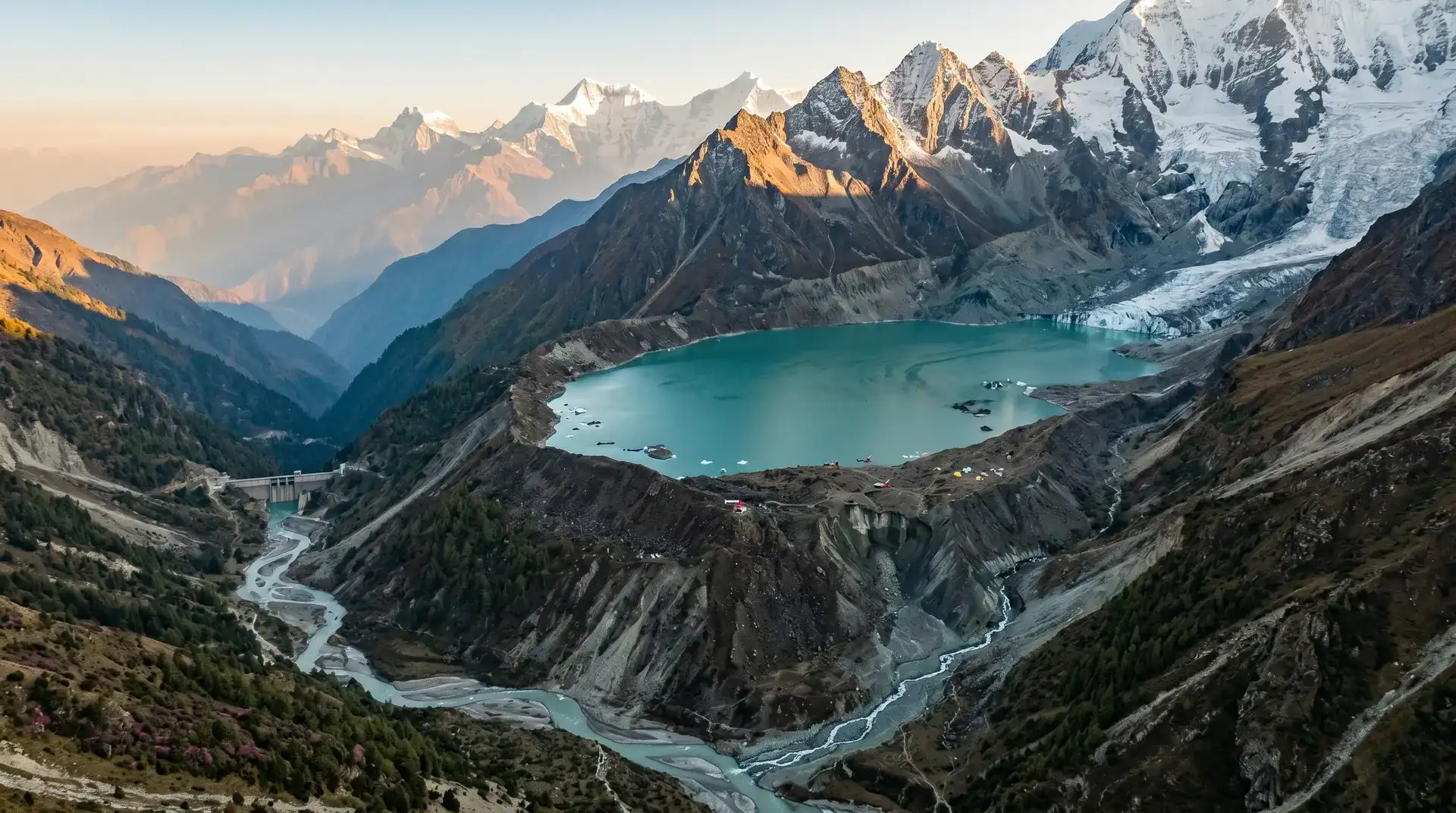
ICIMOD’s Status of Glacial Lakes inventory and the IPCC AR6 WG2 Cross-Chapter Paper 5 on Mountains show continued glacier retreat across the Hindu Kush Himalayan region. The retreat changes catchment hydrology, sediment regimes, and creates new glacial lakes that are vulnerable to GLOF events.
Implications for concrete:
- GLOF risk increasing, with implications for spillway design and dam safety review
- Sediment loads changing, affecting reservoir sedimentation and downstream concrete abrasion
- River flow regimes shifting, affecting design discharge assumptions and operating rules
4. Atmospheric CO2
Atmospheric CO2 has risen from approximately 280 ppm pre-industrial to over 420 ppm in 2025 per the NOAA Global Monitoring Laboratory, with continued growth projected. CO2 is the carbonation agent for concrete: higher atmospheric CO2 directly increases the rate at which concrete cover is lost to carbonation, exposing reinforcement to corrosion.
Implications for concrete:
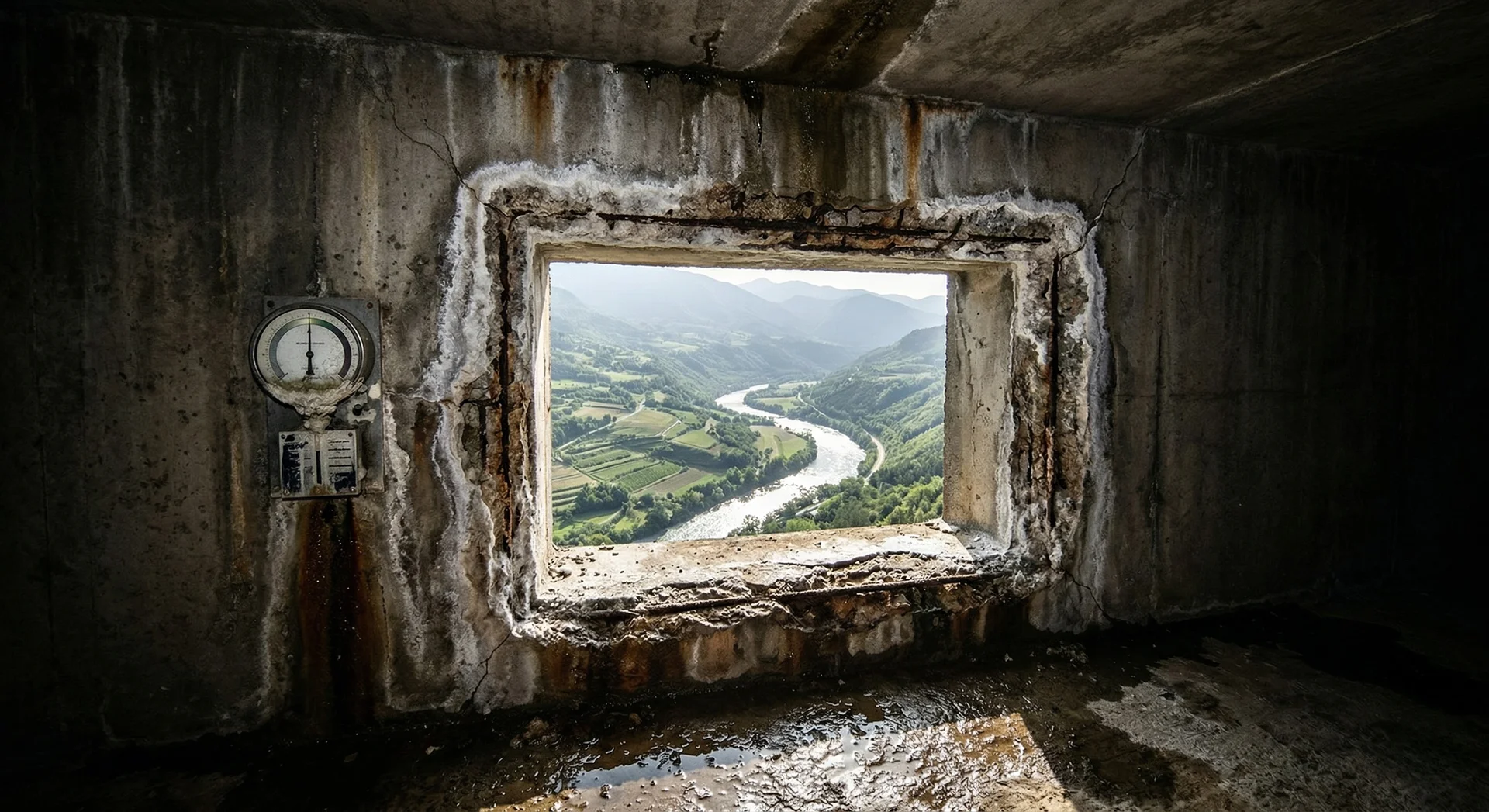
- Carbonation rate has increased, with operating concretes losing cover faster than designed
- Service life of reinforced concrete elements (gallery walls, spillway piers, intake structures) is reducing
- Cover specifications for new construction must account for expected future CO2 levels
5. Sea-level rise
Sea-level rise affects coastal Indian dam infrastructure (relevant for some hydropower outfalls and for irrigation barrages near the coast). Projected sea level rise of 0.3 to 1.0 metres by 2100 depending on emission scenario.
Implications for concrete:
- Chloride exposure increased for coastal structures
- Cover and water-cement ratio specifications tighten for affected structures
- Some operating structures may face conditions outside their original design envelope
6. Compound weather events
Climate change increases the frequency and intensity of compound weather events: cyclones with extreme rainfall, monsoon storms triggering landslides, glacial retreat triggering GLOF, drought followed by extreme rainfall.
Implications for concrete:
- Loading combinations not anticipated in original design
- Rapid sequence of stress events on operating dams
- Need for monitoring and warning systems beyond conventional dam safety
The IPCC AR6 is operational guidance, not advocacy
For dam designers and operators, the IPCC AR6 findings on Himalayan hydropower are not climate policy advocacy. They are projections that engineering practice must incorporate into design floods, durability specifications, and operational risk management. Major lenders (World Bank, ADB, JICA, the Green Climate Fund) increasingly require climate scenario analysis as part of project appraisal, and projects that cannot demonstrate climate resilience face financing challenges.
What this means for existing Indian dam concrete
India has more than 5,700 large dams (per the CWC National Register of Large Dams) across various climates and geographies. The concrete in those dams was specified to historical climate parameters. Vulnerability assessment is now part of the Dam Safety Act, 2021 periodic review framework for many of these assets.
Typical vulnerability indicators:
- Carbonation depth measurements showing faster-than-expected carbonation
- Reinforcement corrosion in elements not previously considered at risk
- Spillway abrasion patterns indicating more aggressive sediment loading
- GLOF risk for high-altitude Himalayan projects
- Foundation impacts from changed flood regimes and sediment delivery
Adaptation options for existing dams typically include:
- Surface treatment to slow carbonation (silane impregnation, anti-carbonation coatings)
- Cathodic protection of reinforcement in critical structures
- Spillway capacity augmentation where original design is inadequate for revised design floods
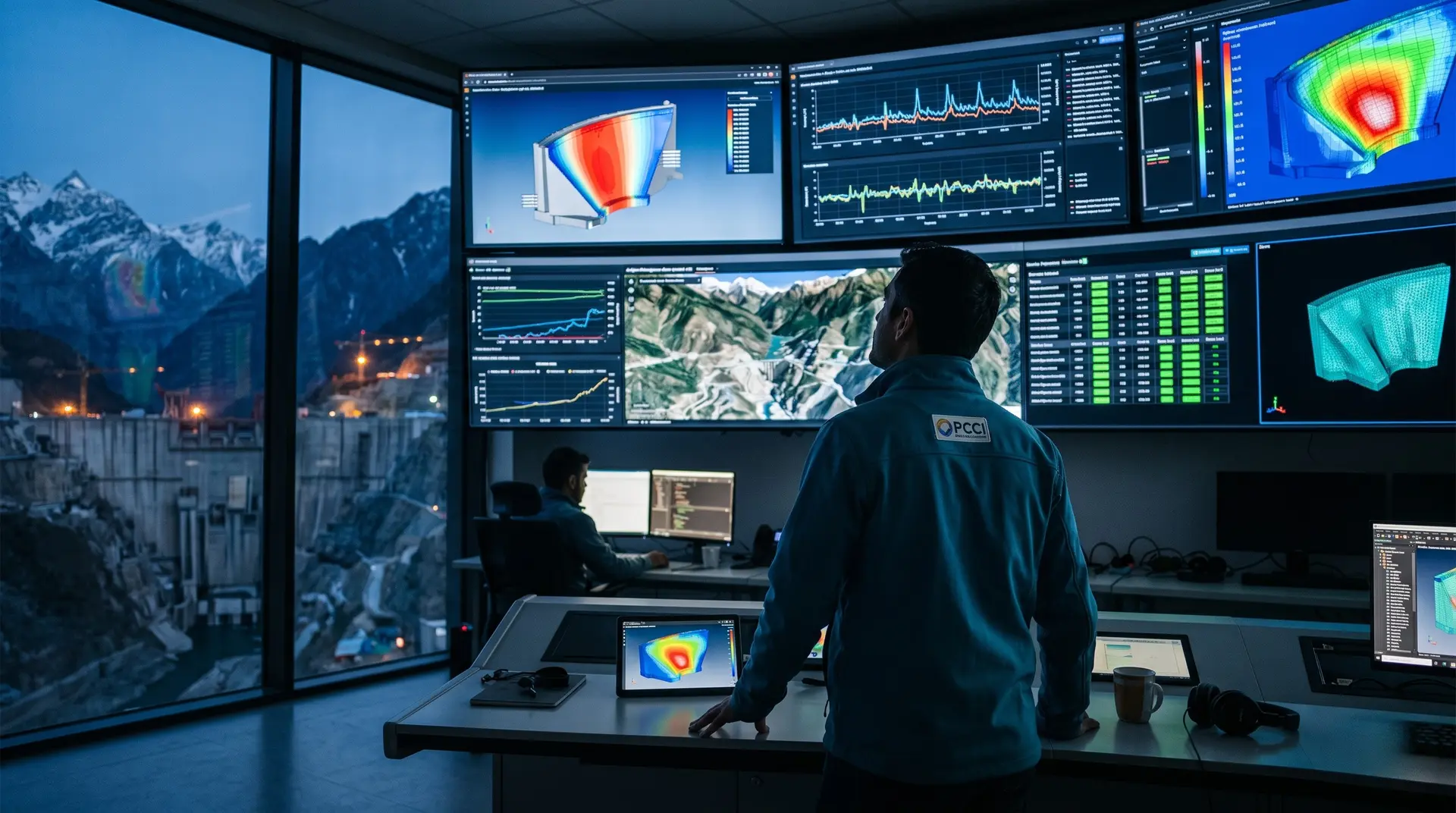
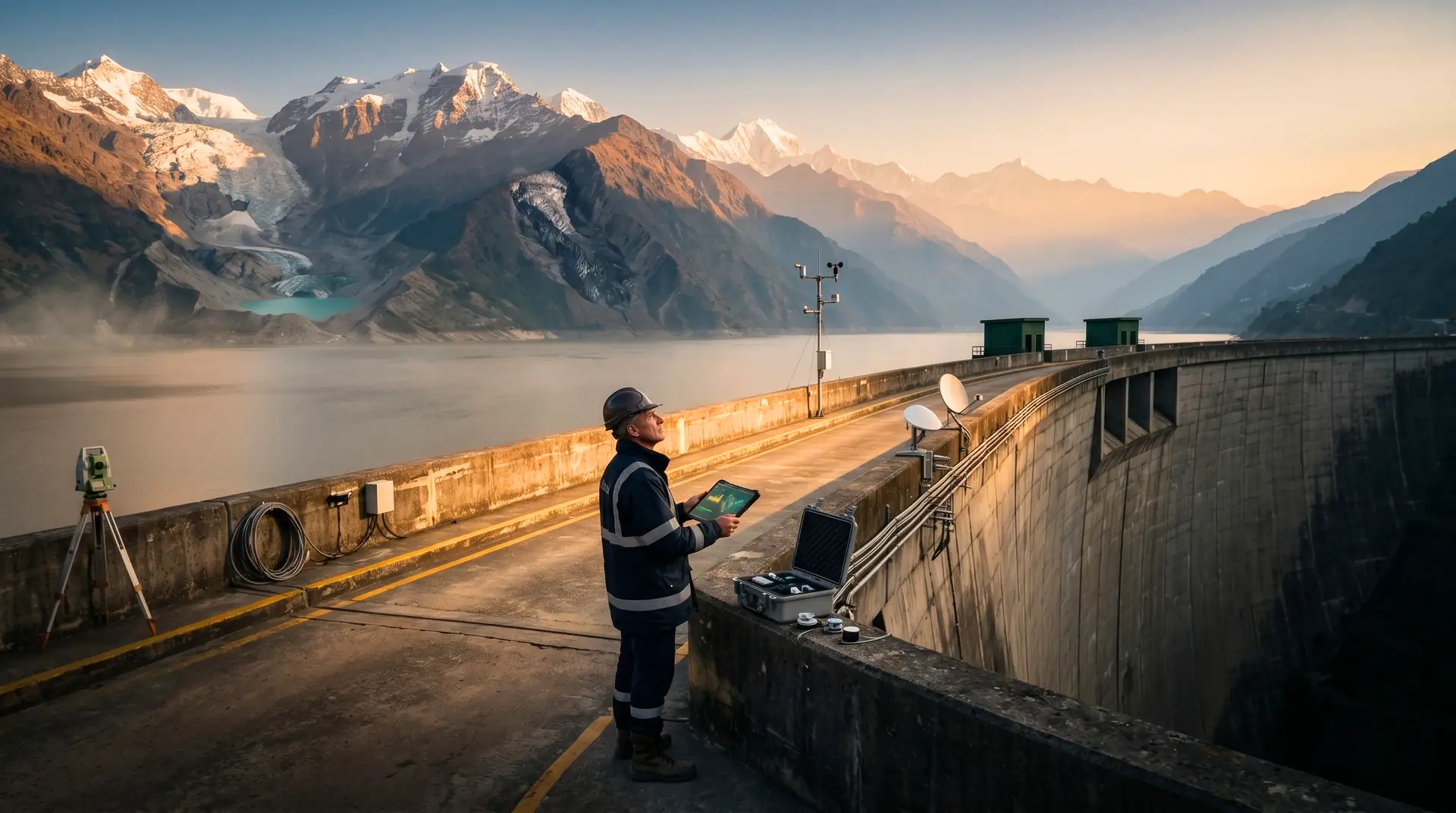
- Real-time monitoring upgrades for catchments, lakes, and dam structures
- Operational rule revisions to accommodate changed hydrology
The cost of these adaptations on a typical operating Indian dam is typically modest compared to project replacement value, but the budget allocation requires recognition of climate impact in dam safety reviews. DRIP Phase II and III funding has been increasingly directed toward climate-relevant interventions.
What this means for new Indian dam concrete
For new dam projects in India, climate adaptation is increasingly part of design from the start.
Higher design floods reflecting updated monsoon and GLOF projections, often 20 to 50 percent above what historical design would have produced.
More conservative durability specifications: lower water-cement ratio (0.40 maximum for exposure-critical zones, vs 0.45 historically), higher SCM content (30 to 40 percent fly ash or GGBS), increased cover (75 mm minimum at exposed concrete vs 50 to 60 mm historically).
Robust thermal control plans for placement under more frequent hot-weather conditions, including pre-cooling for summer pours and embedded cooling pipes for thicker sections.
Real-time monitoring infrastructure for upstream catchments, including glacial lake instrumentation, sediment gauging, weather stations, and dam structural monitoring. Designed in from the start, not retrofit.
Adaptive operation rules built into project agreements, allowing operating regimes to evolve as climate impacts manifest. This is a contractual provision more than a design provision, but it has implications for the structures that the operating rules govern.
The cost premium for these adaptations on a new project is typically 3 to 8 percent of project value, depending on location, project type, and the adaptation depth. The avoided cost over the project’s 50 to 100 year design life is typically much larger. The economics favour adaptation, but the up-front cost is real and the long-term benefit is uncertain in any specific case.
Climate adaptation is engineering, not advocacy
For dam designers, operators, and owners, climate adaptation is not a political position. It is a practical response to projections that increasingly define what design floods, durability specifications, and operational rules need to look like. Engineering practice that does not incorporate climate projections produces infrastructure that will be progressively under-specified for the conditions it operates in. The institutional challenge is funding the adaptation; the engineering challenge is implementing it well.
How PCCI approaches climate adaptation
PCCI’s durability service addresses long-term concrete performance under changing climate conditions, with attention to carbonation, chloride ingress, freeze-thaw, and AAR mechanisms that climate change accelerates. Our independent review service supports owners and dam safety authorities with climate vulnerability assessment for both new and operating projects.
The 4,000+ MW portfolio of PCCI’s leadership includes projects across the climate-vulnerable Himalayan and central Indian regions, with particular attention to the durability and adaptation requirements that long-life hydropower infrastructure now demands.
Book a Technical Call → to discuss your project’s climate adaptation requirements.