The largest single material decision on the project
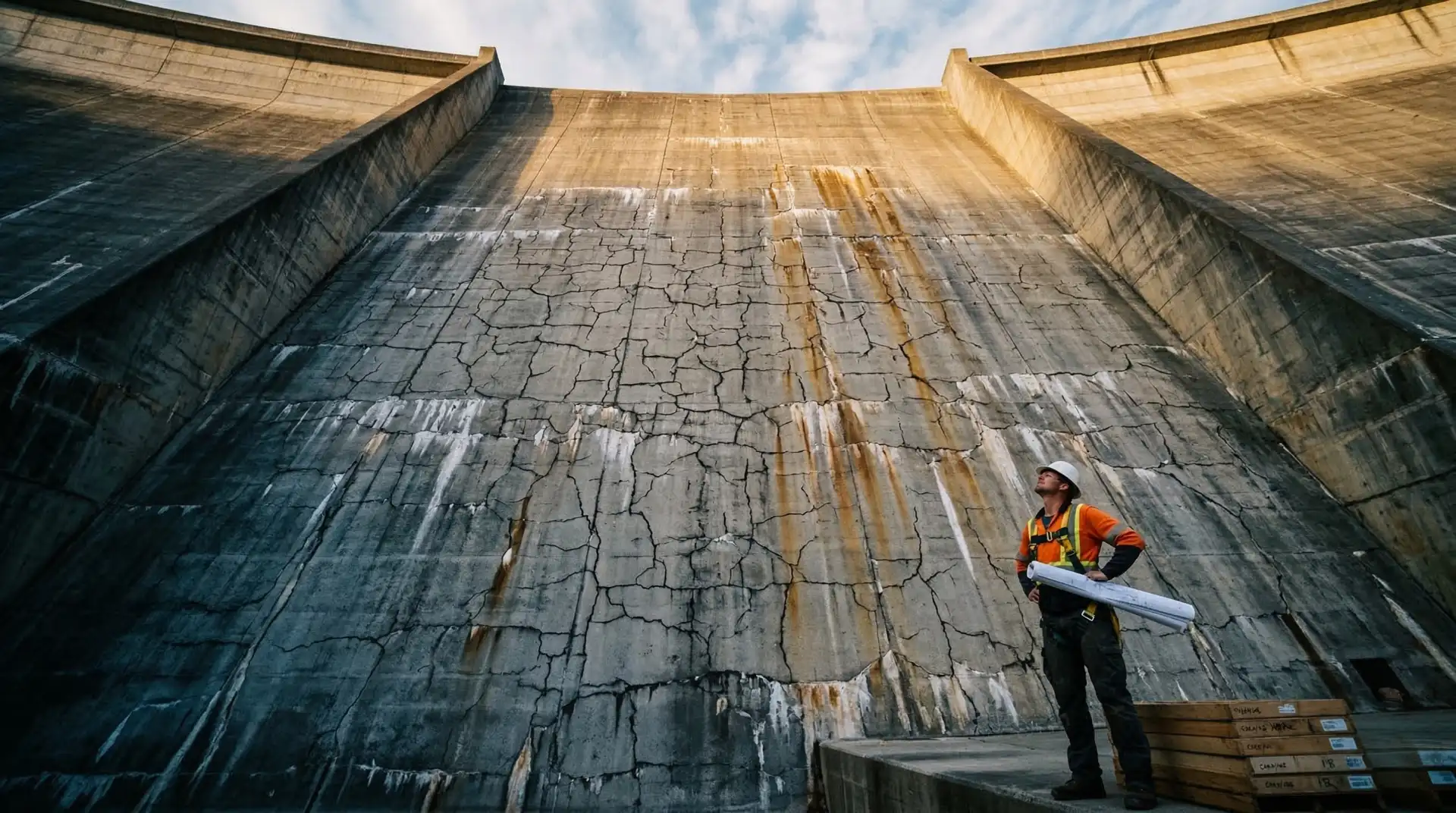
Aggregates make up 70 to 80 percent of concrete by mass. On a 1,000 MW dam project consuming 2 million cubic metres of concrete, that is roughly 4 million tonnes of aggregate. The cost of aggregate supply runs into hundreds of crore rupees. The quality of that aggregate determines the strength, durability, thermal behaviour, and 100-year performance of the concrete.
The aggregate decision is therefore among the largest and most consequential decisions on the project. It is also one of the earliest: aggregate quarries must be identified, investigated, and approved well before construction starts, because aggregate procurement has long lead times and quarry development takes months to years.
Most aggregate decisions on Indian and South Asian hydropower projects are made well, with formal investigation following IS 2386 test methods and ICOLD bulletins on dam concrete durability (notably Bulletin 79 on alkali-aggregate reaction in concrete dams). Some are made poorly, with shortcuts that produce problems during construction. The difference between good and poor aggregate investigation is typically a few months of additional work and a few crore rupees in testing cost, against potential project losses of tens to hundreds of crore rupees if the aggregate proves problematic.
The four-stage framework
Aggregate investigation on a hydropower project follows a four-stage framework that ICOLD, USACE, and BIS practice all recognise.
Stage 1: Source identification
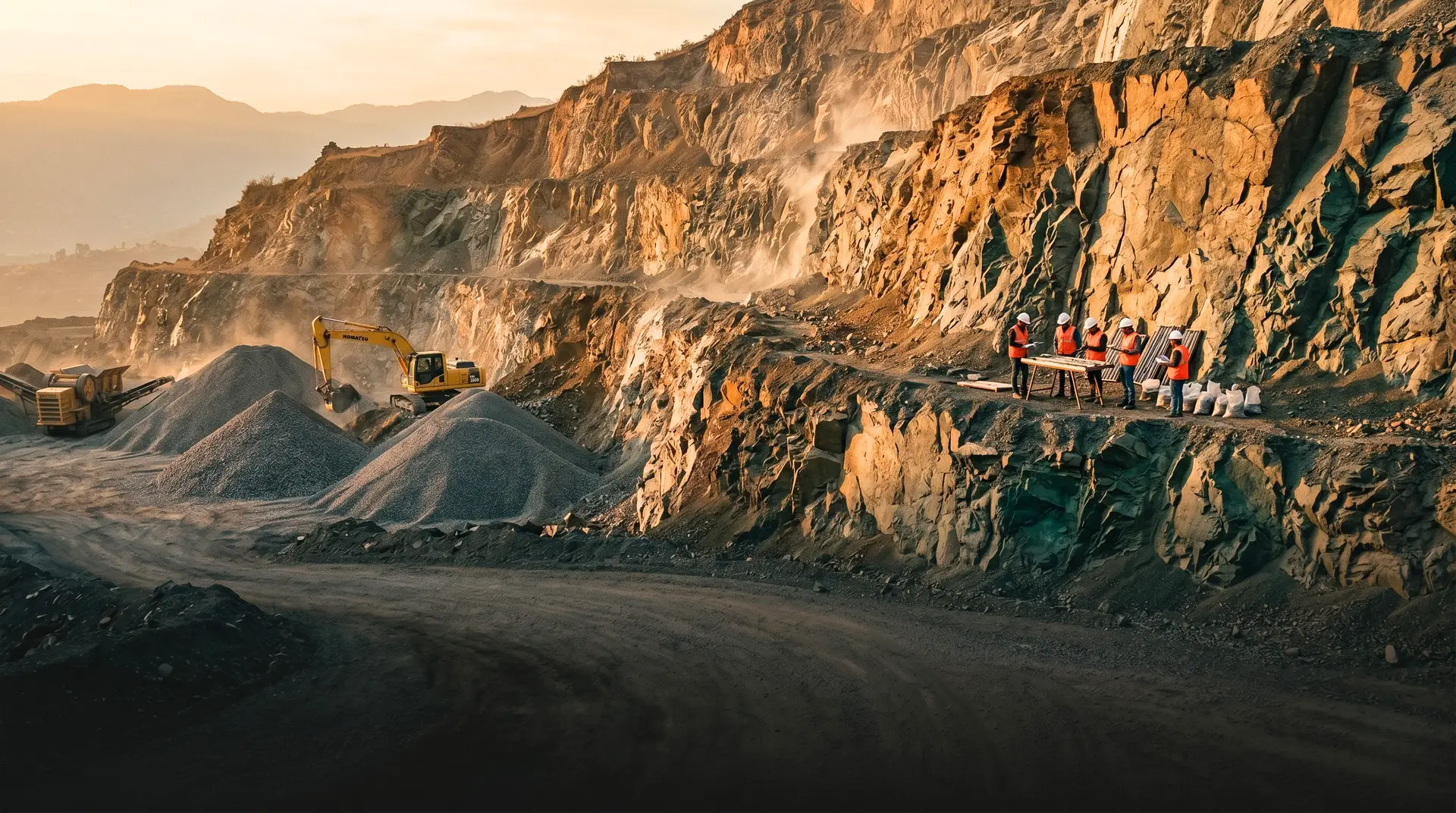
Candidate aggregate sources within economic haulage distance are identified. The factors:
- Geological mapping showing rock outcrops of suitable type
- Existing quarry operations with established production capacity
- Greenfield quarry potential in suitable geology
- Borrow areas for fine aggregate (sand) including river sands and manufactured sand options
- Logistical access including road quality, monsoon access, and environmental clearances
- Land ownership and acquisition considerations
The output of Stage 1 is a list of candidate sources, typically 5 to 10 for a major project, with preliminary assessment of each.
Stage 2: Geological assessment
For each candidate source, geological assessment covers:
- Parent rock type and its mineralogy
- Weathering profile and depth of weathered material
- Joint patterns and structural features affecting blast and crushing yields
- Geological hazards (landslides, earthquakes, volcanic, glacial)
- Reserve estimation with proven, probable, and indicated categories
- Variability across the deposit including any geological boundaries
The output is a geological report for each source that informs Stage 3 sampling.
Stage 3: Laboratory testing
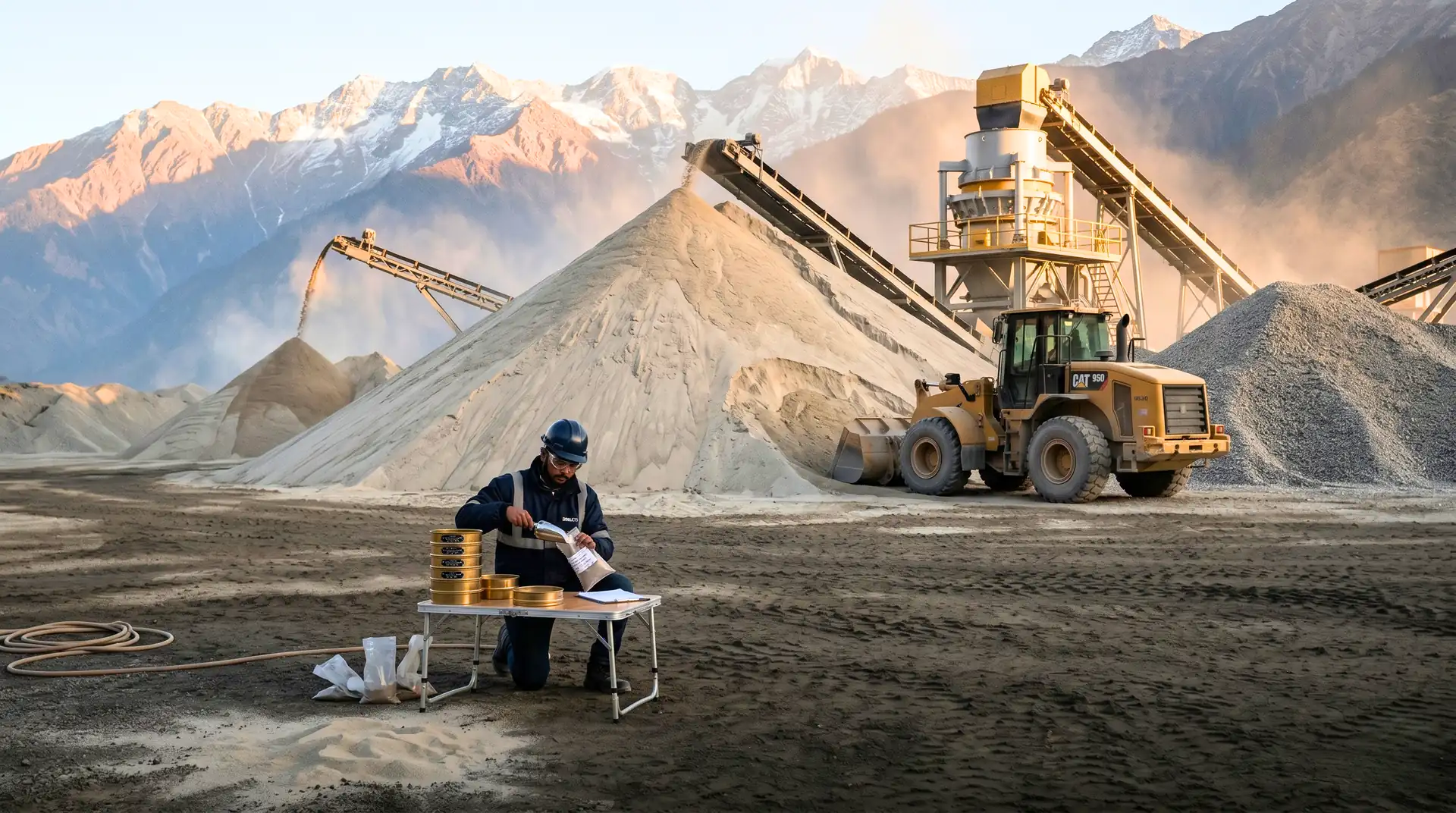
Sampling and testing per IS 2386 (multiple parts) and project specification. The minimum test suite typically includes:
| Property | Test method | Why it matters |
|---|---|---|
| Gradation | IS 2386 Part 1 | Mix design, packing, water demand |
| Specific gravity, absorption | IS 2386 Part 3 | Mix proportions, density |
| Aggregate impact value | IS 2386 Part 4 | Strength against handling |
| Aggregate crushing value | IS 2386 Part 4 | Strength under load |
| Los Angeles abrasion | IS 2386 Part 4 | Long-term durability |
| Soundness (sulphate) | IS 2386 Part 5 | Weathering resistance |
| Deleterious substances | IS 2386 Part 2 | Clay, organic matter, soft particles |
| Alkali reactivity (chemical) | IS 2386 Part 7 | Initial ASR screening |
| Alkali reactivity (mortar bar) | ASTM C1260 | Accelerated ASR test |
| Alkali reactivity (concrete prism) | ASTM C1293 | Long-term ASR test (most reliable) |
| Petrographic analysis | ASTM C295 | Mineralogy and reactive constituents |
Sampling must be representative of the deposit. A single sample from an accessible outcrop is not adequate; multiple samples from across the proposed extraction area, including at depth, are needed.
Stage 4: Petrographic analysis and quarry approval
Petrographic analysis per ASTM C295 is the often-skipped step that distinguishes thorough aggregate investigation from cursory investigation. A trained petrographer examines thin sections under the microscope and identifies:
- Mineralogical composition
- Reactive silica constituents (cristobalite, opal, chalcedony, strained quartz)
- Weathering products
- Structural features
- Anomalies that other tests would miss
Petrographic analysis catches problems that physical and chemical tests miss. It is also the most defensible basis for ASR mitigation strategy: knowing exactly what reactive minerals are present allows targeted SCM substitution and cement alkali limits.
The investigation closes with a quarry approval report that documents: source description, geological context, reserves, sample test results, petrographic findings, recommendations on mitigation, and overall approval recommendation.
The investigation is the cheapest insurance
Comprehensive aggregate investigation for a major hydropower project typically costs Rs 50 lakh to Rs 2 crore depending on number of sources and depth of testing. The cost of remediating ASR damage on an in-service dam can exceed Rs 100 crore. The math overwhelmingly favours investment in investigation, but the investigation cost is on the project's books while the avoided damage cost is invisible.
Alkali-silica reactivity: the critical test
Of all the aggregate properties, alkali-silica reactivity (ASR) is the one most often inadequately tested.
Indian aggregates show wide variability in ASR reactivity. Some basalts, granites, quartzites, and limestones from Indian quarries are non-reactive. Others, particularly some granites with strained quartz, some siliceous limestones, and some volcanic rocks, are slowly or highly reactive. Reactivity cannot be predicted from rock type alone; testing is required.
The accelerated mortar bar test (ASTM C1260) is the most common screening test, with results in 16 days. The longer concrete prism test (ASTM C1293) takes 1 to 2 years but is more reliable for borderline cases.
For dam concrete with 50 to 100 year design life, even slowly reactive aggregates become long-term problems. The investigation must:
- Identify reactivity through rigorous testing
- Quantify the reactivity (highly reactive, slowly reactive, non-reactive)
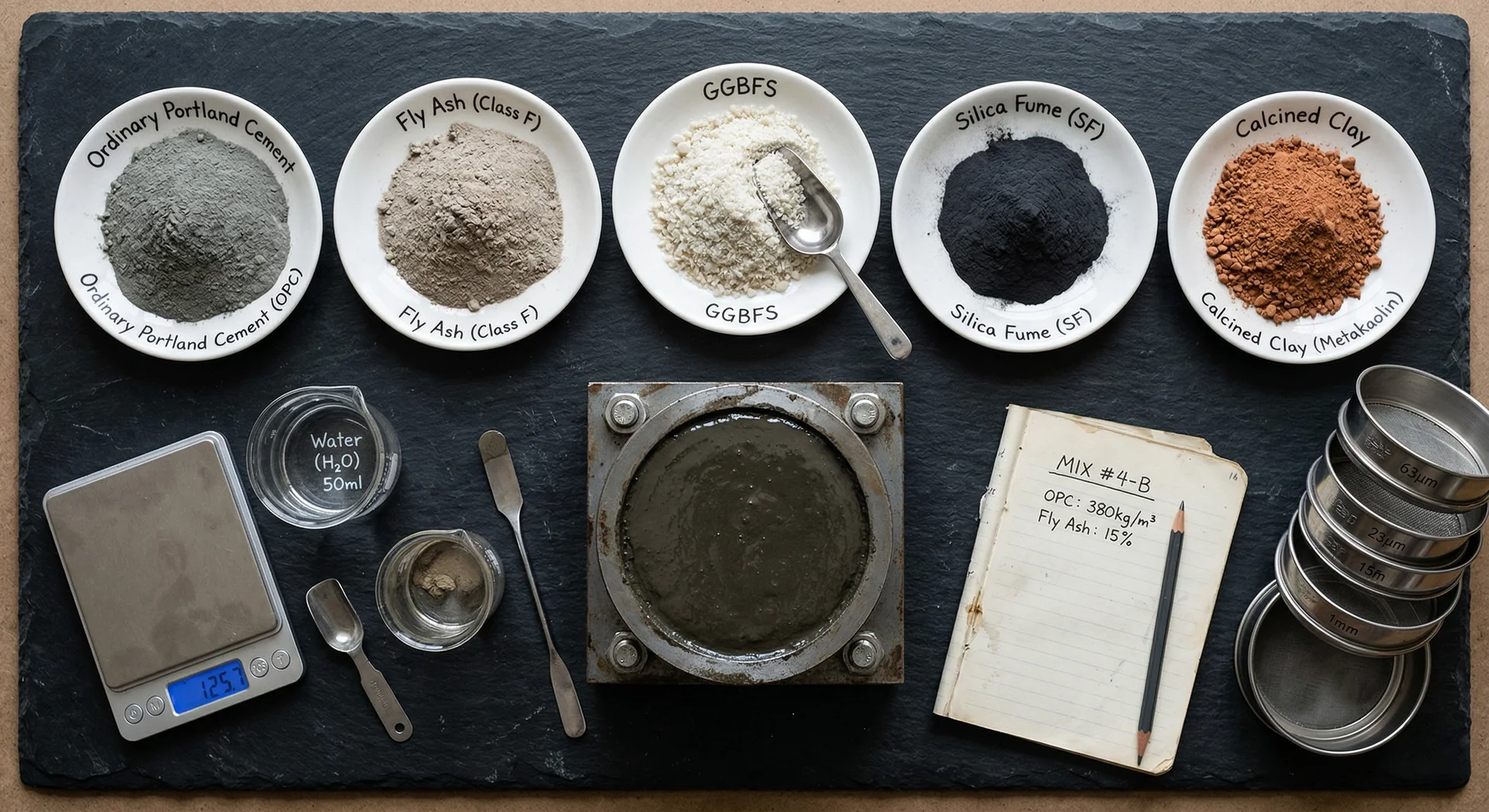
- Specify mitigation if reactivity is present (low-alkali cement, SCM substitution of 25 to 50 percent fly ash or GGBS, lithium-based admixtures)
- Verify mitigation effectiveness through testing
PCCI’s article on alkali-aggregate reaction in dam concrete covers the mitigation strategies in more depth.
Reserve verification
A quarry that meets quality criteria but has insufficient reserves becomes a project crisis when it runs out partway through construction. Reserve verification is part of the investigation.
Indicated reserves (geological estimate based on mapping and limited drilling): should be at least 1.5 to 2 times project consumption.
Proven reserves (confirmed by detailed drilling and sampling): should be equal to or greater than project consumption.
Operational considerations: actual yield from a quarry is typically 70 to 90 percent of the geological reserves, accounting for waste, oversize material, and operational losses.
For a major project, independent verification of the quarry operator’s reserve claims is standard practice. Project geological consultants conduct independent surveys, drilling, and reserve calculations.
Logistical reality
A technically suitable quarry that cannot reliably deliver aggregate to site is not a useful quarry. The investigation must include:
- Haulage routes under all season conditions
- Monsoon access including road closures and bridge load limits
- Crushing plant capacity at the quarry
- Aggregate stockpiling at site to buffer supply variability
- Environmental clearances including any restrictions on extraction rate
Many Indian quarry operations operate under environmental clearances that limit annual extraction. A project requiring more aggregate than the quarry’s clearance allows must either secure additional clearance (slow, uncertain) or use multiple quarries.
Investigate two; approve one; keep one in reserve
Best practice for major hydropower projects is to investigate at least two suitable sources, approve one as primary and one as backup, and maintain the backup approval through construction. If the primary source fails (geological surprise, environmental issue, supply chain disruption), the backup is ready to mobilise. The cost of maintaining backup approval is small; the avoided cost from a primary supply failure can be enormous.
How PCCI approaches aggregate investigation
Aggregate investigation has been part of PCCI’s pre-construction service portfolio across the 4,000+ MW of projects supported by the firm’s leadership, with particularly notable work on Tanahu Hydropower (140 MW) where ASR-resistant aggregate selection and high-fly-ash mix design were critical to the project’s durability strategy.
Our QA/QC service covers ongoing quarry monitoring during construction to catch any drift in aggregate quality from the approved baseline.
Book a Technical Call → to discuss your project’s aggregate sourcing requirements.