Half an hour that prevents many surprises
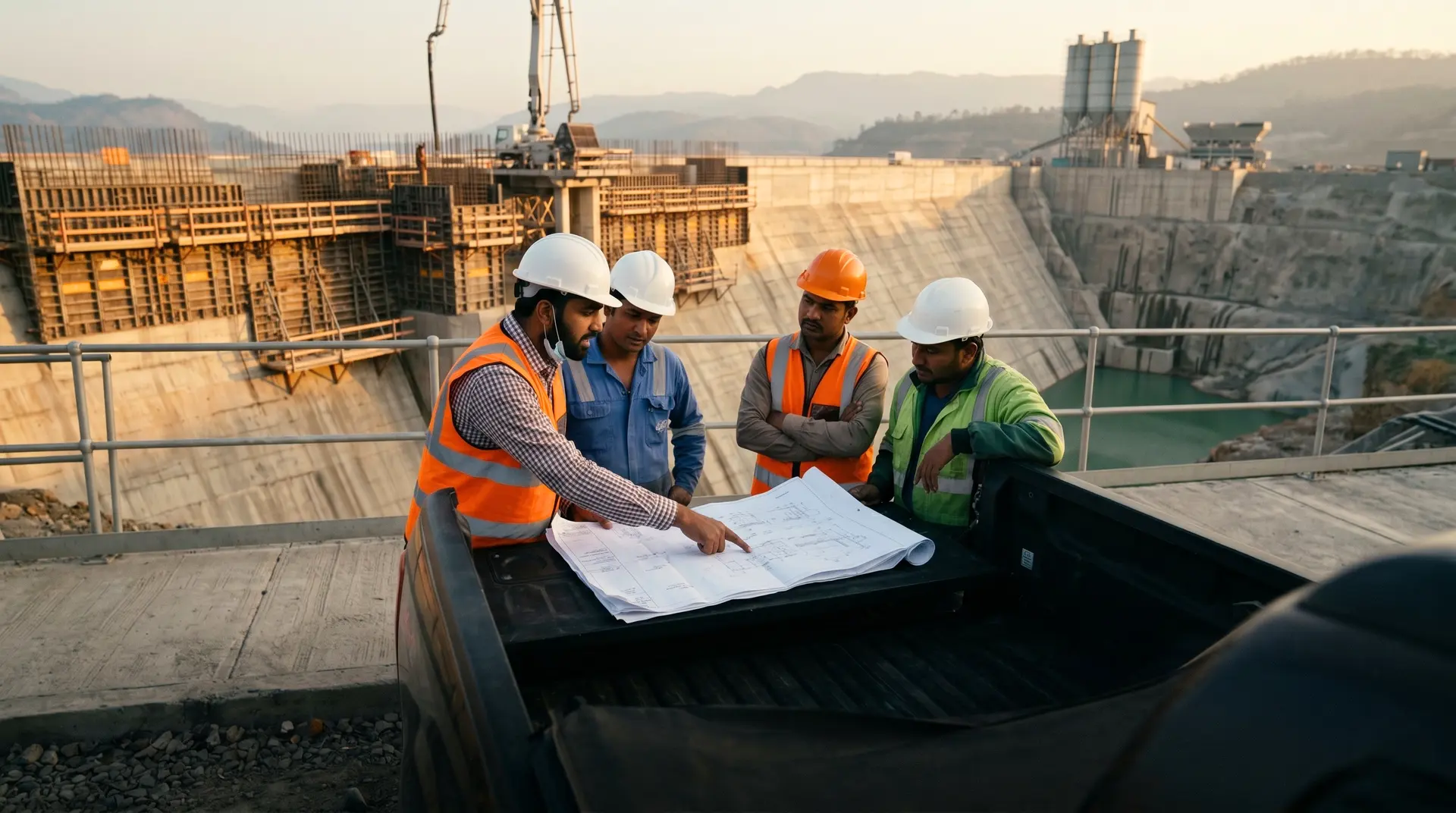
The pre-pour meeting is one of the simplest disciplines on a dam project. Half an hour, a small group of people, a checklist, and a go/no-go decision. It is also one of the most cost-effective. Sites that run it consistently have fewer placement-day surprises, fewer escalating decisions during the pour, and fewer non-conformances after the pour.
Sites that skip it usually have a story for why: the schedule was tight, the foreman is experienced, this is a routine pour. The story tends to come up most often after the pour goes badly.
This article is for project engineers, QC engineers, and contractor foremen who place concrete on dam sites and want a clean checklist for the pre-pour meeting.
Why this works
A concrete pour involves many parties with overlapping responsibilities: batching plant, placement crew, vibrator operators, QC team, engineering supervisor, safety officer. Each party has a piece of the picture. None has the full picture by themselves. The discipline is codified in ACI 304R (Guide for Measuring, Mixing, Transporting, and Placing Concrete) and is treated as universal best practice on every well-run dam pour.
The pre-pour meeting brings the pieces together. In thirty minutes, the parties confirm they are working from the same plan. Mismatches that would otherwise emerge during the pour, when each party is focused on their own task, surface in the meeting where they can be addressed.
Almost every concrete pour problem traceable to coordination has a pre-pour meeting moment where it could have been caught.
The eight-item agenda
A standard pre-pour meeting agenda covers eight items.
1. The pour plan. Location of the pour, volume, mix grade, placement method, expected start time, expected duration, expected end time. Everyone in the meeting confirms this is what they understand.
2. Mix design confirmation. Mix design number, target slump, target temperature, admixture dosages, water-cement ratio. Any deviations from standard production mix (special admixtures for hot-weather concreting, retarder for long pour duration, viscosity modifier for confined placement) are discussed.
3. Batching plant readiness. Aggregate moisture readings just measured at the plant, raw material availability for the full pour, calibration of weighing systems checked, alternative sources available if primary fails.
4. Equipment readiness. Pumps inspected, conveyors checked, vibrators tested, backup equipment available. The number and distribution of vibrators is confirmed against the placement plan. The pump output rate is matched against the truck mixer arrival rate.
5. Placement crew readiness. Number of crew, vibrator operator assignments, sequence of placement (where the first batch goes, where the next, how the placement progresses across the area). Communication protocol within the crew (radios, hand signals, designated spotter).
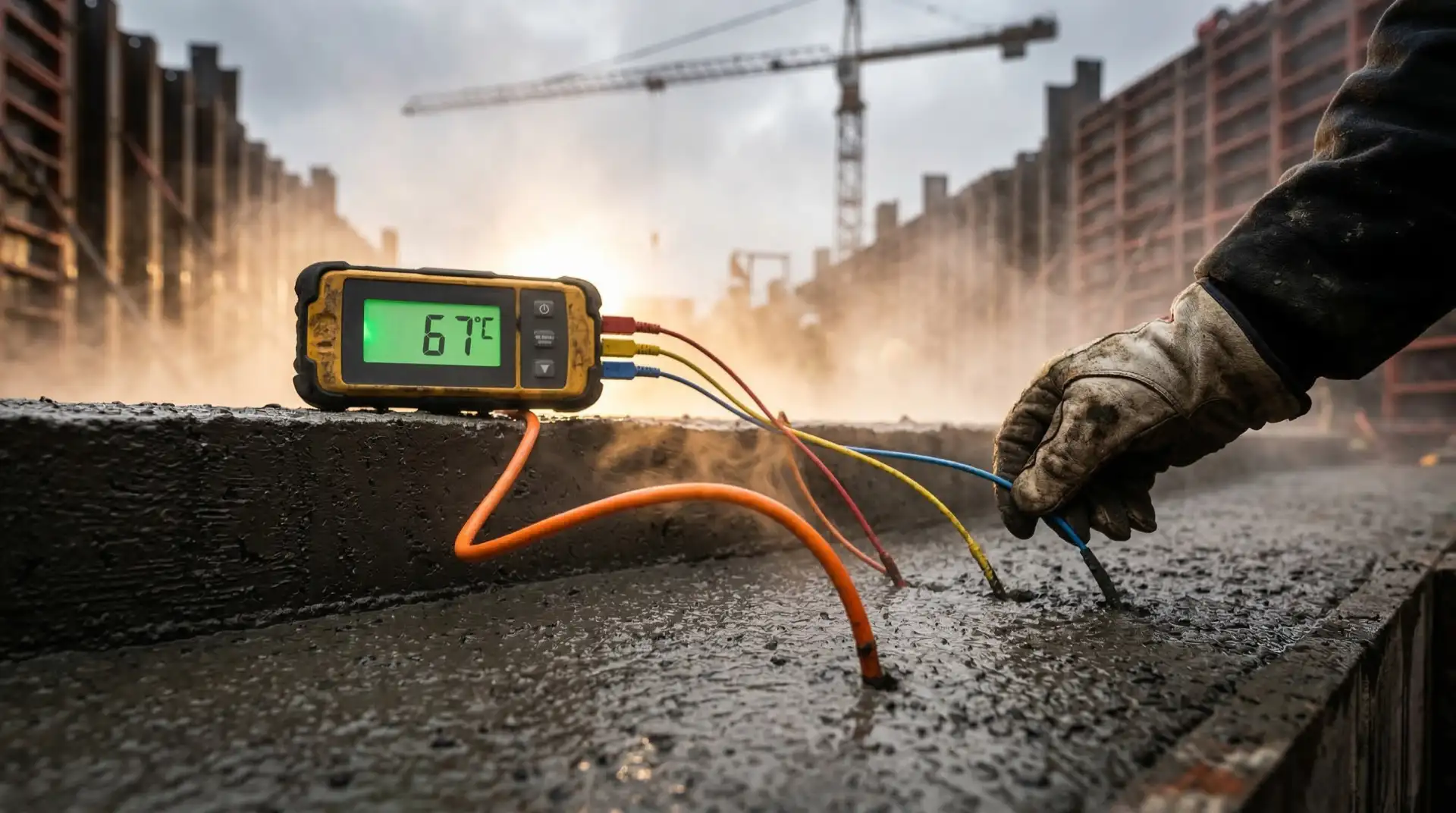
6. QC readiness. Cube moulds prepared and labelled, slump cones and tampers ready, thermometers calibrated, air content meters (where applicable) checked, ASTM C172 fresh-concrete sampling frequency confirmed. The QC engineer’s location during the pour and the protocol for communicating with the batching plant is confirmed.
7. Contingency plans. What happens if a truck arrives off-spec (return to plant, accept with adjustment, reject). What happens if equipment fails mid-pour (alternate placement method, partial pour completion). What happens if weather changes (cover and continue, halt and resume, abandon pour and resume next day).
8. Stop-work conditions. Pre-agreed conditions that will halt the pour. Documented in the meeting record. Respected by all parties when triggered.
The meeting closes with a documented go/no-go decision. The QC engineer and the placement supervisor both sign off.
The walkdown is part of the meeting
Many sites combine the pre-pour meeting with a final walkdown of the placement area. The walkdown checks: formwork in place, embedments aligned, reinforcement clear of placement zones, access for trucks and pumps, lighting adequate, safety fencing in place. Issues found at the walkdown are added to the meeting agenda. A walkdown that finds an issue 30 minutes before pour start is a pour saved.
What gets caught
Over years of running this discipline across many pours, five categories of issue recur in pre-pour meetings.
Mix or grade mismatch. The placement crew expected M30, the BOQ says M35, the batching plant got an order for M30. Resolved in the meeting in five minutes; would have been a non-conformance had the wrong mix arrived.
Embedment or rebar non-conformance. The walkdown finds a rebar mis-placement or an embedment out of tolerance. Resolved by re-fixing before pour start; would have been a defect requiring break-out and recasting if found post-pour.
Weather forecast change. A storm front that was expected for tomorrow is now expected for tonight. Resolved by accelerating the pour, adding cover, or deferring; better than discovering it at hour four of the pour.
Equipment availability. A vibrator is out for repair, the backup pump is on another job, the spare line for crown placement is not on site. Resolved by reorganising the placement plan; would have been a placement crisis if discovered when the third truck arrived.
Concrete supply timing. The batching plant capacity is 60 m3/h, the placement rate is 80 m3/h. The mismatch becomes a placement queue with concrete losing workability past the ASTM C94 discharge time limits. Resolved in the meeting by adjusting placement rate or arranging additional truck mixers.
Each of these costs minutes to address in the meeting and could cost hours or days to address during the pour.
Stop-work discipline
Stop-work conditions are pre-agreed thresholds for halting the pour. Common ones:
- Slump consistently outside acceptance band on first three trucks
- Concrete temperature outside threshold
- Ambient conditions outside placement envelope (rain, wind, temperature)
- Equipment failure with no operational backup
- Placement defect (segregation, honeycombing) requiring remedial action
- Safety incident requiring crew stand-down
The discipline of actually stopping a pour when a stop-work condition triggers is harder than agreeing the conditions. Project pressure pushes hard against stopping. The pre-agreement, documented in the meeting record, is what makes the stop-work discipline operational. When the condition triggers, the QC engineer and placement supervisor refer to the meeting record, agree to halt, and notify the project manager.
A pour halted at hour four because the slump went out of band is a pour that did not place 200 cubic metres of out-of-spec concrete. The cost saved is multiples of the cost of the placement halt.
The pre-pour meeting is the cheapest QC investment
Half an hour of senior staff time before every major pour. No equipment, no testing, no consumables. Just a conversation. The cost is trivial; the avoided cost from coordination errors is often substantial. Sites that run the meeting consistently see the benefit accumulate across many pours.
How PCCI implements pre-pour meetings
The pre-pour meeting discipline is part of PCCI’s QA/QC framework on every concrete-intensive project. The standard agenda has been refined across the 4,000+ MW portfolio including Tala (1,020 MW) and Mangdechhu (720 MW), where the discipline became part of the project’s standing concrete operation procedures.
For projects starting up new concrete operations, the pre-pour meeting structure can be implemented in days, with a standard checklist tailored to the project’s specific elements. The discipline scales from small foundation pours to multi-day mass concrete placements.
Book a Technical Call → to discuss your project’s concrete placement coordination requirements.